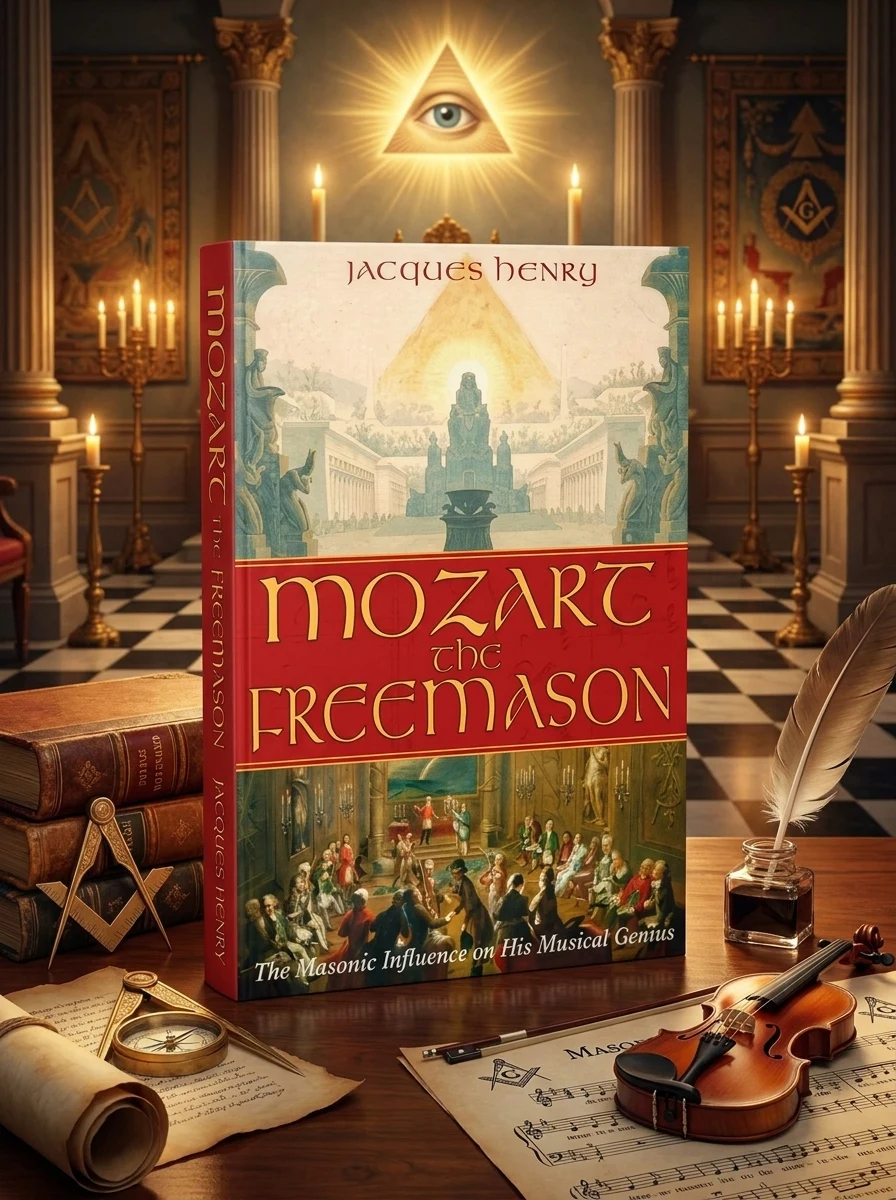
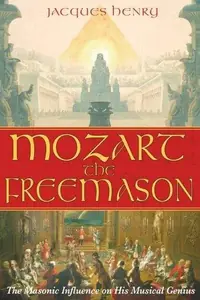
Mozart the Freemason: The Masonic Influence on His Musical Genius


This edition can be ordered. No arrival date is confirmed.
Uncover the secret symphonies of Mozart, woven with the esoteric threads of Freemasonry.
Jacques Henry's compelling study reveals the profound, often overlooked, connection between Wolfgang Amadeus Mozart's musical genius and his deep immersion in Freemasonry. Moving beyond well-known works like *The Magic Flute*, this book demonstrates how Masonic rituals and symbolism formed a foundational 'lexicon' within his entire oeuvre. Through newly unearthed documents, Henry illustrates how Mozart meticulously crafted harmonies, keys, and tempos to audibly translate spiritual principles, guiding listeners towards a transcendental understanding inherent in the Masonic quest. It argues that Freemasonry shaped Mozart's music as fundamentally as Lutheranism influenced Bach.
This work sits at the intersection of musicological scholarship and esoteric history, exploring how fraternal orders like Freemasonry influenced major artistic figures during the Enlightenment era. It contributes to the broader tradition of uncovering hidden symbolic layers within canonical Western art.


📝 Description: Mozart the Freemason: The Masonic Influence on His Musical Genius
💎 Expert review
📖 Why choose it
Why this book is worth reading
Readers deeply fascinated by the hidden architectures of classical music and the spiritual dimensions of Freemasonry will find this book indispensable. It offers a unique lens through which to view Mozart’s entire body of work, revealing how harmonic choices and structural elements serve as audible expressions of Masonic philosophy. This is not merely for musicologists but for anyone seeking to understand how esoteric beliefs can fundamentally shape creative genius. By connecting Mozart’s compositional techniques to the spiritual quest for transcendence, the book provides a rich, immersive experience that bridges the gap between auditory appreciation and intellectual discovery, appealing to those who believe art holds secrets beyond its surface beauty.
⭐ Reader reviews
Reader rating
This study presents a compelling argument that Freemasonry shaped Mozart’s music as profoundly as Lutheranism did Bach. While it successfully uses newly unearthed documents to illustrate how spiritual principles were translated into key and tempo, readers seeking a purely technical music theory analysis may find the esoteric focus distracting. It is best suited for those already intrigued by the intersection of occultism and art history. Those expecting a standard biographical narrative or a dry academic treatise on harmonic theory might feel the mystical interpretations stretch credibility. However, for the right audience, it offers a transformative perspective on how ritual and symbolism can inform artistic creation, making it a valuable, if niche, addition to any collection.
❓ Frequently asked questions
📖 Who should read this
If you are a student of esoteric traditions, a classical music enthusiast, or simply curious about the hidden influences behind artistic genius, this book offers a fascinating new lens through which to appreciate Mozart's masterpieces. Prepare to have your understanding of his music transformed.
🎯 Key themes and symbolism
Masonic Musical Structure
This work delves into how Mozart deliberately structured his compositions to mirror Masonic ceremonies and principles. The author reveals how specific musical elements were chosen to correspond with ritualistic progression, creating an auditory experience that subtly conveyed the underlying symbolic journey of the Craft, often transcending mere entertainment to impart deeper esoteric meaning to the initiated.
Esoteric Musical Lexicon
Henry argues that Mozart developed a comprehensive musical vocabulary, or 'lexicon,' directly inspired by Masonic symbols and tenets. Readers will discover how specific keys, tempos, and melodic phrases were not arbitrary choices but were carefully selected to act as auditory correspondences, translating complex esoteric concepts into a language of sound that resonated with Masonic ideals and spiritual quests.
Transcendence Through Harmony
The book explores how Mozart leveraged his profound understanding of musical symbolism to create compositions that transcended earthly experience. By embedding Masonic principles into his harmonies, he aimed to guide listeners toward a state of profound unity and spiritual enlightenment, mirroring the ultimate goal of the Masonic quest for self-perfection and universal harmony, a truly alchemical transformation.
💬 Quotes from the book
“Beyond mere programmatic music, Mozart developed a sophisticated musical 'lexicon,' where specific melodic phrases, key changes, and instrumental voicings served as direct, auditory symbols for the esoteric principles of Freemasonry.”
“The true genius of Mozart's Masonic compositions lies in their capacity to elevate the listener beyond the mundane, guiding them through carefully constructed harmonies toward a profound, spiritual unity that mirrors the ultimate quest of the initiate.”
📜 Historical context
📚 Glossary
- Freemasonry
- Musical Lexicon
- Esoteric
📔 Questions to reflect on
- Consider a piece of music you love. What hidden, non-obvious influences might have shaped its creation or meaning?
- How does the idea of music as a 'lexicon of symbols' change your perception of listening or composing?
- Reflect on how art, in any form, can guide an audience towards a 'harmony that transcends earthly existence.' What does that mean to you?
🏛 Books from this publisher Inner Traditions International
All books from this publisher →


You might also like
See more →