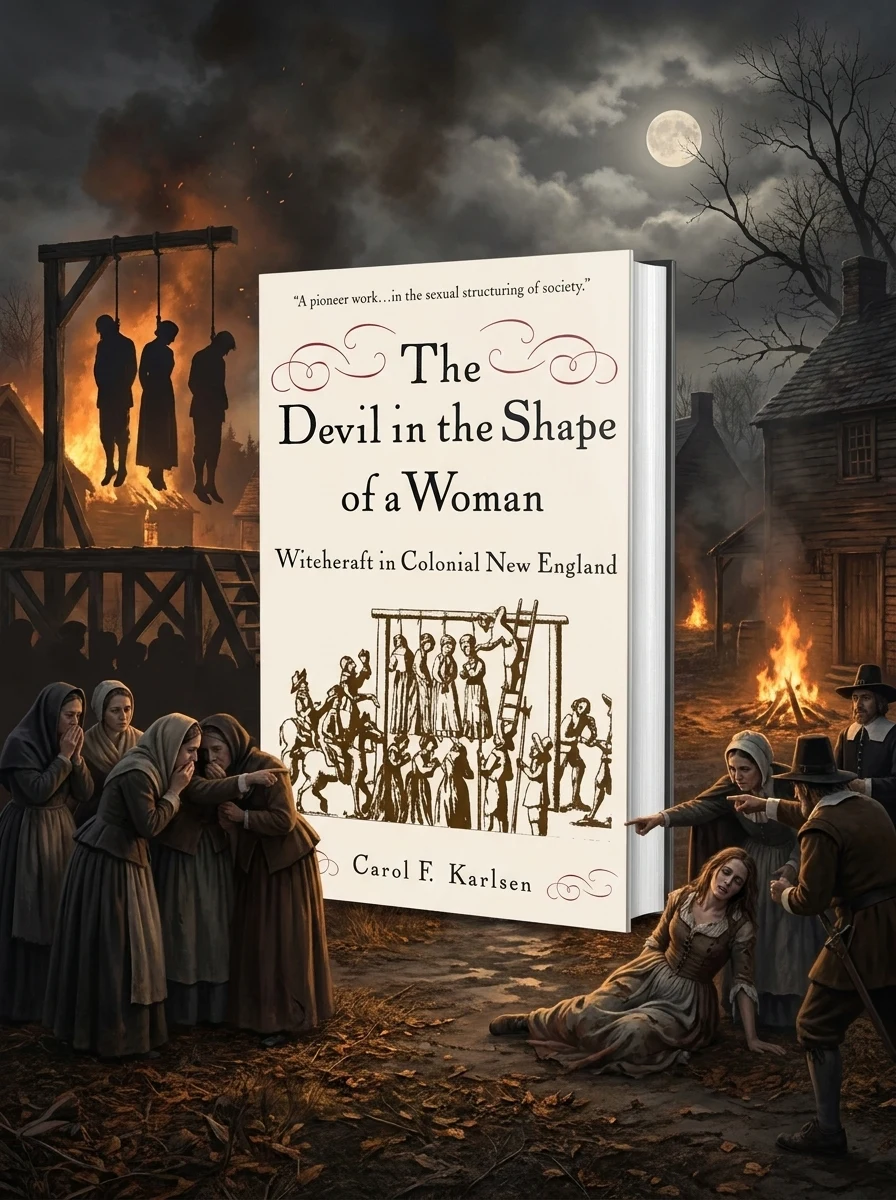
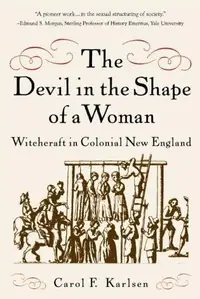
The Devil in the Shape of a Woman: Witchcraft in Colonial New England
Stock reported in the catalog; fulfillment is confirmed with your request.
Uncover the chilling truth behind women accused of witchcraft in Puritan New England.
Delve into the harrowing history of witchcraft accusations that plagued colonial New England, focusing on the disproportionate targeting of women. Carol F. Karlsen meticulously explores the social and cultural dynamics that rendered certain women susceptible to charges of devilish pacts and malevolent spells. Moving beyond sensational tales, this seminal work dissects the underlying gender prejudices and societal anxieties that shaped these persecutions. It reveals how accusations were not random acts of hysteria but deeply embedded in the era's patriarchal structures, offering a profound reinterpretation of America's darkest historical episodes.
This work sits at the intersection of feminist historiography and early American studies, offering a critical re-examination of Puritan colonial society through the lens of gendered persecution. It contributes to the broader scholarly conversation regarding the social construction of witchcraft accusations in New England.


📝 Description: The Devil in the Shape of a Woman: Witchcraft in Colonial New England
💎 Expert review
📖 Why choose it
Why this book is worth reading
Scholars, historians, and readers fascinated by the intricate dynamics of power in early American society will find this book indispensable. It moves beyond the sensationalism often associated with witchcraft narratives to provide a rigorous analysis of patriarchal structures. By revealing how accusations were embedded in societal anxieties rather than random hysteria, it offers a profound reinterpretation of a dark historical episode. Readers seeking to understand the specific mechanisms of gender prejudice and the cultural forces that targeted women will gain valuable insight into the complex social fabric of colonial New England.
⭐ Reader reviews
Reader rating
Karlsen delivers a meticulous dissection of the social and cultural dynamics behind witchcraft accusations, challenging previous narratives of mass hysteria. While academically rigorous and intellectually stimulating for those interested in gender studies and colonial history, this book may not suit readers seeking thrilling supernatural tales or simple moral binaries. It is a dense sociological study rather than a narrative history. Those expecting sensationalism or easy answers may find the focus on patriarchal structures and societal anxieties dry and overly analytical, making it best suited for serious academic inquiry.
❓ Frequently asked questions
📖 Who should read this
If you're fascinated by the intersection of history, gender studies, and the occult, or seek to understand the profound social forces behind America's witch trials, this book is essential. It offers invaluable insights for scholars and curious minds alike, eager to unravel complex historical injustices.
🎯 Key themes and symbolism
Women and Accusation
Karlsen meticulously examines why women, particularly those outside societal norms or with property, were overwhelmingly singled out for witchcraft accusations. She unveils the patriarchal fears and anxieties that positioned women as inherently more susceptible to the Devil's influence, making them prime targets for community suspicion and persecution.
Social Witchcraft Dynamics
This book argues that witchcraft was not merely a supernatural belief but a social construct used to enforce community norms and control dissent. Karlsen demonstrates how accusations functioned as a mechanism to manage perceived threats to order, often originating from disputes over property, status, or unconventional behavior, particularly among women.
Puritan Gender Relations
The text provides an incisive analysis of the rigid gender roles and power imbalances prevalent in Puritan New England. Karlsen illustrates how these deeply ingrained societal structures created an environment where independent or non-conforming women were viewed with suspicion, their very existence challenging the established order and making them vulnerable to severe allegations.
💬 Quotes from the book
“The question endures: why were certain women uniquely positioned to bear the brunt of these terrifying allegations?”
“Witchcraft, in its colonial manifestation, served less as a supernatural evil and more as a reflection of deeply ingrained social tensions and gendered power structures.”
📜 Historical context
📚 Glossary
- Familiarity with the devils
- Social construction of witchcraft
- Puritan patriarchy
📔 Questions to reflect on
- How might contemporary societal anxieties or prejudices manifest in forms of accusation or targeting similar to colonial witchcraft?
- Reflect on how the historical suppression of women's autonomy, as explored in this book, continues to echo in modern gender dynamics or legal systems.
- Consider a historical figure accused of witchcraft. How might Karlsen's framework alter your understanding of their specific case?
🏛 Books from this publisher W. W. Norton & Company
All books from this publisher →
 87
87


You might also like
See more →