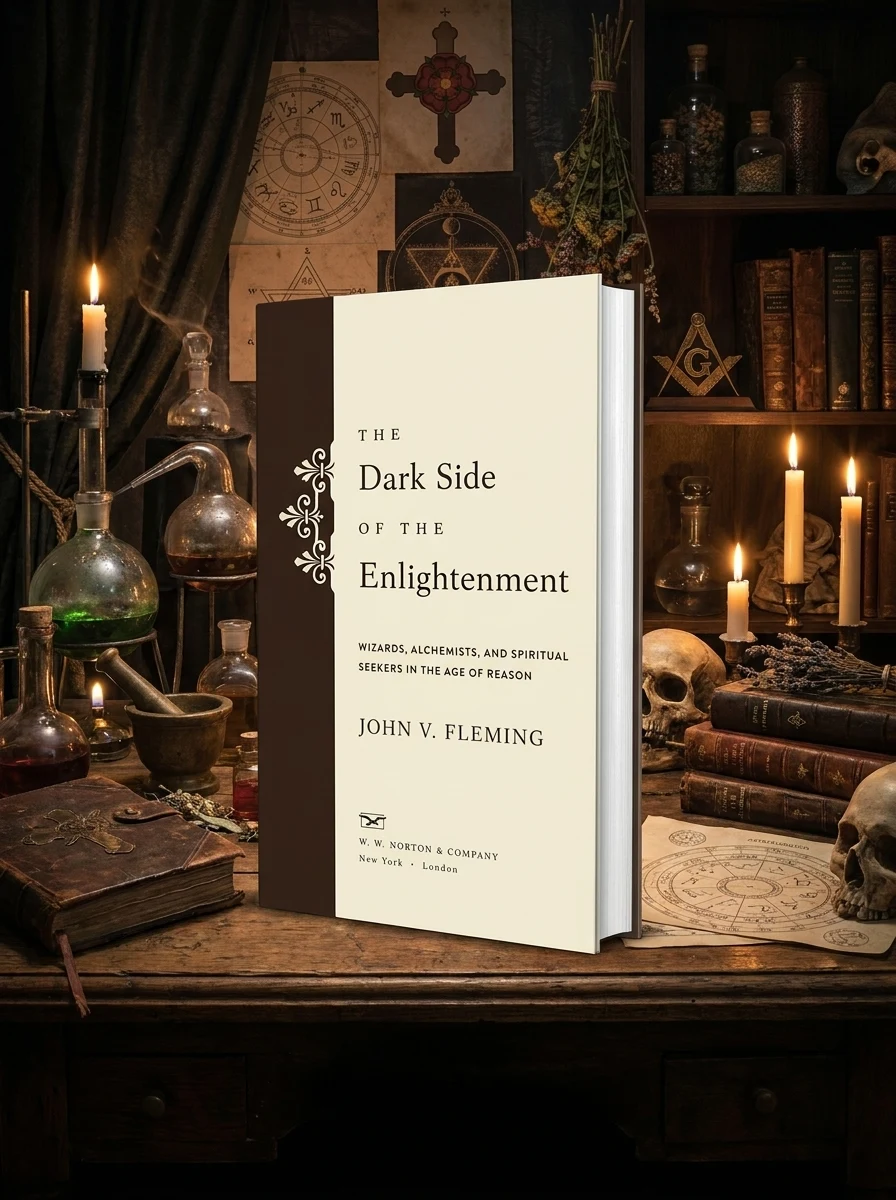
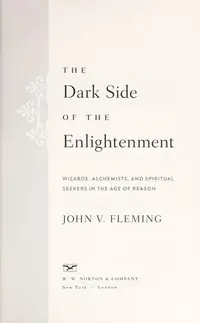
The Dark Side of the Enlightenment: Wizards, Alchemists, and Spiritual Seekers in the Age of Reason
This edition can be ordered. No arrival date is confirmed.
Discover the hidden currents of magic and mystery flowing beneath the Age of Reason's bright surface.
John V. Fleming uncovers the surprising truth that the Enlightenment, while fostering reason, also nurtured a rich tapestry of esoteric and occult pursuits. This book challenges the conventional view, revealing how spiritual seeking, magic, and ancient traditions like alchemy not only persisted but flourished amidst the era's intellectual ferment. Fleming explores the influence of Rosicrucianism and Freemasonry, showcasing how these secret societies engaged with profound mysteries. He further illuminates this complex period through the lives of figures such as the enigmatic Count Cagliostro, proving science and sorcery frequently intertwined.
This work situates itself within the historiography of Western esotericism, challenging the secular narrative of the Enlightenment by highlighting the enduring presence of magical and alchemical traditions. It bridges the gap between intellectual history and occult studies, revealing how mysticism coexisted with the rise of rationalism.


📝 Description: The Dark Side of the Enlightenment: Wizards, Alchemists, and Spiritual Seekers in the Age of Reason
💎 Expert review
📖 Why choose it
Why this book is worth reading
Readers fascinated by the hidden undercurrents of European intellectual history will find this book a revelatory experience. If you have ever wondered how the Age of Reason accommodated wizards and alchemists, Fleming provides the missing link. This volume is ideal for those who appreciate nuanced historical narratives that defy black-and-white categorizations. It offers a deep dive into Rosicrucianism and Freemasonry, satisfying curiosity about secret societies and figures like Count Cagliostro. By showing how science and sorcery intertwined, it appeals to anyone seeking a more complex, textured understanding of the past, proving that mystery never truly disappeared beneath the surface of reason.
⭐ Reader reviews
Reader rating
Fleming delivers a compelling corrective to standard Enlightenment narratives, successfully demonstrating that esoteric pursuits flourished alongside rationalism. The exploration of secret societies and key figures is engaging and well-researched, offering fresh perspectives on familiar historical periods. However, readers seeking strict scientific skepticism or those who prefer clear distinctions between magic and science may find the blending of these domains disorienting. It is not for those who view the Enlightenment solely as a triumph of secular reason devoid of mystical influence. Nevertheless, it remains a vital text for understanding the full spectrum of eighteenth-century intellectual life.
❓ Frequently asked questions
📖 Who should read this
If you're drawn to the hidden histories of the Enlightenment, curious about the interplay of science and magic, or fascinated by enigmatic figures like Cagliostro, this book offers a refreshing and insightful perspective. It’s perfect for deepening your understanding beyond conventional narratives.
🎯 Key themes and symbolism
Esotericism's Enduring Presence
This work argues against the simplification of the Enlightenment as purely rational. It highlights how occultism, magic, and spiritual traditions, far from fading, actively intertwined with the era's intellectual currents, demonstrating humanity's persistent quest for deeper, often hidden, knowledge even in an age of reason.
Alchemy's Scientific Roots
Fleming recontextualizes alchemy, showing it wasn't mere superstition but the scientific precursor to modern chemistry. He emphasizes its prestige among learned individuals, revealing how alchemists were often leading scientists and physicians. Their pursuits were considered legitimate scientific endeavors before linguistic shifts redefined the field, challenging contemporary views.
Enlightenment's Contradictions
The book expertly navigates the inherent tensions of the "Age of Lights." It explores how the same intellectual impulses that spurred rational inquiry also fostered a fascination with the miraculous, Rosicrucianism, and Freemasonry. This dual nature is brought to life through figures like Cagliostro, embodying the era's complex blend of emerging science and enduring mysticism.
💬 Quotes from the book
“The Age of Reason, far from eradicating the mystical, often found itself inadvertently cultivating new forms of occult fascination.”
“To truly understand the learned men of the eighteenth century, one must grasp that alchemy was not a fringe pursuit, but often the very cutting edge of their scientific inquiry.”
📜 Historical context
📚 Glossary
- Enlightenment
- Alchemy
- Rosicrucianism
📔 Questions to reflect on
- How does understanding the 'dark side' of the Enlightenment change your perception of this pivotal historical era?
- Consider how contemporary scientific pursuits might be viewed as 'occult' by future generations. What parallels can you draw?
- What role do you think secret societies like the Freemasons played in shaping both the rational and esoteric aspects of the Enlightenment?
🏛 Books from this publisher W. W. Norton & Company
All books from this publisher →
 87
87
You might also like
See more →