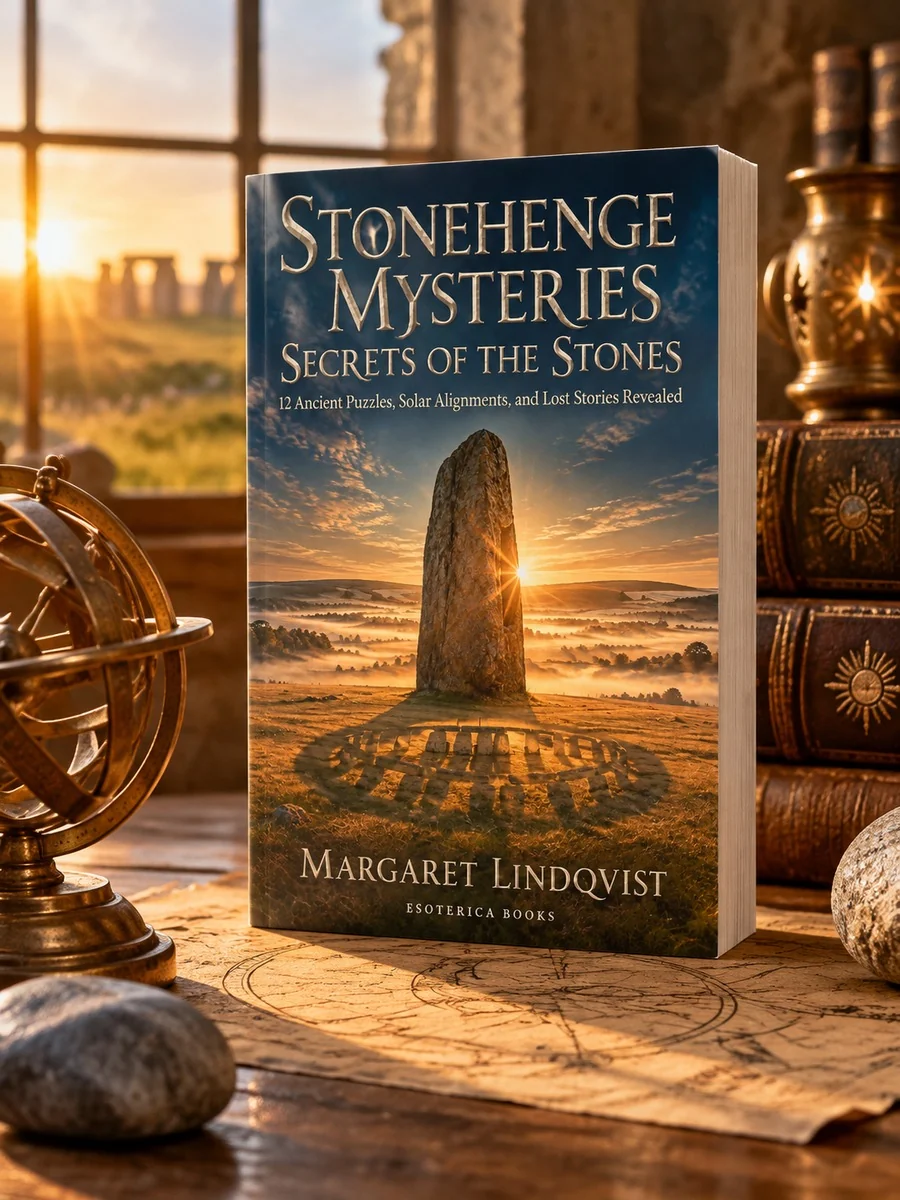
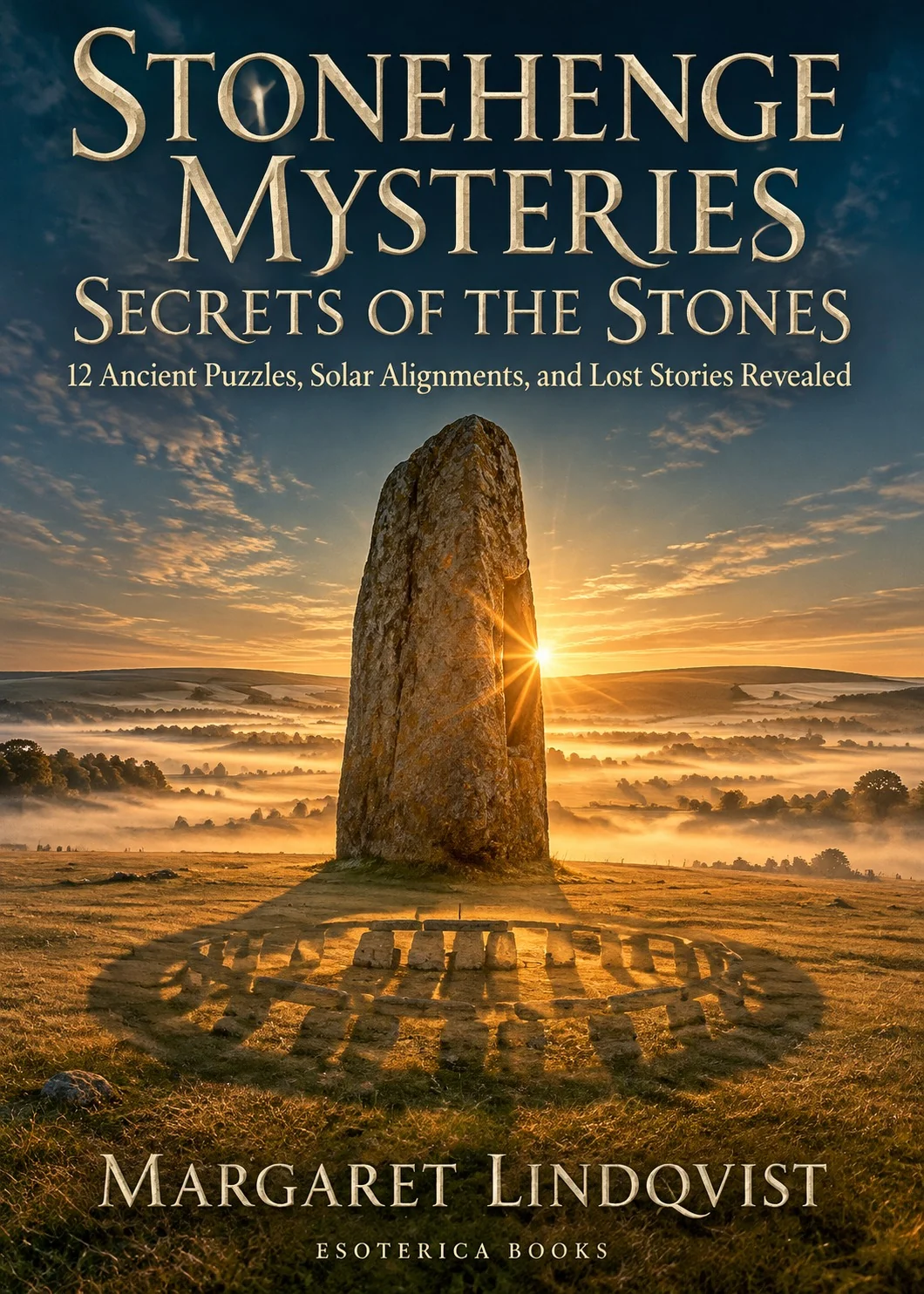
Stonehenge Mysteries: Secrets of the Stones
Explore Stonehenge's 12 greatest mysteries, from its enormous stones to the secrets of its solar alignments.
Why does Stonehenge face the rising summer sun, and how did prehistoric communities transport and arrange its enormous stones? Stonehenge Mysteries takes readers through 12 investigations of this remarkable monument on Salisbury Plain. Using the five-step Stone Circle Method—Observe, Trace, Compare, Connect, Reflect—you will examine the sarsens and bluestones, follow their geographical origins, explore successive building phases, and investigate astronomical alignments and archaeological evidence. Along the way, you will distinguish established discoveries from plausible interpretations and the questions that remain unanswered.
Stonehenge belongs to the prehistoric landscape of Salisbury Plain in Wiltshire, England. Its successive building phases, astronomical alignment, and connections with surrounding monuments invite exploration of how prehistoric communities organized their landscapes and gathered around monumental places.


📝 Description: Stonehenge Mysteries: Secrets of the Stones
📖 Why choose it
Why this book is worth reading
Stonehenge is familiar as an image, but understanding its construction, geography, and astronomical relationships requires looking much more closely. This book provides a practical way to do exactly that. Its observation exercises encourage readers to examine individual features, while its comparison activities make competing archaeological interpretations easier to understand. Particularly valuable is the distinction between what has actually been established and what remains open to debate. Instead of offering one sweeping explanation, the book teaches readers how to build a thoughtful interpretation from the available clues.
⭐ Reader reviews
Reader rating
Stonehenge Mysteries offers an accessible, carefully organized introduction to one of prehistoric Britain's most recognizable monuments. Its strongest feature is the Stone Circle Method, which gives readers five clear ways to approach archaeological questions rather than simply presenting a collection of theories. The preview is particularly effective when it moves from the monument's physical features to specific geographical evidence, including the origins of the sarsens and bluestones. The distinction between established evidence, plausible interpretation, and open questions is another welcome editorial choice. One limitation: readers seeking detailed archaeological debates, excavation reports, or specialist technical analysis will find this introductory approach relatively basic. For general readers, however, the structure is engaging and useful.
❓ Frequently asked questions
📖 Who should read this
Ideal for curious readers interested in Stonehenge mysteries, prehistoric Britain, ancient monuments, archaeology, and the relationship between ancient architecture and the sky. Particularly suitable for beginners who enjoy guided investigations, historical puzzles, and hands-on observation activities.
🎯 Key themes and symbolism
Prehistoric Construction
Solar Alignments
Archaeological Evidence
Ancient Landscapes
📜 Historical context
📚 Glossary
- Sarsens
- Bluestones
- Heel Stone
- Avenue
- Solstice Alignment
- Building Phases
📔 Questions to reflect on
- Which feature of Stonehenge would you investigate first, and what specific evidence would you look for before forming an interpretation?
- How does learning where the sarsens and bluestones originated change your understanding of the planning and communal effort involved in building Stonehenge?
- Which question about Stonehenge interests you most: its solstice alignment, its construction, its possible ceremonial purposes, or its relationship with the surrounding landscape? What evidence would help you investigate it?
📖 Read on the blog
✍️ More books by this author Margaret Lindqvist



🏛 Books from this publisher Esoterica Books
All books from this publisher →
You might also like
See more →
Have a question about this item?
Ask about the edition, condition, delivery or anything else — we reply by email or phone, usually within a day.
