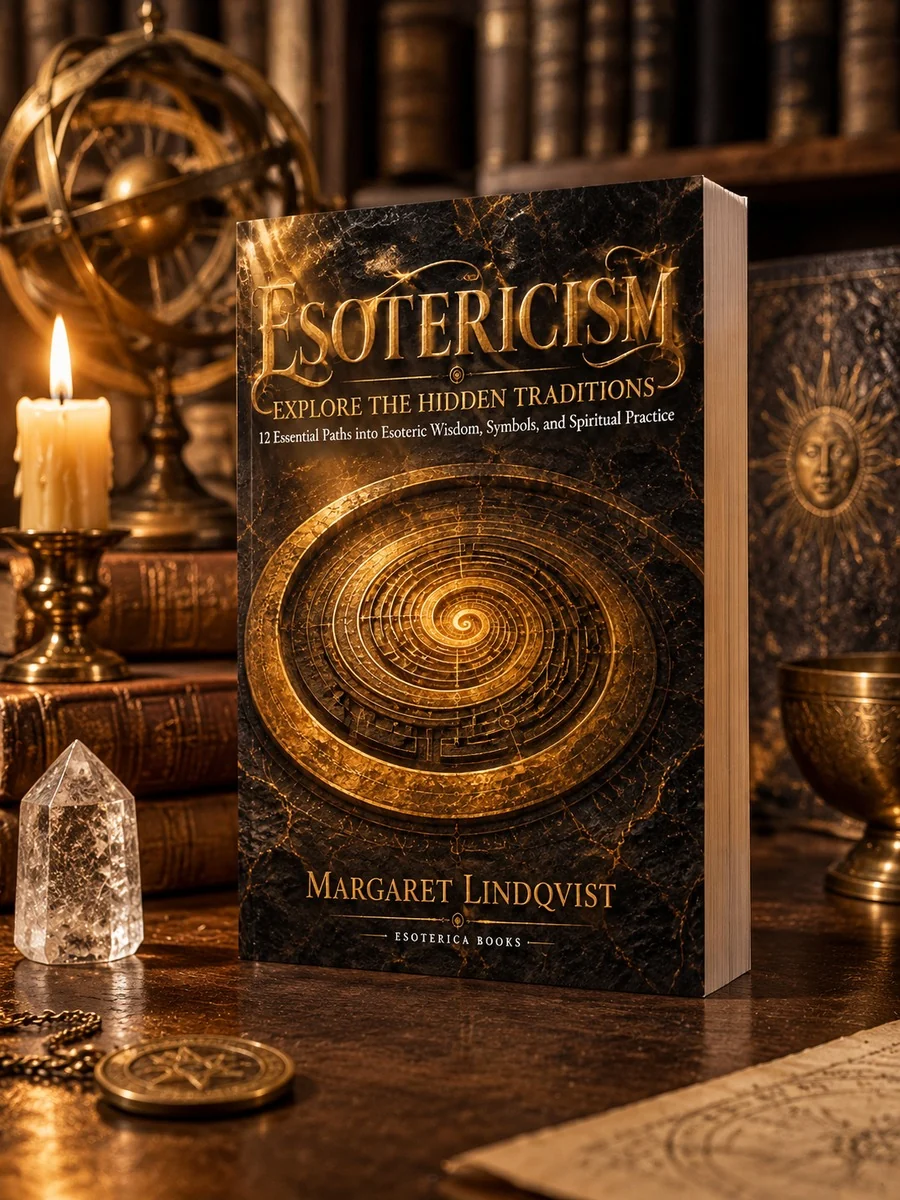
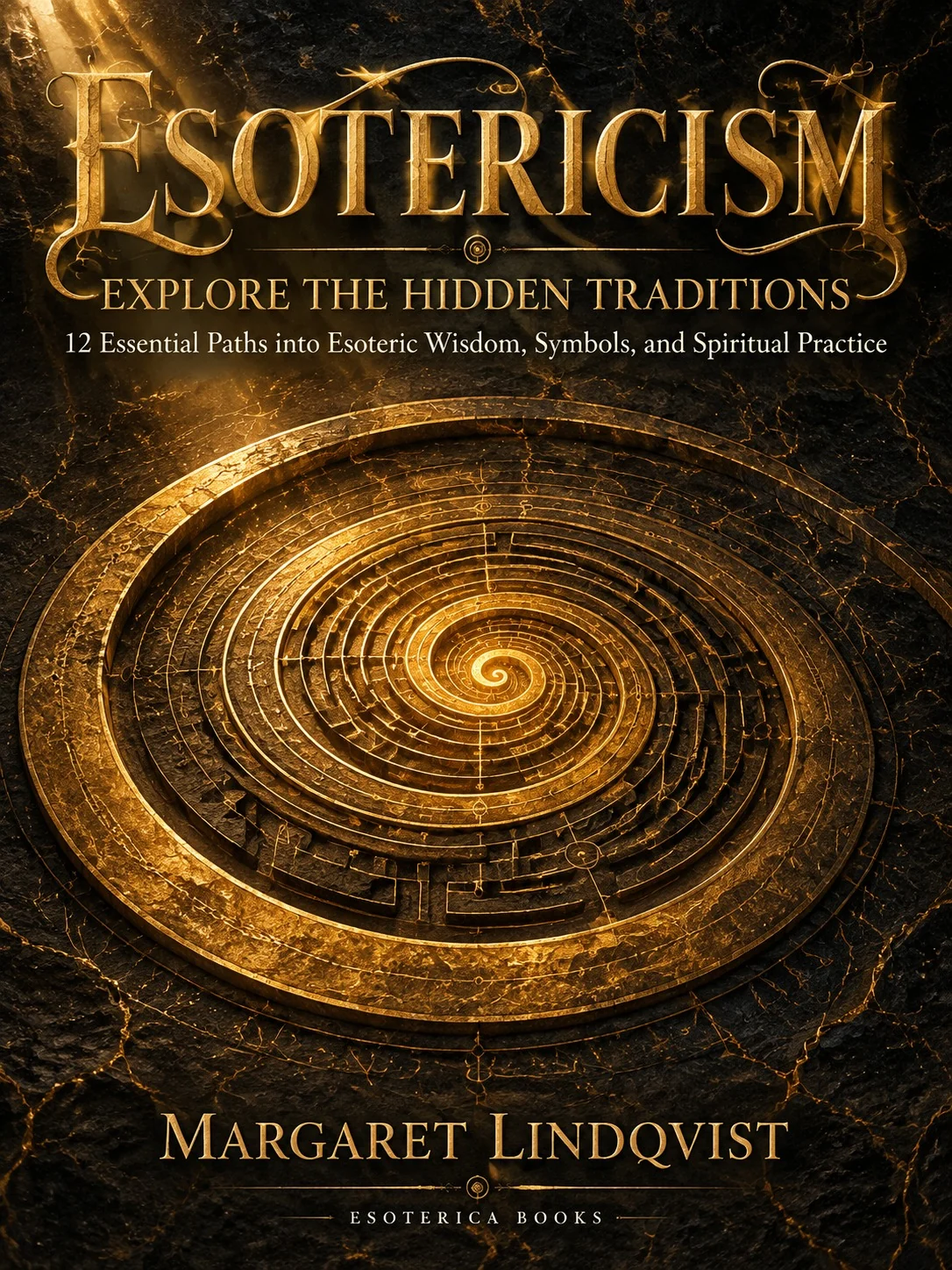
Esotericism: Explore the Hidden Traditions
Discover what esotericism means and explore twelve traditions through symbols, philosophy, and practical exercises.
What is esotericism, and how do its hidden traditions connect symbols, spiritual ideas, and the search for deeper meaning? Margaret Lindqvist offers beginners a clear introduction to this diverse field, exploring Hermeticism, alchemy, mysticism, sacred geometry, numerology, astrology, tarot, and ritual. Using the four-stage Lantern Path—Notice, Trace, Interpret, and Integrate—you will learn to recognize symbolic patterns, investigate their traditional contexts, distinguish established meanings from personal interpretations, and develop a thoughtful approach to independent esoteric study.
Esotericism encompasses diverse philosophical, spiritual, and symbolic traditions concerned with meanings that are not immediately apparent. Its vocabulary and practices vary across historical and cultural settings, making attention to context essential when exploring their teachings.


📝 Description: Esotericism: Explore the Hidden Traditions
📖 Why choose it
Why this book is worth reading
The value of this introduction lies in its combination of accessible definitions and a practical method. Instead of presenting esotericism as one mysterious system, Lindqvist introduces its different traditions while showing how to approach their symbols with attention and discernment. The opening key exercise makes the central idea immediately understandable, while the tarot spread, correspondence journal, and personal study map provide concrete starting points. The Lantern Path offers a useful structure for continuing to explore unfamiliar material independently.
⭐ Reader reviews
Reader rating
Margaret Lindqvist takes a sensible approach to a subject that can quickly become tangled in specialized vocabulary. The opening exercise, which asks readers to examine a key, mirror, or spiral, is an effective demonstration of layered symbolic interpretation. The Lantern Path gives the twelve-chapter introduction a consistent structure, and the practical activities make abstract concepts easier to engage with. Particularly useful are the distinctions between traditional associations and personal meanings, as well as the guidance on approaching unfamiliar teachings with historical awareness. The principal limitation is breadth: readers looking for detailed historical research or advanced instruction in one specific tradition will need more specialized books. As a beginner's orientation, however, the structure is clear and approachable.
❓ Frequently asked questions
📖 Who should read this
Ideal for complete beginners curious about the meaning of esotericism, occult symbolism, and spiritual traditions who want clear definitions alongside practical exercises. Readers seeking advanced historical scholarship or detailed instruction in a single tradition may find the introductory approach too broad.
🎯 Key themes and symbolism
Hidden Symbolism
Esoteric Traditions
Symbolic Interpretation
Personal Spiritual Practice
📜 Historical context
📚 Glossary
- Esotericism
- Exoteric
- Hermeticism
- Correspondence
- Alchemy
- Mysticism
📔 Questions to reflect on
- Which everyday object attracts your attention, and what three layers of meaning could it carry: practical, symbolic, and personal?
- When exploring an unfamiliar spiritual tradition, how can you distinguish its established teachings from your own interpretations and associations?
- Which three areas of esoteric study would you most like to explore, and what questions would guide your first investigations?
📖 Read on the blog
✍️ More books by this author Margaret Lindqvist
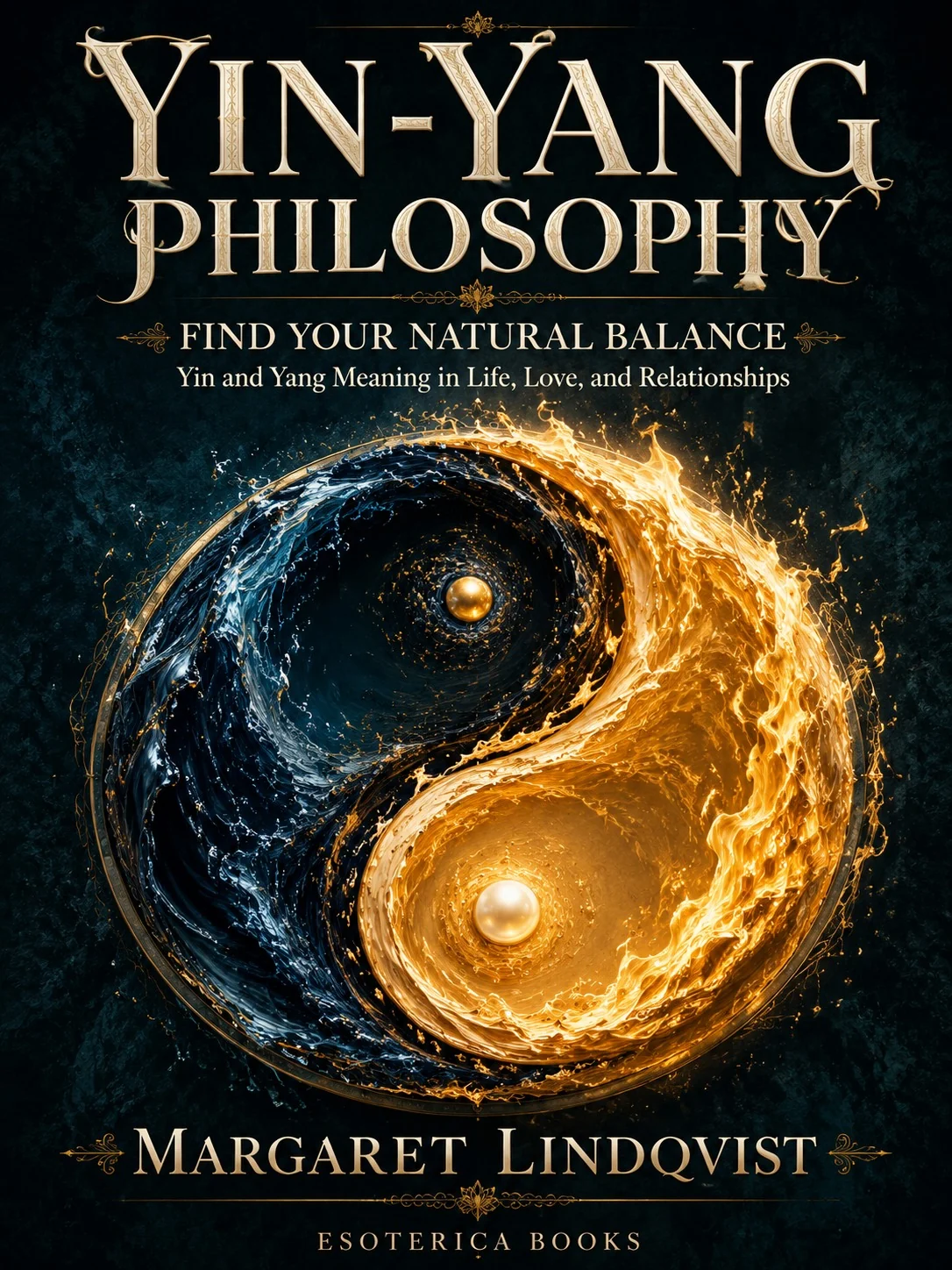


🏛 Books from this publisher Esoterica Books
All books from this publisher →
You might also like
See more →
Have a question about this item?
Ask about the edition, condition, delivery or anything else — we reply by email or phone, usually within a day.
