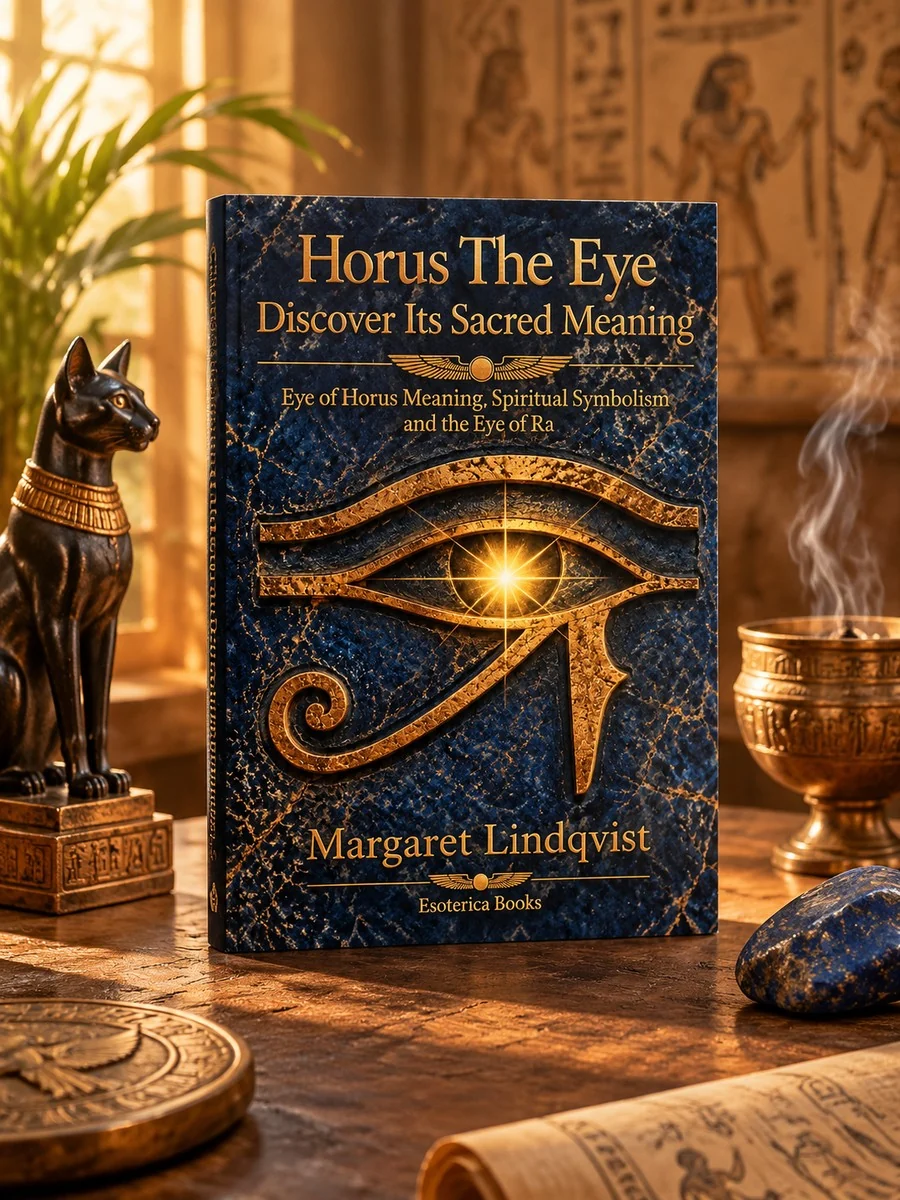
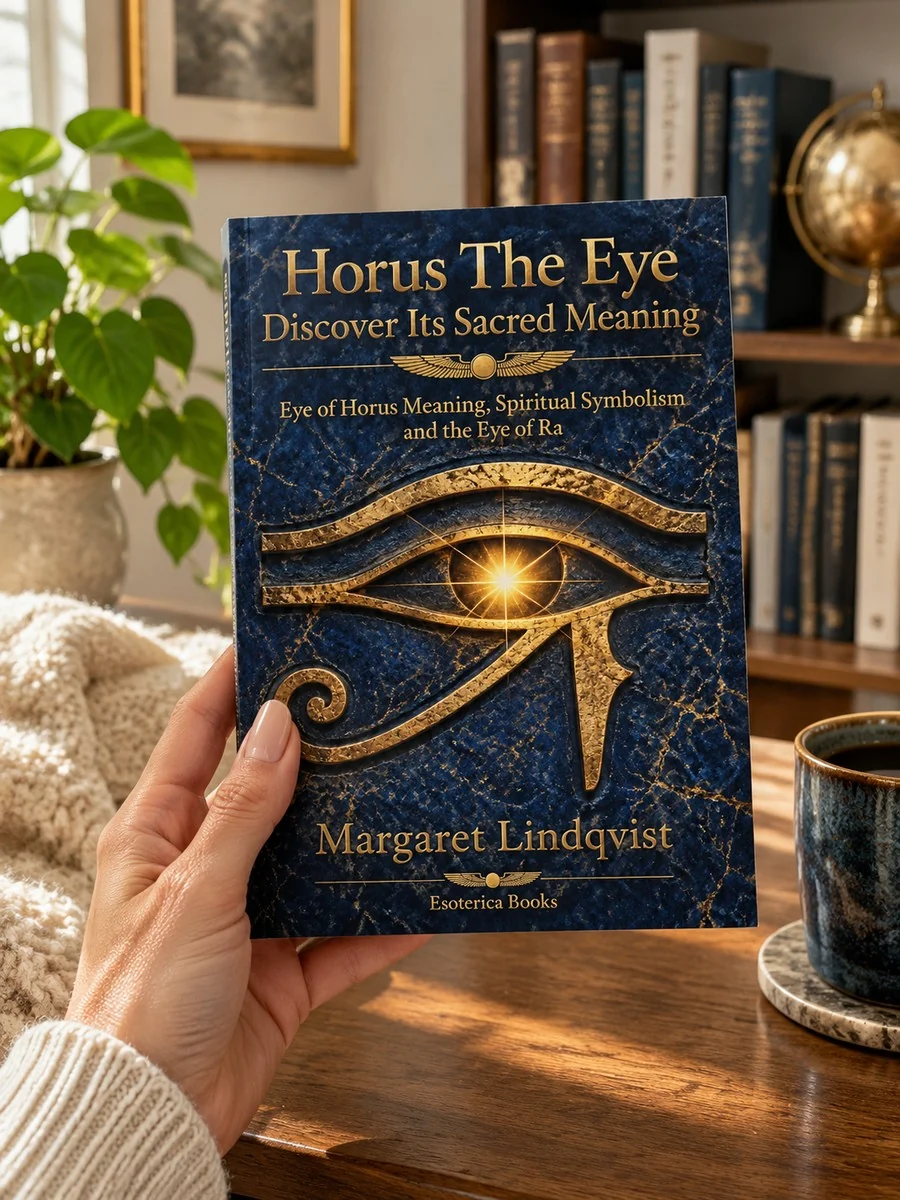
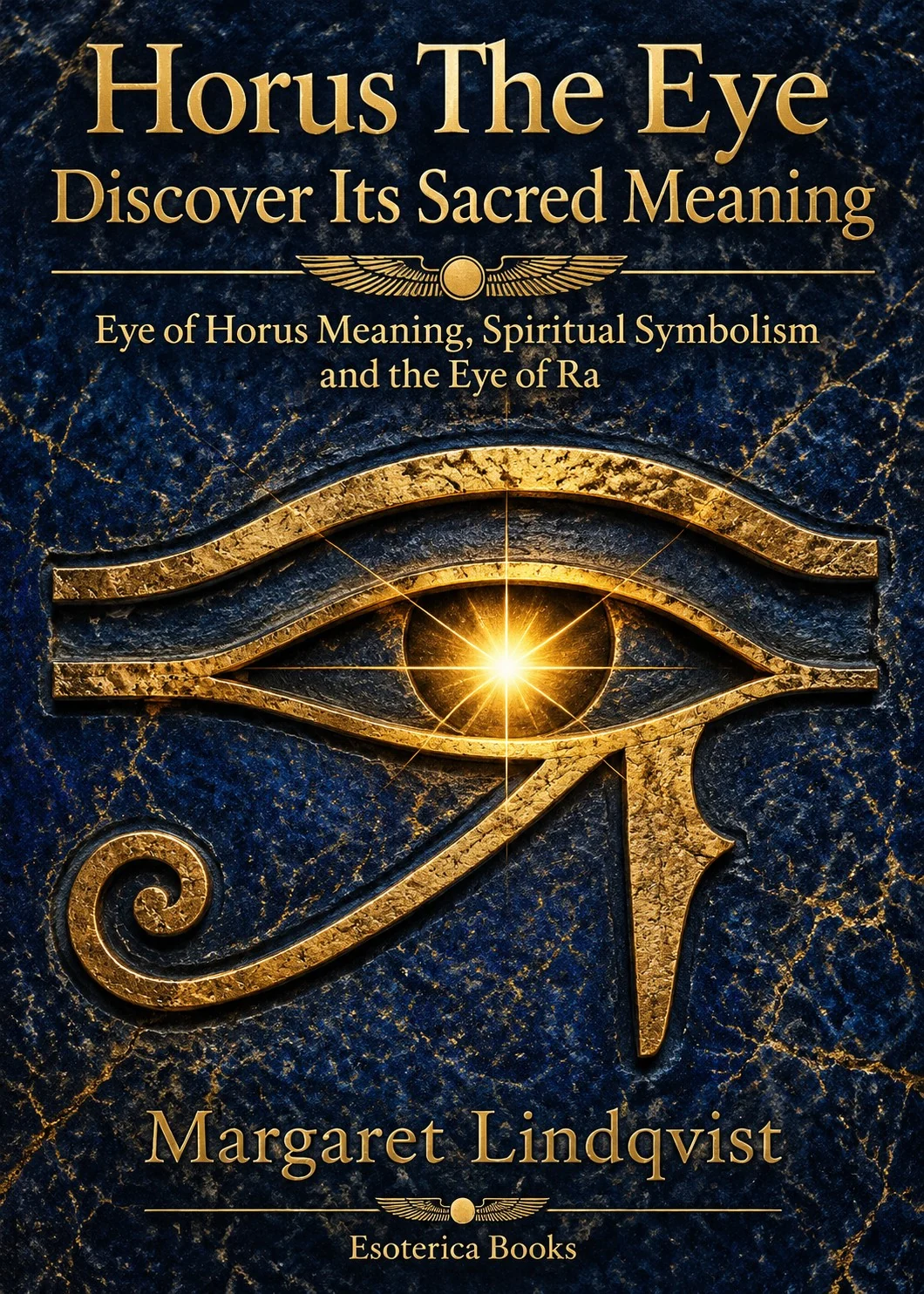
Horus The Eye: Discover Its Sacred Meaning
Discover the Eye of Horus, its Egyptian symbolism, and the meaning behind its distinctive sacred details.
What does the Eye of Horus represent, and how can you recognize its meaning? This beginner-friendly guide explores the ancient Egyptian Wedjat, from its distinctive eyebrow, curved markings, and lower spiral to its traditional associations with restoration, wholeness, and protection. Discover the mythology behind Horus's restored eye, understand how the Eye of Horus differs from the Eye of Ra, and explore the interpretations of its left and right forms. The five-step Sacred Gaze method brings historical symbolism into personal observation, journaling, and thoughtful spiritual reflection.
The Eye of Horus, or Wedjat, belongs to the religious and mythological imagery of ancient Egypt. Its associations with restoration, wholeness, and protection emerge from the mythology of Horus's injured and restored eye, while its later interpretations demonstrate how symbols can acquire additional meanings across spiritual traditions.


📝 Description: Horus The Eye: Discover Its Sacred Meaning
📖 Why choose it
Why this book is worth reading
The Eye of Horus is frequently encountered in jewelry, artwork, and contemporary spiritual imagery, but recognizing the symbol is only the beginning of understanding it. This guide provides a useful foundation for distinguishing historical Egyptian symbolism from later esoteric interpretations. Its particular strength is the Sacred Gaze method, which turns visual observation into an organized process of learning and reflection. Rather than relying on vague mystical language, it encourages readers to examine specific details, understand their context, and develop a considered personal interpretation.
⭐ Reader reviews
Reader rating
This introduction succeeds at making the Eye of Horus approachable without reducing its Egyptian background to a collection of modern mystical associations. The strongest material is the clear distinction between the Eye of Horus and the Eye of Ra, the explanation of the six mathematical fractions, and the practical first-encounter exercise. The Sacred Gaze framework gives the material a recognizable progression from visual observation to personal interpretation. We also appreciate the distinction between traditional lunar and solar symbolism and later esoteric conventions. One limitation: experienced Egyptology readers will find the treatment introductory, with little depth on the wider historical and archaeological context. For beginners, however, its clarity is a genuine strength.
❓ Frequently asked questions
📖 Who should read this
Ideal for beginners exploring ancient Egyptian spirituality, readers curious about the Eye of Horus meaning, and anyone interested in symbolic imagery, mythology, and reflective spiritual practices. Particularly suitable for readers who appreciate clear explanations alongside simple drawing and journaling exercises.
🎯 Key themes and symbolism
Egyptian Symbolism
Restoration and Wholeness
Sacred Eye Imagery
Personal Reflection
📜 Historical context
📚 Glossary
- Wedjat
- Horus
- Seth
- Eye of Ra
- Wedjat amulet
- Sacred Gaze
📔 Questions to reflect on
- Which feature of the Eye of Horus attracts your attention first: the eyebrow, the eye, the curved markings, the descending line, or the lower spiral? What does that detail bring to mind?
- What do restoration, wholeness, and protection mean in your own understanding of the Eye of Horus, and which of these traditional themes resonates most strongly with you?
- How might understanding the difference between the Eye of Horus and the Eye of Ra change the way you interpret Egyptian-inspired symbols in artwork, jewelry, or personal objects?
📖 Read on the blog
✍️ More books by this author Margaret Lindqvist



🏛 Books from this publisher Esoterica Books
All books from this publisher →



You might also like
See more →
Have a question about this item?
Ask about the edition, condition, delivery or anything else — we reply by email or phone, usually within a day.
