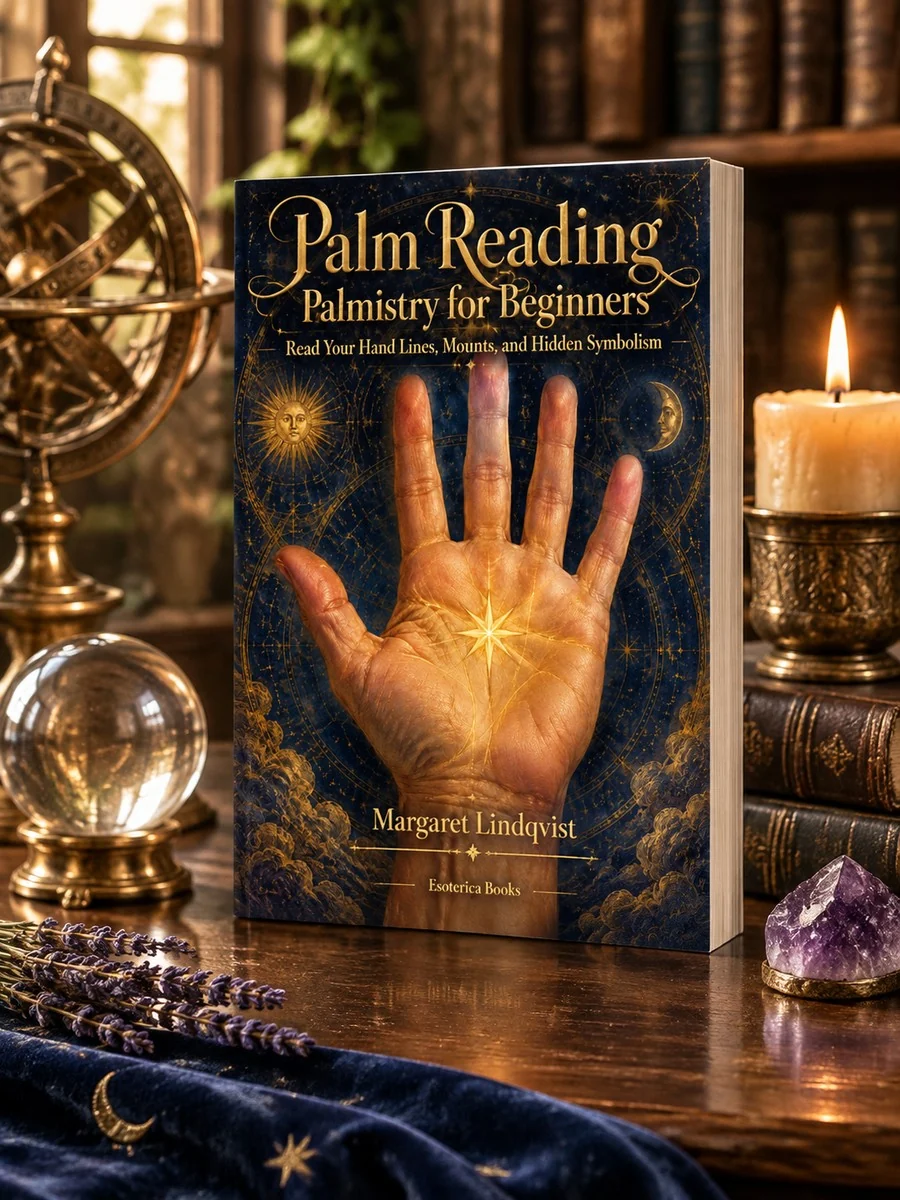
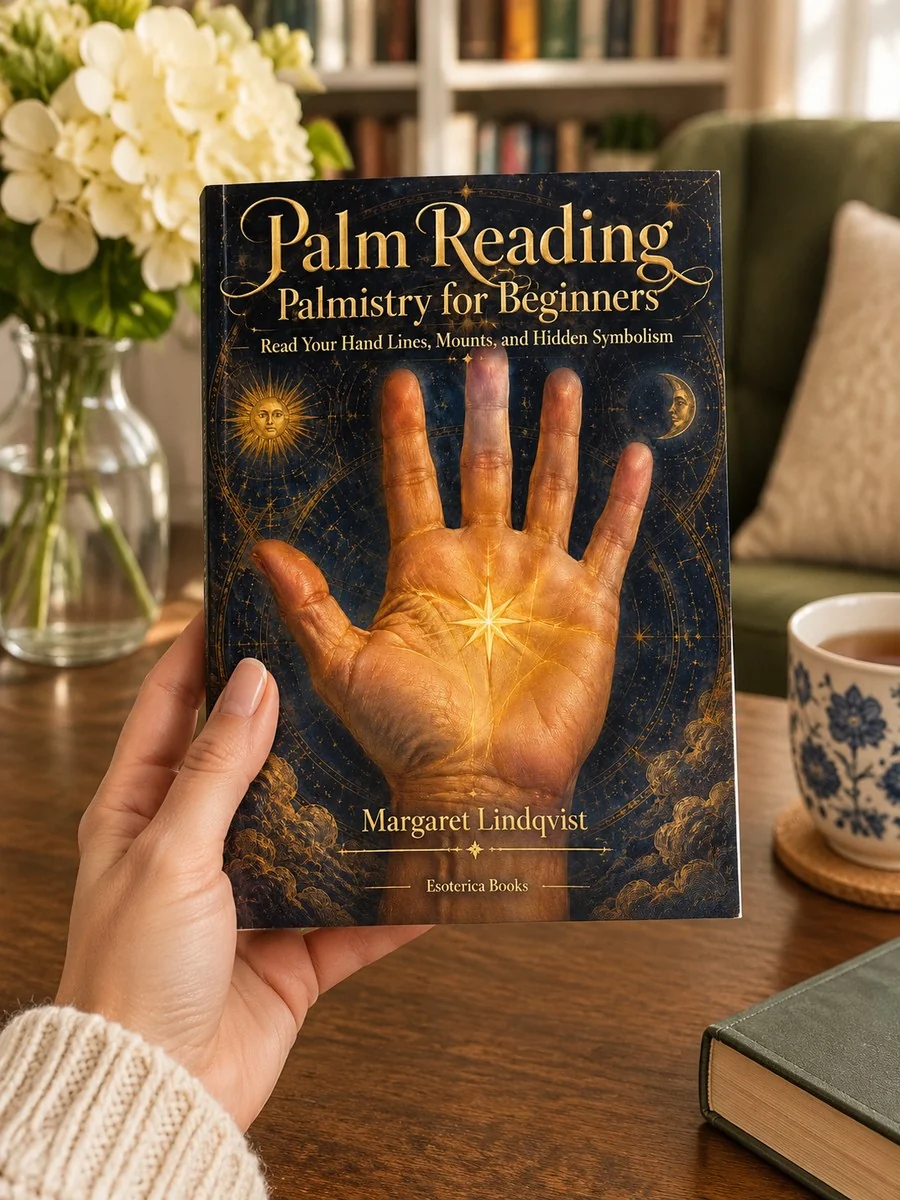
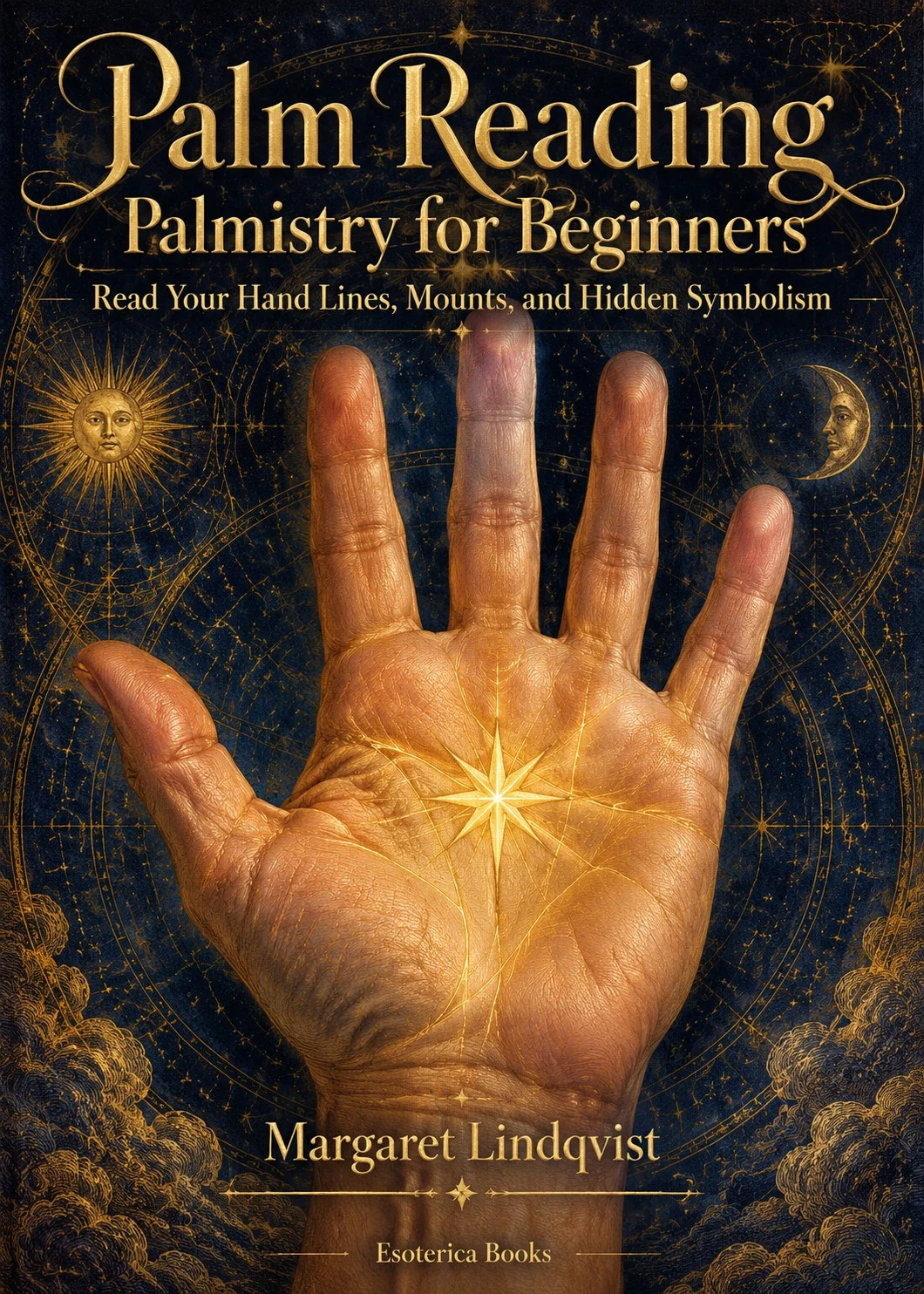
Palm Reading Palmistry for Beginners
Learn to read your heart, head, and life lines, explore the seven mounts, and discover the symbolism of your hands.
Discover the traditional art of palmistry with a practical, beginner-friendly approach to reading the hands. Learn to identify the heart line, head line, and life line, recognize the four elemental hand shapes, and explore the seven palm mounts, fingers, thumbs, and distinctive markings. Margaret Lindqvist introduces the Fourfold Hand Reading method: Observe, Explore, Connect, Interpret, and Reflect. Through clear instructions, guided exercises, sample readings, and a personal palmistry journal, you'll build the skills to examine both hands and develop your own thoughtful interpretation of their symbolism.
Palmistry is a traditional interpretive practice that examines the lines, shapes, mounts, fingers, and other features of the hands. Its symbolic vocabulary includes elemental hand types, planetary mount names, and interpretations that vary among different schools of practice.


📝 Description: Palm Reading Palmistry for Beginners
📖 Why choose it
Why this book is worth reading
The appeal of palmistry is easy to understand: your hands are always with you, yet their lines and shapes can seem surprisingly difficult to interpret. This book gives you a practical starting point. Instead of memorizing disconnected meanings, you'll learn to identify individual features, compare their traditional associations, and bring them together into a complete reading. The five-step method also encourages careful observation and written reflection, making palmistry an approachable personal practice rather than a collection of mysterious rules.
⭐ Reader reviews
Reader rating
Margaret Lindqvist takes a sensible, observation-first approach to an introductory subject that can easily become a jumble of symbolic definitions. The strongest feature of the preview is the Fourfold Hand Reading method, which gives beginners five clear stages for moving from visible hand features to personal interpretation. The first exercise is particularly useful: it specifies the lighting, materials, hand position, and details to record when examining the heart line. The contents extend this foundation into hand shapes, mounts, markings, comparisons, and complete readings. One limitation: experienced palmists looking for advanced comparative schools or extensive historical scholarship may find the introductory scope too basic. Overall, a clearly organized starting point.
❓ Frequently asked questions
📖 Who should read this
Ideal for beginners curious about palm reading palmistry, traditional symbolism, and self-discovery. Also suitable for anyone who wants a structured reference for comparing both hands and practicing thoughtful readings with willing friends.
🎯 Key themes and symbolism
Major Palm Lines
Elemental Hand Shapes
Seven Palm Mounts
Traditional Hand Symbolism
📜 Historical context
📚 Glossary
- Heart Line
- Head Line
- Life Line
- Mounts
- Dominant Hand
- Fate Line
📔 Questions to reflect on
- What did you notice about the shape, proportions, and natural features of your hands before assigning them any symbolic meaning?
- How do the traditional associations of your heart line, head line, and life line connect with the experiences and reflections you have recorded?
- What differences do you observe between your dominant and nondominant hands, and how might you explore their traditional symbolism in your personal palmistry journal?
📖 Read on the blog
✍️ More books by this author Margaret Lindqvist
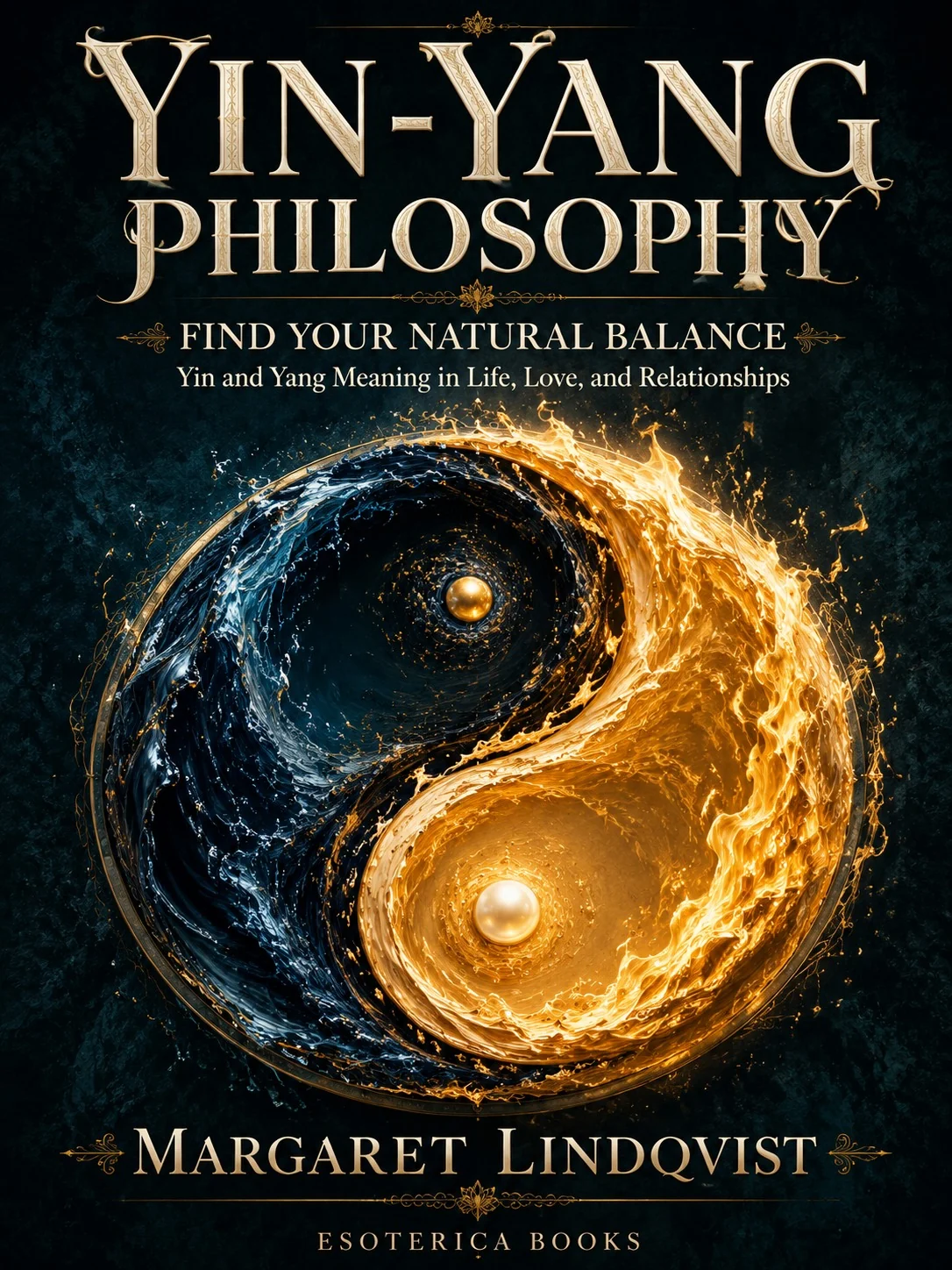


🏛 Books from this publisher Esoterica Books
All books from this publisher →
You might also like
See more →
Have a question about this item?
Ask about the edition, condition, delivery or anything else — we reply by email or phone, usually within a day.
