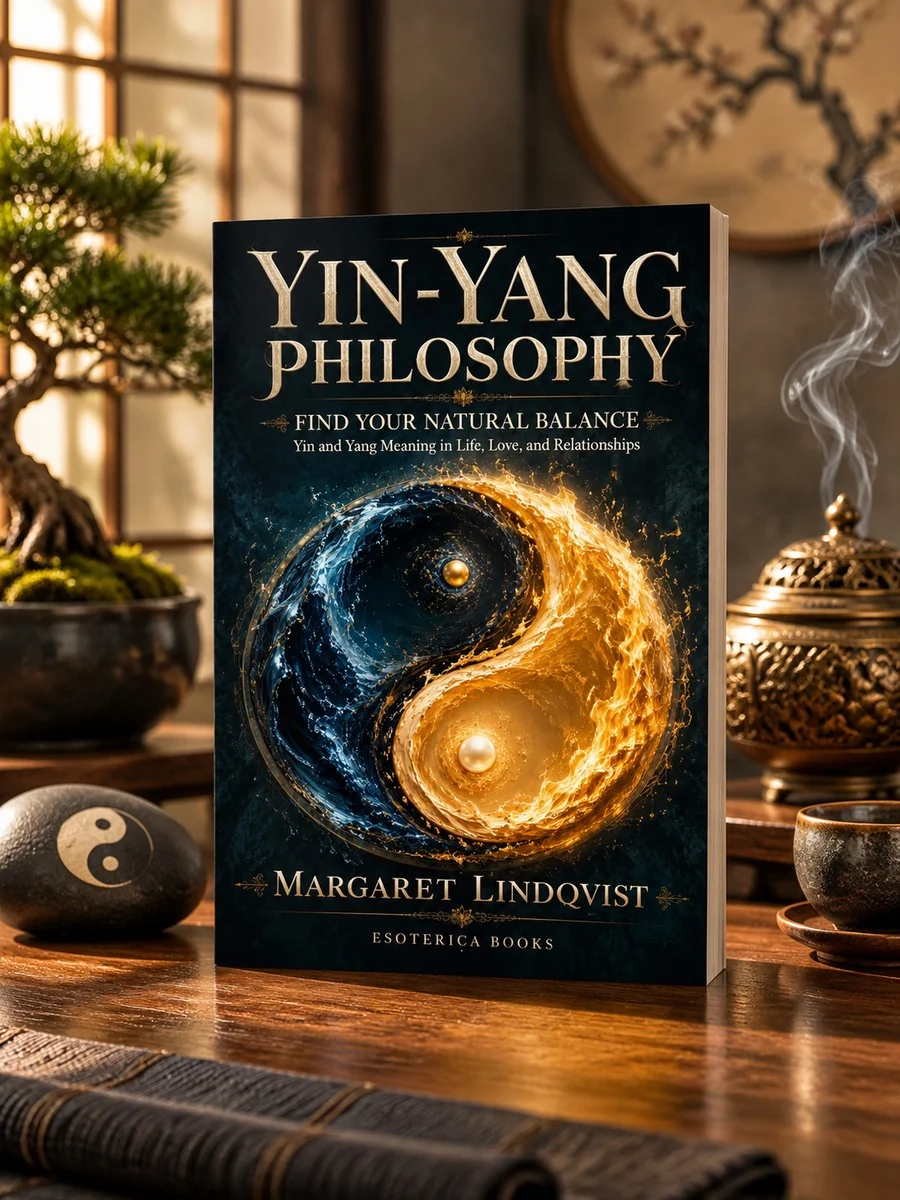
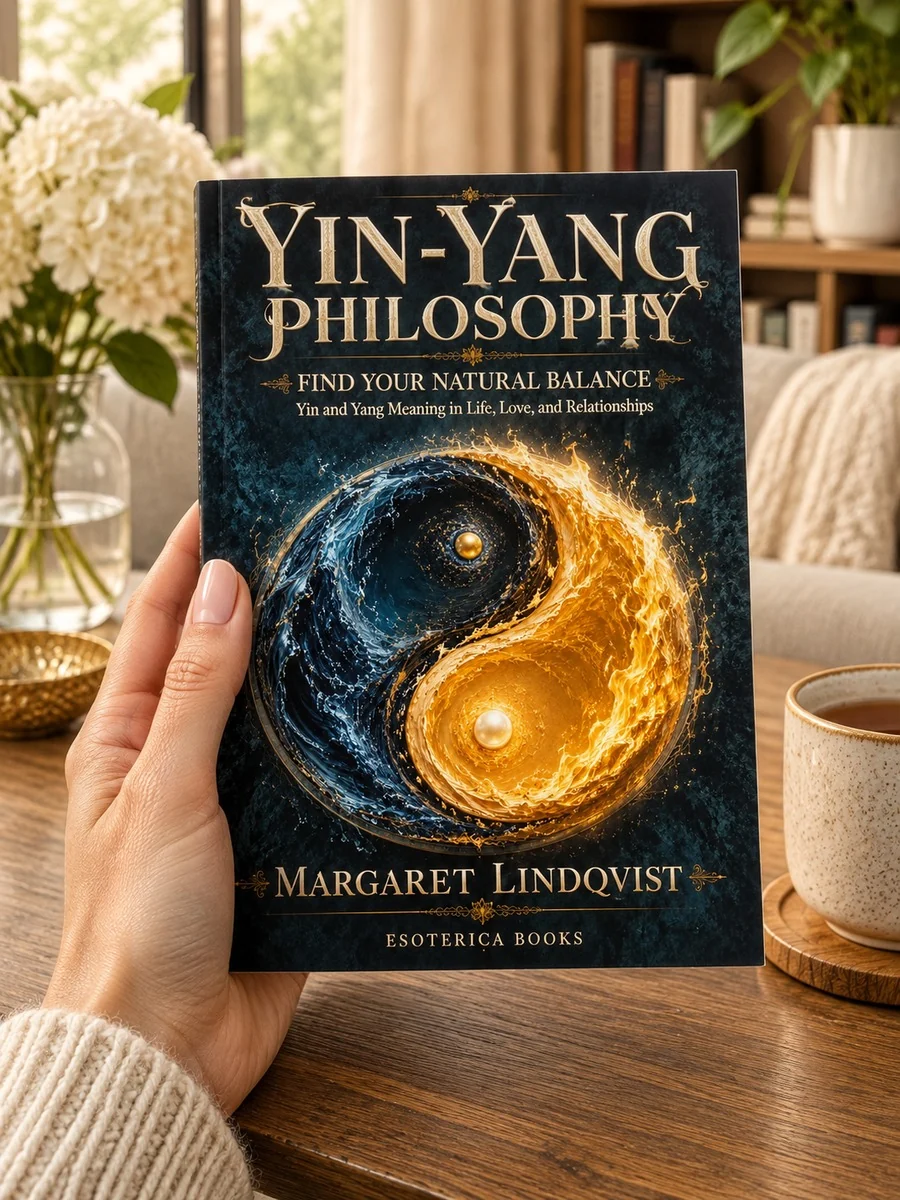
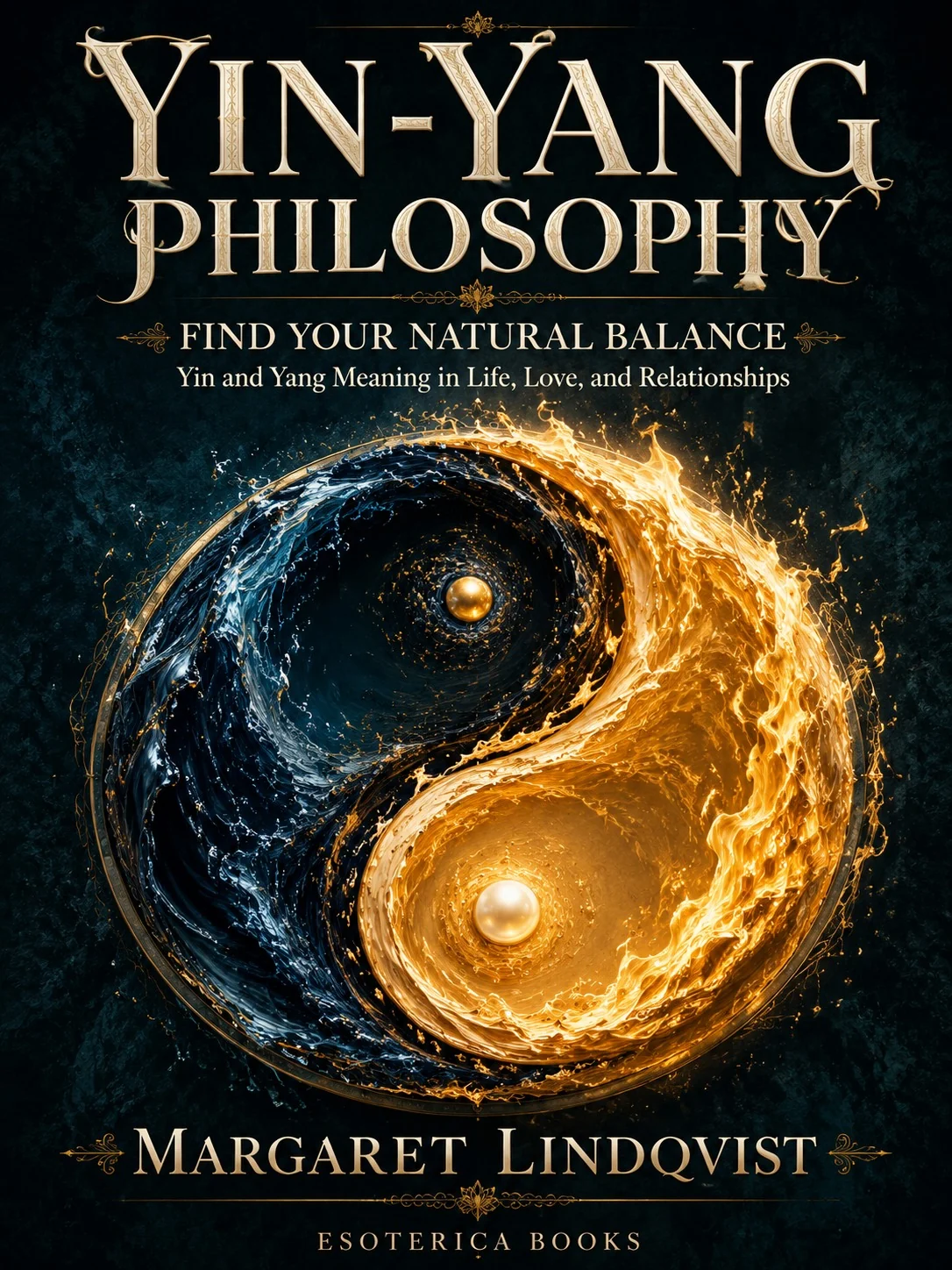
Yin-Yang Philosophy: Find Your Natural Balance
Discover what yin and yang really mean—and bring their changing balance into everyday life.
What does yin and yang mean, and how can this Taoist philosophy help you understand everyday life? Margaret Lindqvist introduces the complementary qualities of stillness and movement, darkness and light, receptivity and action. Beginning with the familiar black-and-white taijitu symbol, the book develops a practical five-step reflection method called The Turning Wheel: Notice, Name, Pair, Adjust, and Return. Explore personal habits, romantic relationships, friendships, everyday decisions, and the Five Phases while learning to recognize how complementary qualities continually influence one another.
Yin and yang are central concepts in traditional Chinese thought and are closely associated with Taoist philosophy. They describe complementary, interdependent qualities whose relationship changes with circumstances, offering a way to contemplate harmony with the Dao, or the Way.


📝 Description: Yin-Yang Philosophy: Find Your Natural Balance
📖 Why choose it
Why this book is worth reading
The familiar yin-yang symbol is easy to recognize, but its meaning becomes more interesting when applied to actual conversations, daily routines, and personal choices. Lindqvist provides a clear vocabulary for examining complementary qualities without turning them into rigid personality categories. The Turning Wheel gives readers a repeatable structure for reflection, while the twelve-minute introductory exercise makes the philosophy approachable from the first chapter. Particularly appealing is the attention given to both romantic relationships and the quieter rhythms of friendship.
⭐ Reader reviews
Reader rating
Margaret Lindqvist offers a welcoming, clearly organized introduction to yin and yang, with a particularly useful emphasis on practical application. The Turning Wheel is the book's strongest feature: its five steps translate an abstract philosophical idea into a sequence readers can apply to conversations, daily decisions, and relationships. The opening taijitu exercise is also a sensible teaching choice, making the symbol's curved boundary and contrasting circles part of an active reflection rather than merely an illustration. The contents provide a coherent progression through personal qualities, the Five Phases, love, and friendship. One limitation: the treatment is introductory, not a detailed historical or textual study of Taoist philosophy. Recommended for accessible exploration rather than advanced scholarship.
❓ Frequently asked questions
📖 Who should read this
Ideal for beginners curious about yin and yang meaning in life, love, and friendship, as well as readers who enjoy practical Taoist philosophy and guided self-reflection. Those seeking an advanced study of Taoist texts, historical scholarship, or detailed traditional cosmology may find this introduction too introductory.
🎯 Key themes and symbolism
Taoist Philosophy
Complementary Opposites
Everyday Relationships
Dynamic Balance
📜 Historical context
📚 Glossary
- Yin
- Yang
- Taijitu
- Dao
- Wuxing
- The Turning Wheel
📔 Questions to reflect on
- Where do you notice yin qualities such as stillness, receptivity, and inward movement in your everyday routine, and where do yang qualities such as activity and expression appear?
- In an important relationship, which complementary qualities receive the most attention, and which might benefit from more room?
- Think of a recent difficult choice: how could you use Notice, Name, Pair, Adjust, and Return to understand the qualities involved and choose a thoughtful next step?
📖 Read on the blog
✍️ More books by this author Margaret Lindqvist


🏛 Books from this publisher Esoterica Books
All books from this publisher →



You might also like
See more →
Have a question about this item?
Ask about the edition, condition, delivery or anything else — we reply by email or phone, usually within a day.
