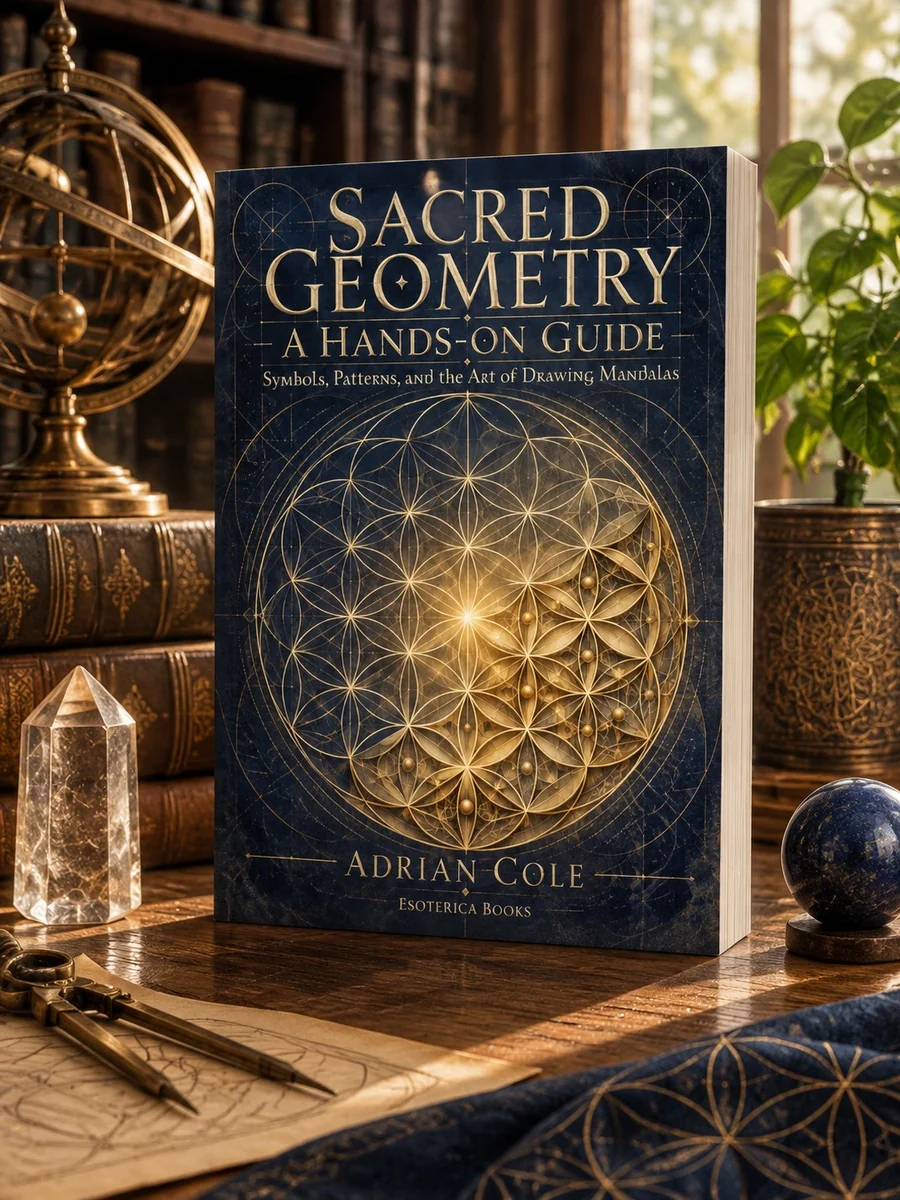
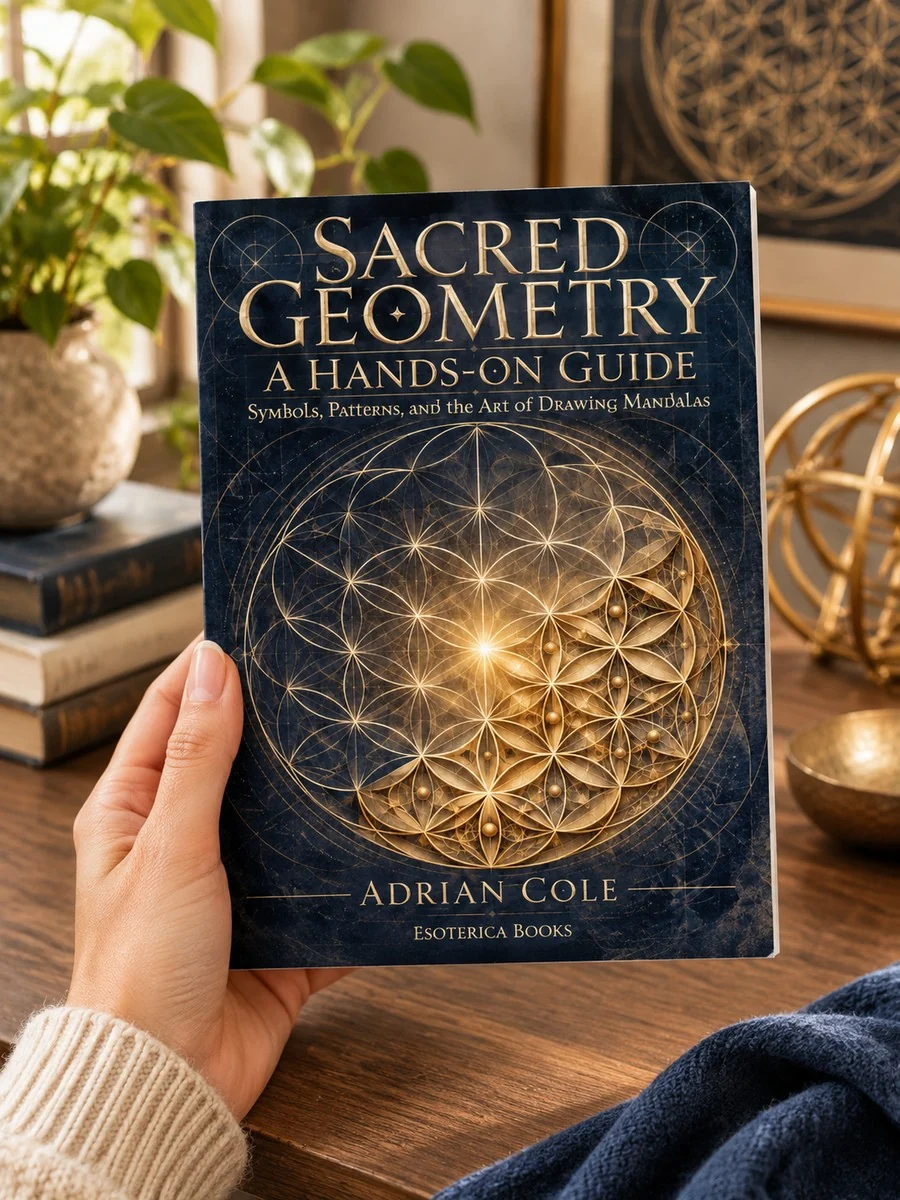
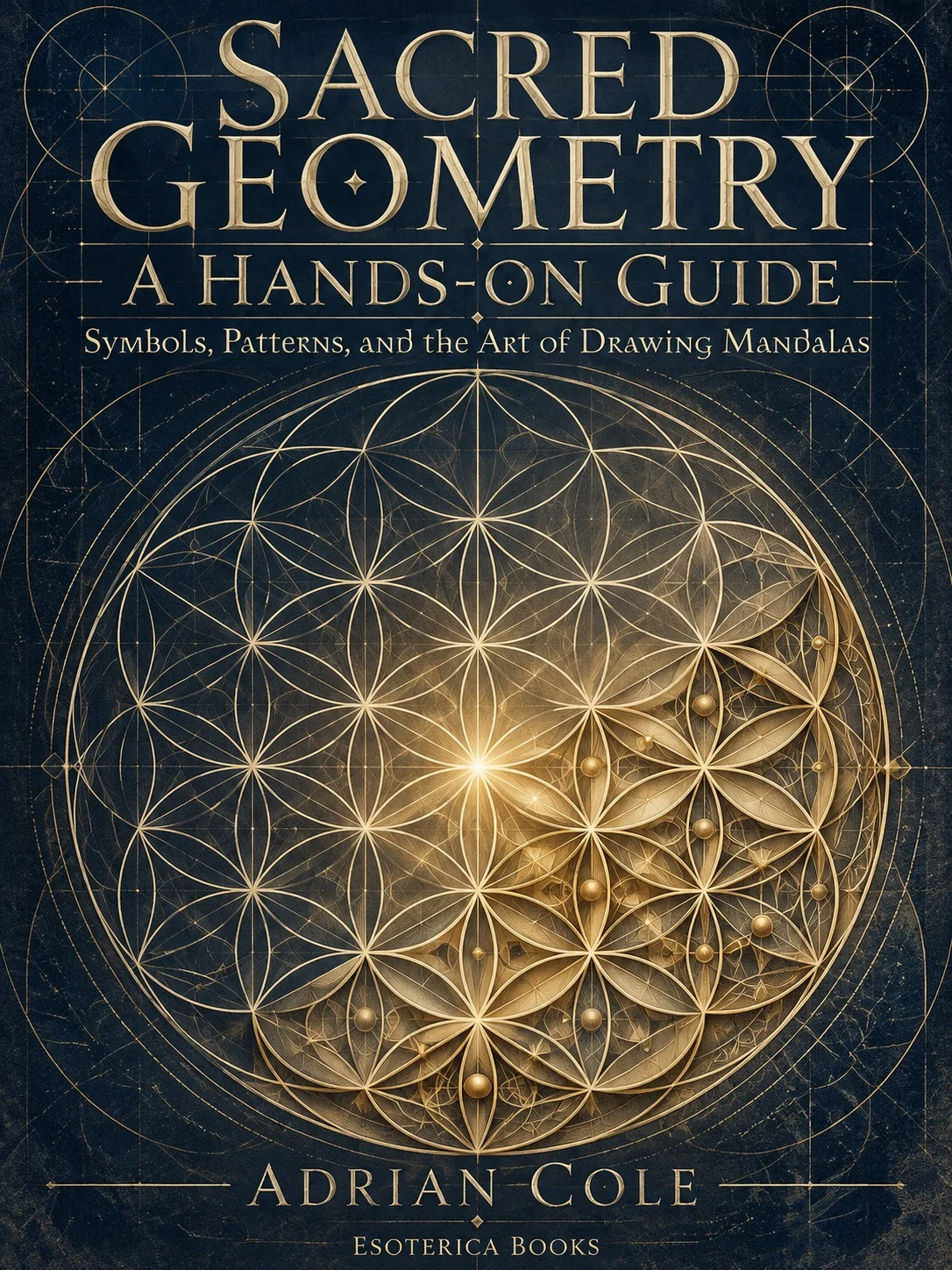
Sacred Geometry: A Hands-On Guide
Learn to draw sacred geometry, understand its symbols, and create your own mandalas with a compass and pencil.
Explore sacred geometry through simple shapes, traditional symbolism, and practical drawing exercises. This hands-on beginner's guide takes you from your first six-petal geometric flower to the Seed of Life, Flower of Life, Metatron's Cube, spirals, and intricate mandalas. Using the five stages of the S.U.H.A.E. Method—See, Understand, Hand-draw, Apply, and Explore—you will learn to recognize geometric patterns, construct them accurately with basic tools, interpret their traditional meanings, and incorporate your own designs into journaling, reflection, and creative practice.
Sacred geometry approaches shapes, proportions, symmetry, and repeating patterns as expressions of spiritual meaning, order, and harmony. Its symbols receive different interpretations across spiritual traditions, making it important to distinguish traditional associations from personal meanings.


📝 Description: Sacred Geometry: A Hands-On Guide
📖 Why choose it
Why this book is worth reading
Sacred geometry becomes much more approachable when you can draw the patterns yourself instead of simply looking at finished diagrams. This book gives you a practical starting point, with compass-and-pencil instructions that progress from overlapping circles to more intricate constructions. Its combination of geometric observation, traditional symbolism, and original artwork makes it useful both as a beginner's drawing guide and as a starting point for personal exploration. The emphasis is on learning by doing, with room to develop your own visual language.
⭐ Reader reviews
Reader rating
This is an approachable introduction that understands an important thing about sacred geometry: readers need to learn how the patterns are actually constructed, not just memorize their names. The opening six-petal flower exercise provides an immediate practical entry point, while the S.U.H.A.E. Method gives the material a coherent progression from observation to independent creation. The contents cover recognizable subjects, including the Vesica Piscis, Flower of Life, Metatron's Cube, Merkaba, and mandalas. We particularly appreciate the distinction between traditional symbolism and personal interpretation. One limitation is its deliberately beginner-oriented scope: readers seeking advanced mathematical proofs or detailed comparative histories of individual traditions will need a more specialized reference.
❓ Frequently asked questions
📖 Who should read this
Ideal for beginners interested in sacred geometry, spiritual symbolism, mandala drawing, and creative self-exploration. Also suitable for visual learners who enjoy working with simple drawing tools and discovering the patterns behind familiar shapes.
🎯 Key themes and symbolism
Sacred Geometry Symbols
Compass and Ruler Drawing
Geometric Mandala Art
Spiritual Symbolism
📜 Historical context
📚 Glossary
- Vesica Piscis
- Seed of Life
- Flower of Life
- Metatron's Cube
- Merkaba
- Mandala
📔 Questions to reflect on
- Which geometric shape speaks most strongly to you: the circle, triangle, square, hexagon, or spiral? What personal associations do you discover when you draw it?
- Where do you notice circles, symmetry, spirals, or repeating arrangements in your everyday surroundings, and how might you translate one observation into a geometric drawing?
- If you were to create an original mandala representing an intention that matters to you, which shapes, proportions, and repeating patterns would you choose, and why?
📖 Read on the blog
✍️ More books by this author Adrian Cole





🏛 Books from this publisher Esoterica Books
All books from this publisher →



You might also like
See more →



Have a question about this item?
Ask about the edition, condition, delivery or anything else — we reply by email or phone, usually within a day.
