
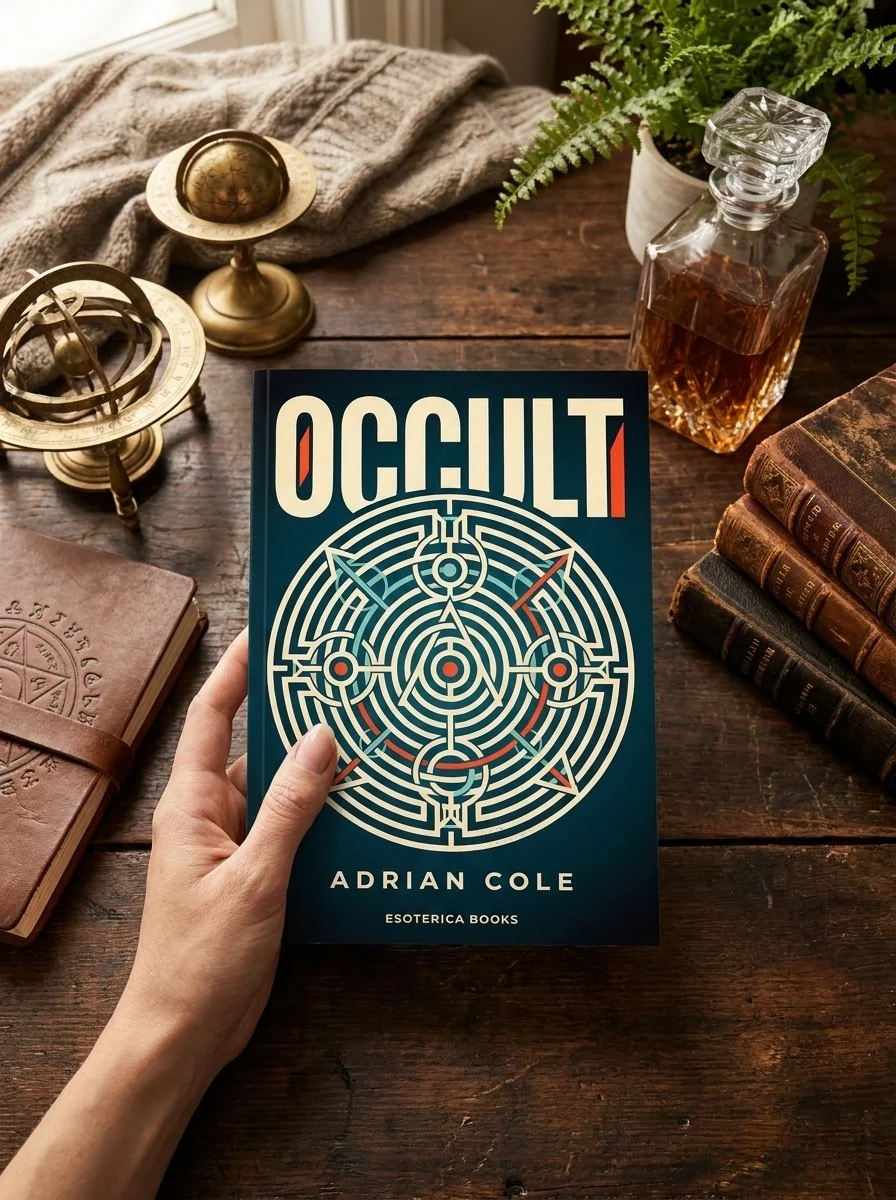
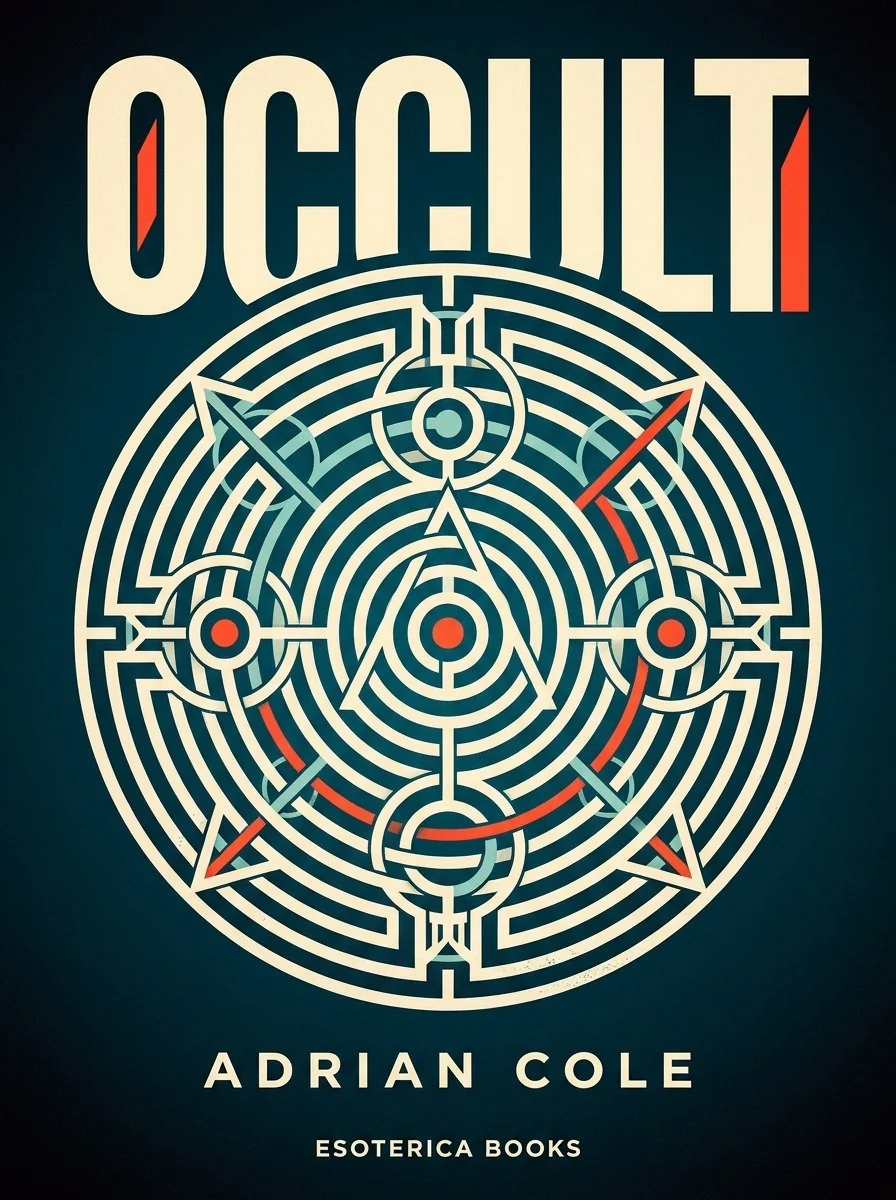
Occult: A Practical Guide to Hidden Traditions
Discover the symbols, philosophies, and rituals of the occult through a clear, practical four-step method.
What does the occult really mean, and how can you begin exploring its hidden traditions? Adrian Cole introduces the foundations of Western esotericism through recognizable symbols, traditional correspondences, ritual objects, tarot imagery, and historical philosophy. At the center of the book is the O.P.E.N. Method: Orient, Pick, Explore, Note. This repeatable approach helps beginners investigate unfamiliar material, distinguish traditional associations from personal interpretations, and develop a symbol journal. Twelve chapters progress from a first crescent-moon exercise to designing personal rituals and independently exploring historical texts.
The book approaches the occult through Western esotericism, a diverse field of spiritual and intellectual traditions concerned with hidden knowledge, symbolism, and philosophical interpretation. It treats individual traditions as distinct bodies of thought rather than presenting them as one universal system.


📝 Description: Occult: A Practical Guide to Hidden Traditions
📖 Why choose it
Why this book is worth reading
The greatest advantage of this guide is its practical starting point. Instead of asking beginners to memorize an entire symbolic vocabulary, it teaches them to investigate one object at a time. The O.P.E.N. Method provides a consistent framework for reading unfamiliar material, comparing traditional meanings, and recording personal observations. From a crescent-moon drawing to a five-card tarot spread and a personally assembled ritual arrangement, the exercises make an otherwise sprawling subject easier to navigate. It is an inviting introduction to a fascinating intellectual and spiritual landscape.
⭐ Reader reviews
Reader rating
Adrian Cole takes a sensible approach to a subject that is often made unnecessarily intimidating. The strongest feature is the O.P.E.N. Method, which gives beginners four memorable steps for exploring symbols, traditional associations, and personal interpretations. The twelve-chapter structure is well considered: it moves from a simple crescent-moon exercise and introductory candle ritual to Hermeticism, elemental correspondences, tarot, and historical reading. The practical details are appealing, particularly the five-card spread and the suggested candle and stone arrangements. The principal limitation is its introductory scope: readers seeking extensive historical scholarship, advanced ceremonial techniques, or detailed examinations of individual traditions will need more specialized books. A clear and accessible starting point.
❓ Frequently asked questions
📖 Who should read this
Ideal for curious beginners who want to understand what the occult actually encompasses, recognize familiar symbols, and explore accessible spiritual practices. Also suitable for readers who enjoy historical symbolism, tarot, astrology, and reflective journaling but prefer clear explanations over complicated jargon.
🎯 Key themes and symbolism
Occult Symbolism
Western Esotericism
Ritual Practice
Symbolic Correspondences
📜 Historical context
📚 Glossary
- Western Esotericism
- Hermeticism
- Correspondences
- Pentagram
- Major Arcana
- Classical Elements
📔 Questions to reflect on
- Which symbol first sparked your curiosity about the occult, and what traditional associations or personal memories influence the way you interpret it?
- When you encounter an unfamiliar occult tradition, how can you distinguish its historical teachings from your own interpretations and assumptions?
- If you were to create a personal symbolic arrangement using a candle, a stone, and a written intention, which objects and traditional correspondences would you choose, and why?
📖 Read on the blog
✍️ More books by this author Adrian Cole


🏛 Books from this publisher Esoterica Books
All books from this publisher →

You might also like
See more →





Have a question about this item?
Ask about the edition, condition, delivery or anything else — we reply by email or phone, usually within a day.
