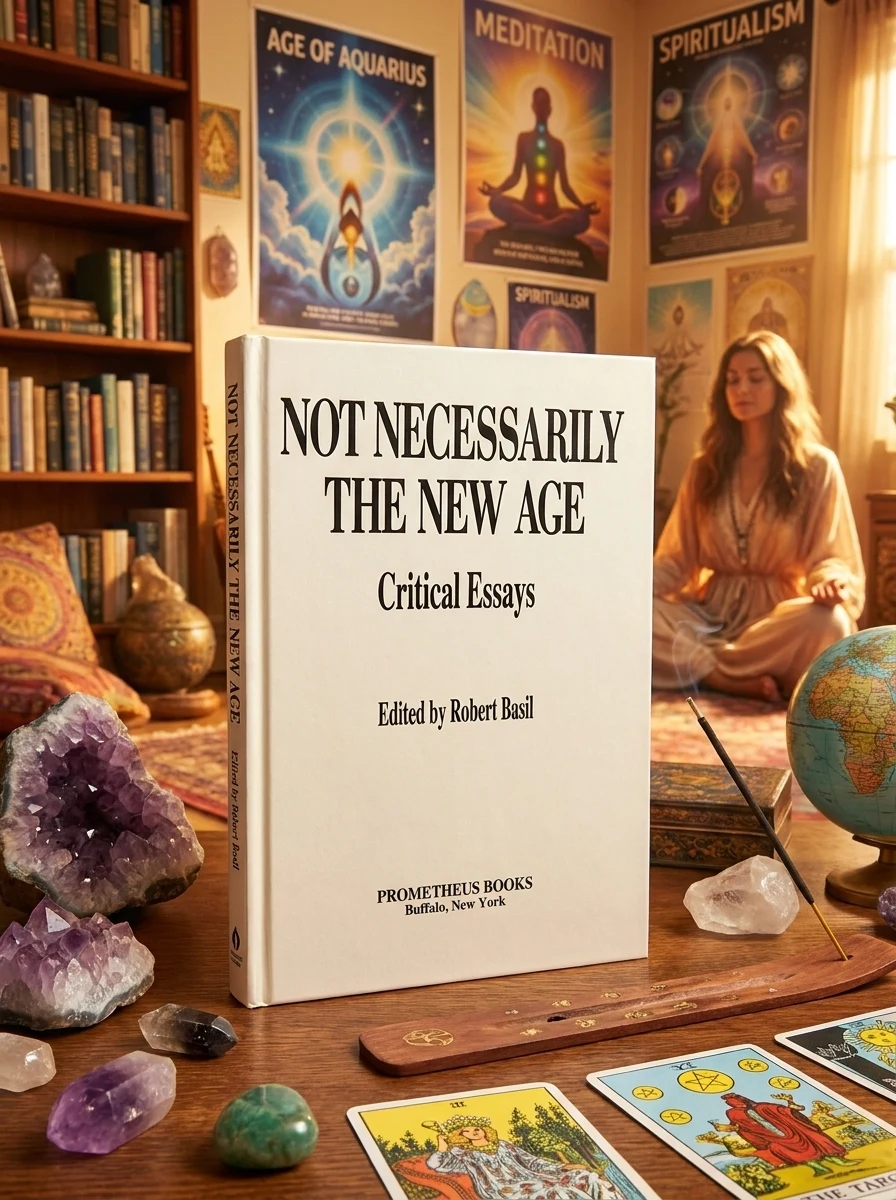
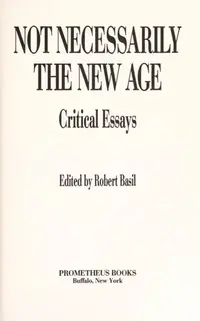
Not Necessarily the New Age
This edition can be ordered. No arrival date is confirmed.
Unmask the commercialized spirituality that replaced the 1960s counterculture's utopian dreams with a lucrative spiritual marketplace.
Robert Basil dissects the rapid ascent of New Age beliefs from fringe occultism to mainstream American culture. He argues that the promised Age of Aquarius never arrived, yet the baby-boomer generation eagerly purchased its substitute: a vast industry of crystals, gurus, and pseudo-scientific terminology. This volume explores how traditional religion's decline created a vacuum filled by channeled entities and spiritual supplies, transforming the hidden arts into a consumer product. It is a critical examination of how spiritual seeking became a commodity, stripping ancient mysteries of their depth for mass consumption.
This work stands as a critical critique within the late twentieth-century discourse on the commercialization of spirituality, challenging the mainstream acceptance of New Age movements that emerged from the 1960s counterculture. It examines the transition of esoteric practices from fringe occultism to a lucrative consumer industry.


📝 Description: Not Necessarily the New Age
💎 Expert review
📖 Why choose it
Why this book is worth reading
Readers who value intellectual rigor over spiritual comfort will find profound satisfaction in this text. It is ideal for those weary of the superficiality often found in modern wellness trends and seeking a historical explanation for why traditional religion declined without delivering the promised utopia. By exposing the vacuum filled by channeled entities and pseudo-scientific jargon, the book offers clarity to skeptics and seasoned occultists alike. It provides necessary context for understanding how ancient mysteries were stripped of depth for mass consumption. If you wish to understand the mechanics behind the spiritual marketplace and why the Age of Aquarius remains a commercial substitute rather than a realized era, this analysis is essential reading.
⭐ Reader reviews
Reader rating
I collect works on this subject and this is a worthy addition. It pairs well with more modern commentaries on the same tradition. Challenging in places, but never needlessly obscure. My only regret is not ordering it sooner.
As someone who reads a lot in this field, I can be picky. I found myself reading passages aloud just to sit with them. Great value for what you get.
Arrived faster than expected and well packaged. The symbolism is layered and generous to patient readers. Some archaic spellings slow things down. Good, with the caveats above.
Bought this as a gift for my sister and ended up ordering a second copy for myself. It rewards patience more than any book I've bought this year. Solid, if not essential.
This has been on my wishlist for months. The print is clean and easy on the eyes for long sessions. Solid binding, decent paper — holds up to heavy use. Already eyeing my next order.
Bought this as a gift for my sister and ended up ordering a second copy for myself. The language takes some getting used to, but it becomes part of the charm. Already eyeing my next order.
Basil delivers a sharp, unsparing dissection of the New Age phenomenon, effectively unmasking its roots in baby-boomer disillusionment. The text succeeds by tracing how hidden arts became consumer products, offering a compelling narrative on the loss of esoteric depth. However, this volume is not suited for seekers looking for practical healing crystals or gurus to guide their personal journey. It offers no comfort, only critique. Readers expecting affirming spiritual advice will likely find the tone too cold and academic. It is strictly for those interested in the sociology of belief and the commercial history of the occult, rather than anyone wishing to participate in the very marketplace Basil critiques.
❓ Frequently asked questions
📖 Who should read this
Readers interested in the sociology of religion, the history of the 1960s counterculture, and those seeking to understand the commercialization of modern spiritual practices.
🎯 Key themes and symbolism
Spiritual Commodification
Counterculture Legacy
Mainstream Occultism
💬 Quotes from the book
“The elusive, utopian state of affairs has yet to materialize, yet the paraphernalia of 'higher' consciousness is everywhere.”
“What used to be called 'the occult' is occult no longer, nor confined to a lunatic fringe.”
📜 Historical context
📚 Glossary
- Channeled Entities
- Age of Aquarius
- Occult
📔 Questions to reflect on
- How has the commercialization of spirituality changed your perception of its authenticity?
- In what ways do you see the promises of the 1960s counterculture reflected in today's spiritual markets?
- What distinguishes genuine spiritual inquiry from the consumption of 'spiritual supplies'?
🏛 Books from this publisher Prometheus Books
All books from this publisher →
 83
83

You might also like
See more →
 90
90

 88
88