US shipping Secure card payment Occult and esoteric books

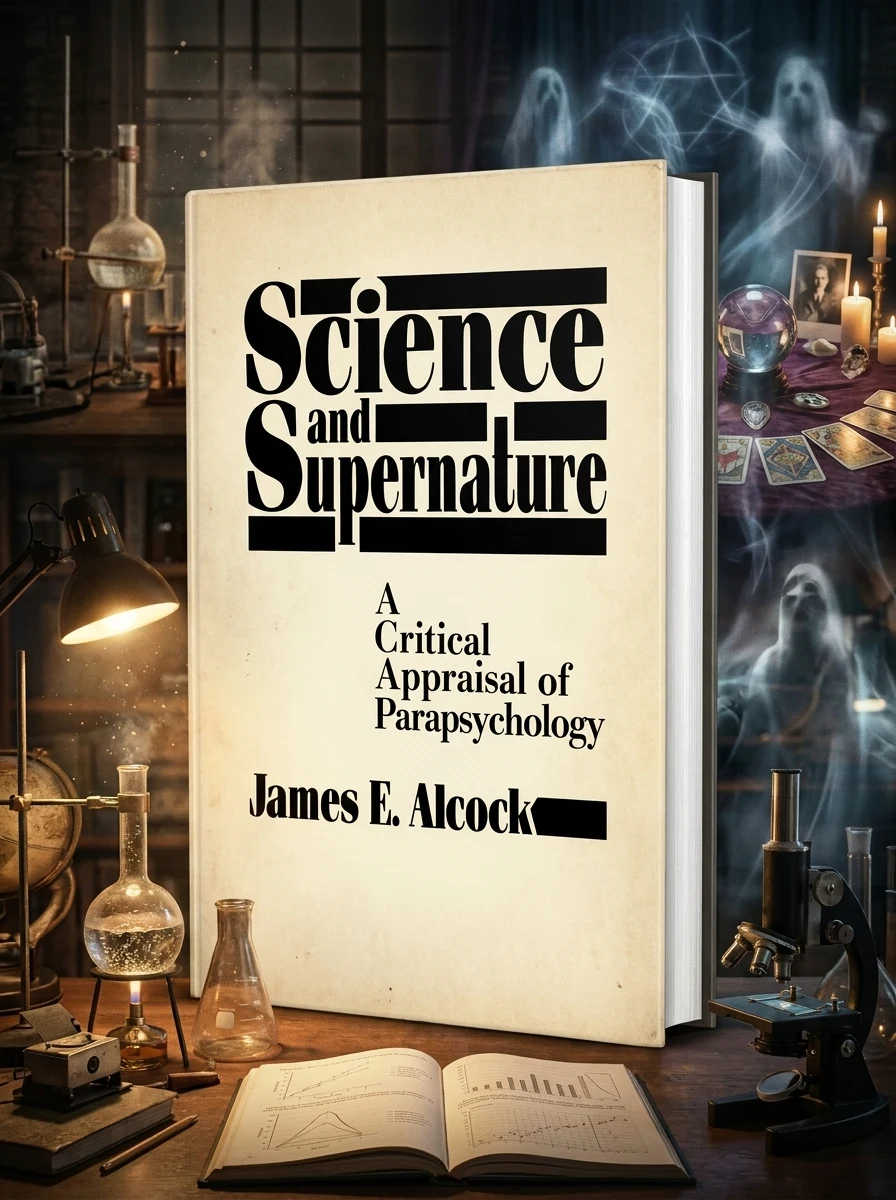
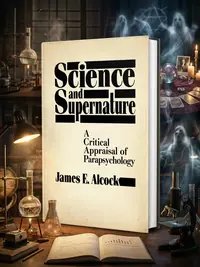
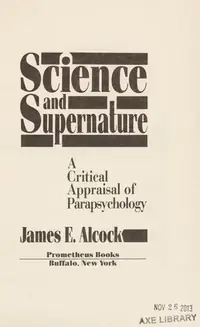
Science and Supernature

Alcock, James E
Reader rating
4.6
(2 reviews) 30 sold
In stock

Stock reported in the catalog; fulfillment is confirmed with your request.

📚 ABOUT THE BOOK

A rigorous skeptic dismantles the myths of psychic science with clinical precision and unflinching logic.

Alcock systematically dissects the history and methodology of parapsychology, exposing the logical fallacies and experimental flaws that have plagued the field for a century. He argues that claims of ESP or telepathy require accepting forces that defy known physics, lacking any positive definition. This text serves as a necessary counterweight to paranormal enthusiasm, offering a clear-eyed view of why scientific consensus rejects psychic phenomena while acknowledging the persistent human desire to believe in the supernatural.

Key themes
Scientific Skepticism Experimental Methodology Parapsychology Critique
Historical context

This work emerges from the long-standing tradition of scientific skepticism challenging paranormal claims, serving as a critical counter-narrative within the occult and esoteric bookshop's philosophy section. It represents the rigorous intersection of logical analysis and the history of parapsychology.


Difficulty
●●● Demanding
Fans will love it
Carl Sagan · James Randi · Michael Shermer · The Demon-Haunted World
🕯️ Occult Philosophy
🏛 Prometheus Books 📖 186 pages 📔 Hardcover 📐 Hardcover ISBN: 9780879755485
Fun fact
Alcock delivers a masterclass in critical thinking, stripping away the mystique surrounding parapsychology to reveal its methodological emptiness. It excels in clarity and logical rigor, making it essential for debunking pseudoscience. However, it will disappoint those seeking confirmation of psychic realities. It stands as a definitive skeptical anchor in a field often clouded by wishful thinking.
📚 This book appears in Esoterica Books

📝 Description: Science and Supernature

Is there more to our existence than modern science can measure? For more than a hundred years, parapsychology - the scientific study of paranormal phenomena - has tried to find the answer to this question. In Science and Supernature, psychologist James E. Alcock presents a critical evaluation of parapsychological research and reviews the current status of the evidence. The book is divided into two parts. In Part 1, Dr. Alcock discusses a number of key questions: - What are "psychic" phenomena? - If they exist, how can they be detected? - What is the evidence for "psi"? - Does parapsychology follow the rules of science? - Are the critics fair? He concludes that, to accept the reality of psychic phenomena, "we must accept that some force or process exists that cannot at this time be described in terms of positive properties, but only in terms of what it is not; a force that is capable of allowing for direct communication between two brains, regardless of the distance between them, and that allows the mind . . . to influence matter in such a way as to gain some desired goal." Part 2, "Psi in the Laboratory," is adapted from the Background Paper Dr. Alcock was commissioned to write for the National Academy of Sciences for its now controversial report "Evaluating Human Performance." Here, Alcock reviews two areas of research that are considered by parapsychologists to be among the "best cases" in the field: the study of psychokinesis (mind over matter) and/or clairvoyance using random-event generators, and the study of remote-viewing by physicists Russell Targ and Harold Puthoff at the Stanford Research Institute. Alcock's judgements are stimulating and fair-minded. This is an important book for everyone interested in the study of psychic phenomena.

💎 Expert review

💎
Esoterica Books editorial team
Occult literature desk
Alcock delivers a systematic dissection of parapsychology’s history, exposing persistent logical fallacies and experimental flaws with clinical precision. While intellectually robust, this text does not suit readers seeking validation of psychic abilities or those who prefer mystical over empirical explanations. It is a dense, logic-driven critique that may frustrate enthusiasts of the supernatural. However, for those committed to scientific rigor, it offers an invaluable perspective on why ESP claims lack positive definition and defy known physics. The book stands as a critical counterweight, demanding readers confront the uncomfortable reality behind persistent paranormal beliefs.
✓ EDITOR'S REVIEW

📖 Why choose it

📖

Why this book is worth reading

Readers who value intellectual honesty and logical consistency will find profound satisfaction in this text. It is ideal for those weary of uncritical acceptance of psychic phenomena, offering a necessary corrective to paranormal enthusiasm. If you appreciate rigorous dismantling of myths through clinical precision, this book provides the unflinching logic required to understand why scientific consensus rejects such claims. It appeals to skeptics who wish to acknowledge the human desire for the supernatural while firmly grounding their understanding in known physics and positive definitions. This volume is essential for anyone seeking a clear-eyed view of the field's methodological flaws.

⭐ Reader reviews

The starting rating comes from the team Esoterica Books —
⭐ Esoterica editorial review Editorial rating 4.6/5
★★★★
Readers interested in the philosophy of science, psychology students, and skeptics seeking a robust, evidence-based rebuttal to paranormal claims and pseudoscientific arguments.

Reader rating

4.6
Based on 2 reviews
5
1
4
1
3
0
2
0
1
0
S
Steven V. ✓ Verified purchase
June 23, 2025
A treasure

Ordered this after seeing it referenced in another book I was studying. The print is clean and easy on the eyes for long sessions.

E
Esoterica Books editorial team

Alcock delivers a systematic dissection of parapsychology’s history, exposing persistent logical fallacies and experimental flaws with clinical precision. While intellectually robust, this text does not suit readers seeking validation of psychic abilities or those who prefer mystical over empirical explanations. It is a dense, logic-driven critique that may frustrate enthusiasts of the supernatural. However, for those committed to scientific rigor, it offers an invaluable perspective on why ESP claims lack positive definition and defy known physics. The book stands as a critical counterweight, demanding readers confront the uncomfortable reality behind persistent paranormal beliefs.

❓ Frequently asked questions

He dismisses the *evidence* for them, arguing that the burden of proof has never been met, rather than asserting an absolute impossibility of such phenomena.
No, it is a critical evaluation. It will likely disappoint those seeking validation of psychic experiences, as it focuses on methodological failures and logical inconsistencies.

📖 Who should read this

Readers interested in the philosophy of science, psychology students, and skeptics seeking a robust, evidence-based rebuttal to paranormal claims and pseudoscientific arguments.

🎯 Key themes and symbolism

Scientific Skepticism

Experimental Methodology

Parapsychology Critique

💬 Quotes from the book

“We must accept that some force or process exists that cannot at this time be described in terms of positive properties.”

“A force that is capable of allowing for direct communication between two brains, regardless of the distance between them.”

📜 Historical context

Emerging from the late 20th-century debate over the scientific validity of parapsychology, this work aligns with the broader critical movement led by figures like Carl Sagan and James Randi. It addresses the tension between anomalous experience reports and the rigorous demands of empirical verification, marking a pivotal moment in defining the boundaries of acceptable scientific inquiry.

📚 Glossary

Psi
Parapsychology
Empirical Evidence

📔 Questions to reflect on

  1. When have you encountered a claim that seemed to defy logic, and how did you evaluate its credibility?
  2. What distinguishes a scientific hypothesis from a paranormal belief in your own thinking?
  3. How does the lack of a physical mechanism affect your willingness to accept extraordinary claims?

🏛 Books from this publisher Prometheus Books

All books from this publisher →

You might also like

See more →