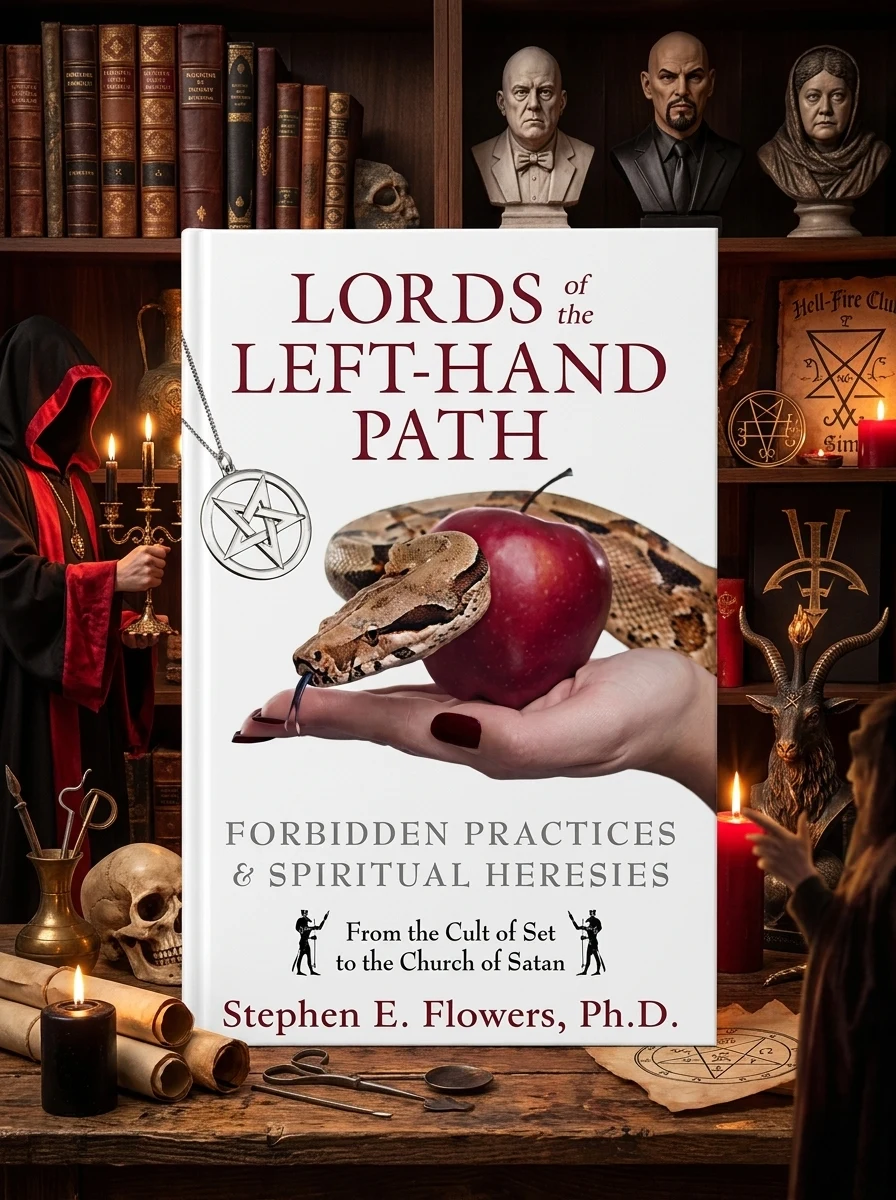
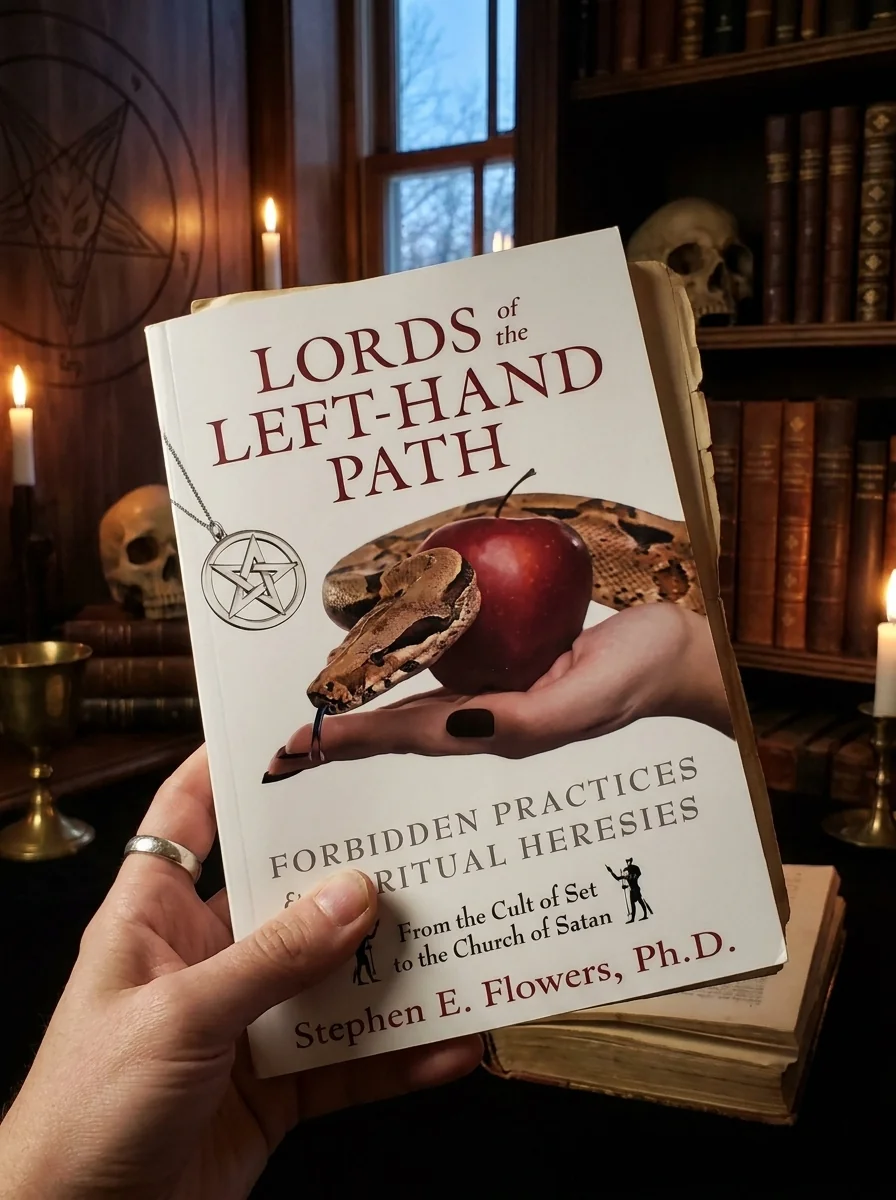
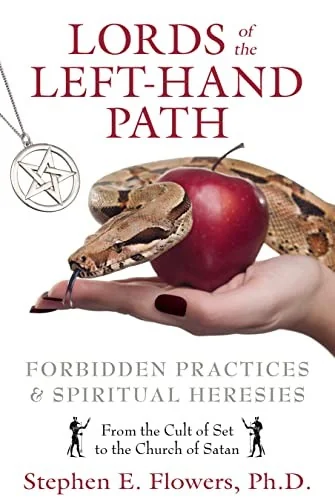
Lords of the Left-Hand Path: Forbidden Practices & Spiritual Heresies
✍️ Flowers, Stephen EDr. Stephen Flowers offers a scholarly yet accessible exploration of the Left-Hand Path, tracing its evolution from ancient Tantric roots to its contemporary expressions. This comprehensive work dissects the philosophies, practices, and historical impact of spiritual heresies centered on individual autonomy rather than divine subservience. Flowers illuminates the lives and contributions of pivotal figures like Aleister Crowley and the Marquis de Sade, alongside examining diverse groups such as the Hell-Fire Club and various Gnostic and Sufi sects. He meticulously defines the LHP's core tenets, distinguishing it from the traditional Right-Hand Path's emphasis on union with a higher power.


Praise for this book
“I recommend this book highly to those who wish to challenge and explore their choice of paths to divinity.”
📝 Description: Lords of the Left-Hand Path: Forbidden Practices & Spiritual Heresies
💎 Expert review
📖 Why choose it
Why this book is worth reading
This book is essential for the intellectually curious seeker who values self-sovereignty and spiritual independence above traditional dogma. Dr. Flowers provides a rigorous, scholarly exploration that appeals to those interested in the historical evolution of heretical practices and the philosophies of figures like Crowley and de Sade. Readers will gain a nuanced understanding of the Left-Hand Path’s core tenets, distinguishing them from the Right-Hand Path’s emphasis on divine union. It is ideal for historians of religion, occult practitioners, and philosophers seeking to comprehend the roots of spiritual heresy. By tracing these doctrines from Tantric origins to contemporary expressions, Flowers offers a comprehensive map for navigating the complex terrain of individual autonomy in spiritual practice.
⭐ Reader reviews
Reader rating
Flowers delivers a meticulous academic dissection of the Left-Hand Path, making it a valuable resource for serious students of esoteric history and philosophy. The text effectively contextualizes pivotal figures and groups within the broader narrative of spiritual defiance. However, this work is not suited for casual readers seeking practical spell-casting instructions or those who prefer devotional, Right-Hand Path spirituality focused on divine subservience. It demands a scholarly mindset and an appreciation for historical analysis over mystical experience. Readers looking for dogmatic religious guidance will find its emphasis on individual autonomy jarring. Ultimately, it is a dense, intellectual journey into forbidden doctrines rather than a manual for spiritual initiation.
❓ Frequently asked questions
📖 Who should read this
If you're drawn to spiritual paths less traveled, or seek to understand the historical currents of occult rebellion and self-empowerment, this book is essential. It's for anyone dissecting the nuanced history of alternative spirituality and those curious about the philosophical underpinnings of individualistic esoteric traditions.
🎯 Key themes and symbolism
Defining the Path
The book meticulously unpacks the core concept of the Left-Hand Path, moving beyond simplistic or sensationalist interpretations. It defines LHP as a spiritual current emphasizing individual sovereignty, self-deification, and the conscious forging of one's own spiritual law, often in direct opposition to conventional morality or external divine authority.
Historical Exemplars
Flowers provides a rich tapestry of historical figures and groups associated with the LHP. From ancient Gnostic sects and heretical Sufi mystics to infamous occultists like Aleister Crowley and Anton LaVey, the book highlights their unique contributions to the tradition, demonstrating the diverse manifestations of this rebellious spiritual impulse across centuries.
Path Divergence
A central theme is the clear delineation between the Left-Hand Path and the Right-Hand Path. The book explains that while the RHP seeks union with and dependence on a higher power, the LHP champions individual freedom, self-empowerment, and the pursuit of a 'higher law' based on personal knowledge and willpower, fundamentally challenging orthodox spiritual paradigms.
📜 Historical context
📚 Glossary
- Left-Hand Path
- Right-Hand Path
- Tantric Philosophy
📔 Questions to reflect on
- How do you define individual spiritual sovereignty in your own life, and what does it mean to forge your 'own spiritual law'?
- Reflect on a societal or religious norm you have personally felt compelled to question or defy. How does this align with the LHP principles discussed?
- Consider a historical figure from the book. How might their LHP perspective offer a different lens through which to view contemporary challenges or ethical dilemmas?