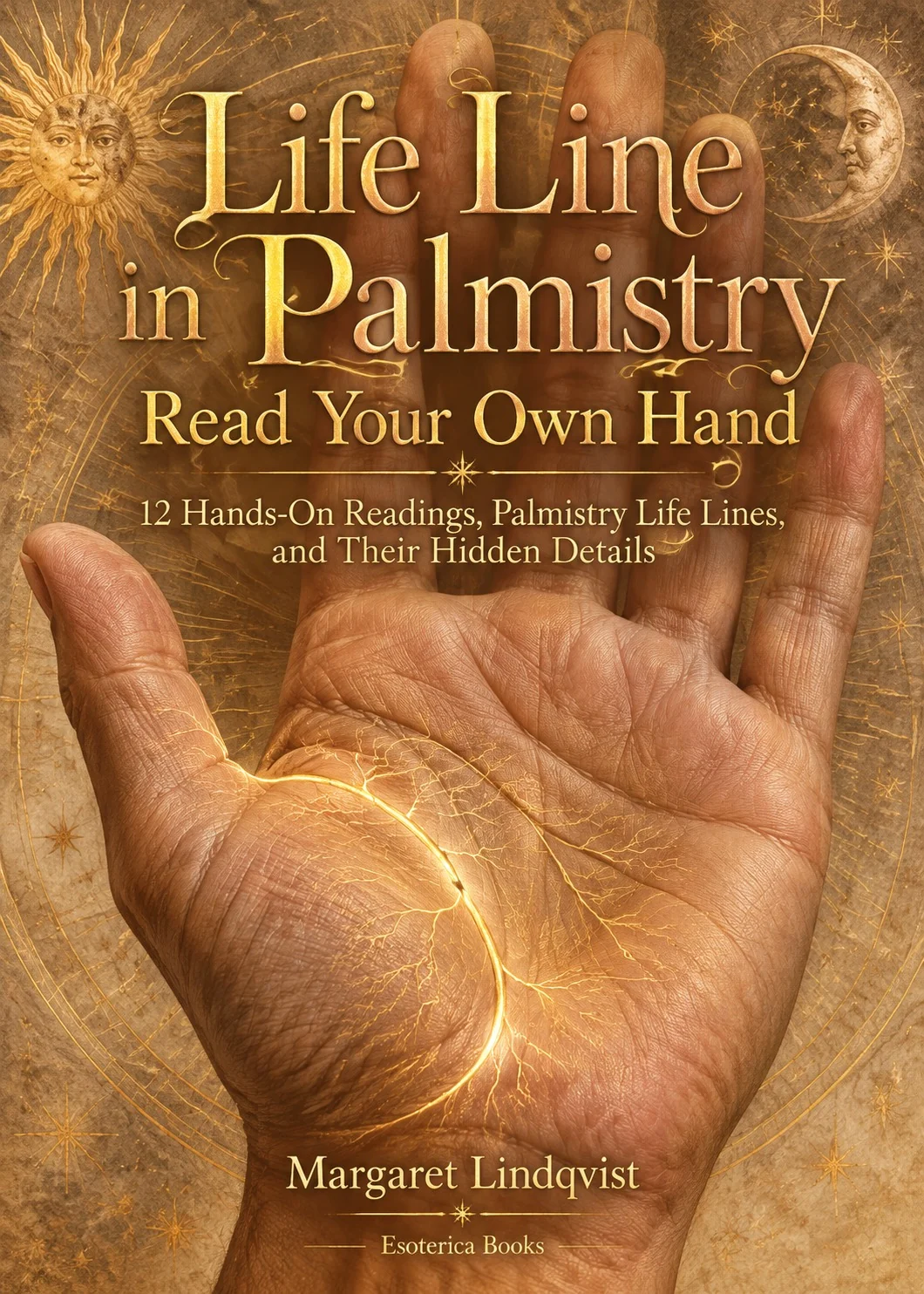
Life Line in Palmistry: Read Your Own Hand
Learn to trace, recognize, and interpret every detail of your palm's life line with a practical five-step method.
Discover the traditional art of reading the life line in palmistry with Margaret Lindqvist's beginner-friendly, hands-on guide. The Living Arc Method teaches you to locate the line, trace its shape, recognize breaks and branches, compare both hands, and bring individual markings together in a thoughtful reading. Explore deep and faint lines, wide and narrow curves, islands, forks, parallel markings, and traditional age divisions. With illustrated examples, twelve progressive exercises, and a personal palmistry journal, you can develop the skills to examine your own hand and read other willing participants' palms.
Palmistry is a traditional system of interpreting the lines, shapes, and features of the hand. Different schools approach the two hands and individual markings differently, making observation and awareness of interpretive traditions important parts of the practice.


📝 Description: Life Line in Palmistry: Read Your Own Hand
📖 Why choose it
Why this book is worth reading
The appeal of this guide is its emphasis on learning by looking. Instead of asking beginners to memorize a long list of palmistry meanings, Margaret Lindqvist offers a repeatable process for observing the whole life line before interpreting its details. The distinction between a genuine break, an island, and a chained section is especially useful for developing visual confidence. The twelve exercises and journal template also give readers a practical way to document their observations and build increasingly complete readings.
⭐ Reader reviews
Reader rating
Margaret Lindqvist takes a sensible, observation-first approach to a subject that beginners can easily overcomplicate. The Living Arc Method gives the reader five clear stages, moving from locating the line to interpreting its markings in context. Particularly useful are the distinctions between breaks, islands, and chained sections, alongside the side-by-side examination of both hands. The twelve chapters provide a logical progression, while the exercises and journal template encourage active practice rather than passive memorization. The guide is deliberately focused: readers looking for an extensive history of palmistry or advanced coverage of every palm line will need additional material. For learning the life line itself, however, its scope is well chosen.
❓ Frequently asked questions
📖 Who should read this
Ideal for beginners curious about the life line in palmistry, readers who want to understand the traditional meanings of individual palm markings, and anyone interested in developing a personal palm-reading practice. It also suits curious students who want a structured way to examine the hands of friends and family with their permission.
🎯 Key themes and symbolism
Life Line Interpretation
Palm Markings
Two-Hand Comparison
Practical Palmistry
📜 Historical context
📚 Glossary
- Life Line
- Mount of Venus
- Island
- Parallel Line
- Fork
- Active and Receptive Hands
📔 Questions to reflect on
- When you examine your life line, which features do you notice first: its curve, depth, length, or individual markings? How does looking more carefully change your initial impression?
- What differences can you observe between the life lines on your two hands, and what personal themes might these differences suggest within traditional palmistry?
- How would you describe your life line using only visible details before introducing traditional symbolic meanings? What changes when you consider the surrounding palm features as well?
📖 Read on the blog
✍️ More books by this author Margaret Lindqvist



🏛 Books from this publisher Esoterica Books
All books from this publisher →




You might also like
See more →


Have a question about this item?
Ask about the edition, condition, delivery or anything else — we reply by email or phone, usually within a day.
