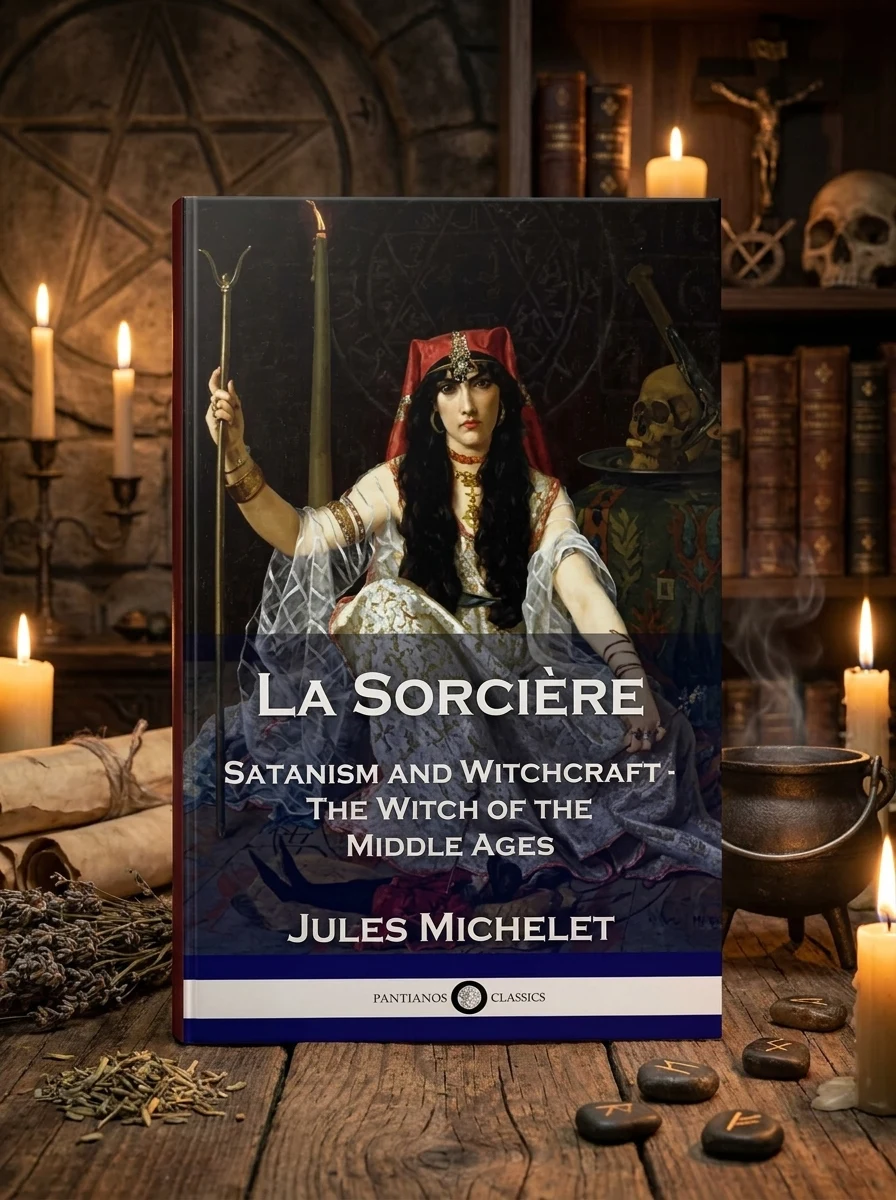
La Sorcière: Satanism and Witchcraft - The Witch of the Middle Ages
Stock reported in the catalog; fulfillment is confirmed with your request.
Unearth the hidden history of medieval European witchcraft, a tale of defiance and power.
Jules Michelet's seminal work, originally titled 'Satanism and Witchcraft,' explores the evolution of witchcraft from the Middle Ages through the 18th century. This English translation meticulously traces how ancient pagan beliefs merged with distorted Christian narratives to forge what became known as witchcraft. Michelet presents these practices not merely as superstition, but as a profound societal response to the pervasive Christian dominance of the era. Drawing on extensive historical sources, he offers a comprehensive and compelling narrative that illuminates the complex origins and enduring legacy of the witch figure.
This text sits within the historiography of European witchcraft trials and the scholarly re-evaluation of pagan survivals in medieval society. It represents a foundational Western perspective on the intersection of ancient belief systems and emerging Christian orthodoxy.


📝 Description: La Sorcière: Satanism and Witchcraft - The Witch of the Middle Ages
💎 Expert review
📖 Why choose it
Why this book is worth reading
Readers interested in the sociological roots of gender oppression and religious history will find profound value here. Michelet reframes the witch not as a villain, but as a symbol of resistance against rigid Christian dominance. By tracing how pagan beliefs were distorted into narratives of Satanic conspiracy, this work offers a vital corrective to traditional demonology. It appeals to those seeking to understand the historical mechanisms behind mass hysteria and the construction of 'evil.' For scholars and enthusiasts of esoteric history, it provides essential context on how power dynamics shaped the persecution of women and marginalized groups during the Middle Ages through the eighteenth century.
⭐ Reader reviews
Reader rating
While Michelet’s narrative is compelling for its focus on defiance and power, it demands patience from readers seeking quick summaries or supernatural explanations. It is an academic historical analysis, not a practical guide to modern Wicca or a collection of spooky tales. Those expecting sensationalist gossip or step-by-step ritual instructions will likely find this text dry and overly theoretical. The work is best suited for historians and sociologists analyzing the intersection of religion and gender. Casual readers looking for light entertainment may struggle with its dense exploration of societal responses to Christian dominance, making it less accessible than popular occult fiction.
❓ Frequently asked questions
📖 Who should read this
If you seek a foundational historical understanding of European witchcraft, exploring its societal roots and evolution, this classic offers a rich, narrative journey. Perfect for those interested in cultural dissent, religious history, or the often-misunderstood figures of occult history.
🎯 Key themes and symbolism
Origins of Witchcraft
Michelet delves into the intricate beginnings of witchcraft, demonstrating how its practices were not monolithic but rather a fusion of pre-Christian pagan traditions and interpretations of Biblical lore. He meticulously outlines the cultural crucible from which these beliefs and rituals emerged, offering a historical rather than purely theological explanation for their form.
Resistance to Orthodoxy
The book vividly portrays witchcraft as a potent counter-narrative and a form of spiritual and social resistance against the near-absolute authority of Christianity in Europe. Michelet argues that the figure of the witch, and the practices associated with her, provided an outlet for dissent and an alternative source of power for those marginalized by the prevailing religious and social order.
Historical Inquiry
As a diligent historian, Michelet meticulously examines and references key historical texts, including infamous works like the 'Hammer for Witches' (Malleus Maleficarum). His approach is characterized by thorough research and a narrative style that makes complex historical developments accessible, providing a well-sourced and engaging account of witchery's trajectory through centuries.
💬 Quotes from the book
“The ancient rites, once whispered in forest clearings, did not vanish with the advent of the Cross; rather, they entwined themselves with the very fabric of new dogma, creating a potent, if illicit, spiritual synthesis.”
“In the shadow of the cathedral's might, the sorceress often emerged as a figure of desperate hope or vengeful justice for the dispossessed, her power a stark counterpoint to established authority.”
📜 Historical context
📚 Glossary
- La Sorcière
- Malleus Maleficarum
- Paganism
📔 Questions to reflect on
- How might societal oppression contribute to the emergence of 'alternative' spiritual practices, as Michelet suggests regarding witchcraft?
- Consider Michelet's portrayal of the witch: Is she a hero, a villain, or something more complex? What does this reveal about historical interpretation?
- How do modern perceptions of witchcraft differ from the historical accounts and figures presented in Michelet's work?
🏛 Books from this publisher Pantianos Classics
All books from this publisher →

 80
80

You might also like
See more → 81
81
 91
91
 91
91