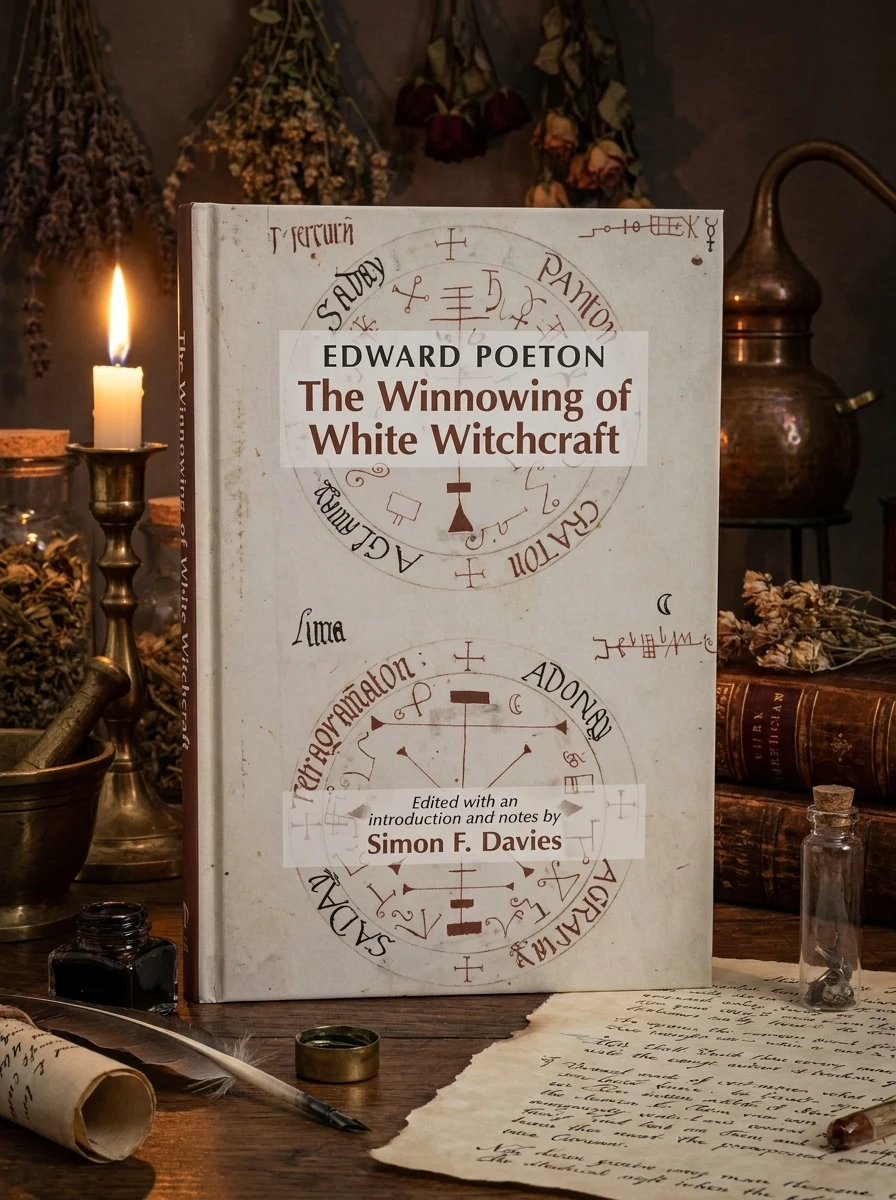
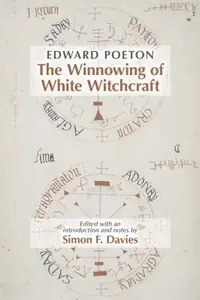
Edward Poeton: The Winnowing of White Witchcraft: Volume 512 Davies, Simon F
This edition can be ordered. No arrival date is confirmed.
Unearth a forgotten 17th-century physician's radical insights into benevolent magic, finally revealed.
Simon F. Davies brings to light the long-hidden treatise of Edward Poeton, a 17th-century physician who dared to explore magic outside the church's purview. Penned in the 1630s, Poeton's *The Winnowing of White Witchcraft* offers a uniquely secular perspective on magical practices, a rare voice from a period dominated by clerical interpretations. This groundbreaking work, previously confined to manuscript, provides fresh insights into how magic was understood and practiced by educated individuals beyond the traditional religious framework, fundamentally reshaping our understanding of early modern esotericism. It's an essential document for tracing the evolution of magical thought.
This volume contributes to the study of early modern esotericism by illuminating secular magical practices outside traditional religious frameworks during the 17th century. It highlights the intersection of medicine and occult philosophy in a period dominated by clerical interpretations.


📝 Description: Edward Poeton: The Winnowing of White Witchcraft: Volume 512 Davies, Simon F
💎 Expert review
📖 Why choose it
Why this book is worth reading
Scholars and enthusiasts of early modern history will find immense value in this groundbreaking edition, which finally reveals the long-hidden treatise of Edward Poeton. By offering a rare secular perspective on benevolent magic from the 1630s, Davies provides essential insights into how educated individuals understood magical practices beyond the church's purview. This work is indispensable for tracing the evolution of esoteric thought and reshaping our understanding of white witchcraft during this pivotal era. Readers interested in the intersection of medicine and occultism will appreciate the fresh light shed on these forgotten radical insights, making it a crucial resource for anyone seeking to deepen their knowledge of historical magical traditions.
⭐ Reader reviews
Reader rating
This scholarly edition is a significant contribution to the field, bringing attention to Poeton’s unique secular approach to magic. However, it is strictly an academic text focused on manuscript analysis and historical context rather than practical application. It does not suit casual readers seeking immediate magical results or those uninterested in early modern history. The dense nature of the material requires a serious commitment to historical study. While essential for researchers tracing esoteric evolution, it may feel dry or overly technical for general audiences expecting accessible occult guidance. It is best reserved for those with a specific interest in the intellectual history of magic.
❓ Frequently asked questions
📖 Who should read this
If you're a serious student of historical occultism, early modern thought, or the intersection of medicine and magic, this volume is indispensable. It offers a unique window into a forgotten perspective, challenging common assumptions about 17th-century magical beliefs.
🎯 Key themes and symbolism
A Physician's Esoteric Lens
Poeton, uniquely positioned as a medical practitioner, examines magical phenomena through a rational yet open-minded framework. He bridges the gap between nascent scientific understanding and the prevailing magical worldview, offering a fascinating glimpse into how a healer might interpret and even integrate elements of "white witchcraft" into his professional observations.
Secular Magical Thought
This work stands apart as one of the rare instances where magic is discussed by a non-clergyman in the early modern period. Poeton’s treatise bypasses theological dogma, presenting an alternative, more pragmatic and perhaps less fear-driven perspective on magical practices, distinguishing itself from the dominant religious narratives of the era.
17th Century Magical Practice
Published centuries after its composition, Poeton's text illuminates the complex intellectual landscape of 17th-century England, where spiritual beliefs intertwined with emerging scientific inquiry. It reveals the nuanced understanding of "white witchcraft" that existed beyond popular superstitions and religious condemnations, offering a sophisticated look at early modern esoteric traditions.
💬 Quotes from the book
“For the humours of the body, when properly balanced, do not permit of such malign influences as the ignorant often attribute to ill-will, but rather suggest an internal disharmony susceptible to natural remedy.”
“Many a country wife, with her simples and her prayers, effects a cure not by league with any diabolical spirit, but by an understanding of nature's hidden virtues.”
📜 Historical context
📚 Glossary
- White Witchcraft
- Early Modern Period
- Treatise
📔 Questions to reflect on
- How might a modern understanding of psychology or medicine re-evaluate the "white witchcraft" practices Poeton describes?
- In what ways does Poeton's secular approach to magic challenge or reinforce your existing perceptions of 17th-century occultism?
- Consider the implications of a medical professional, rather than a theologian, defining and categorizing magical acts in his era. What societal shifts does this imply?
You might also like
See more →
 91
91
 91
91