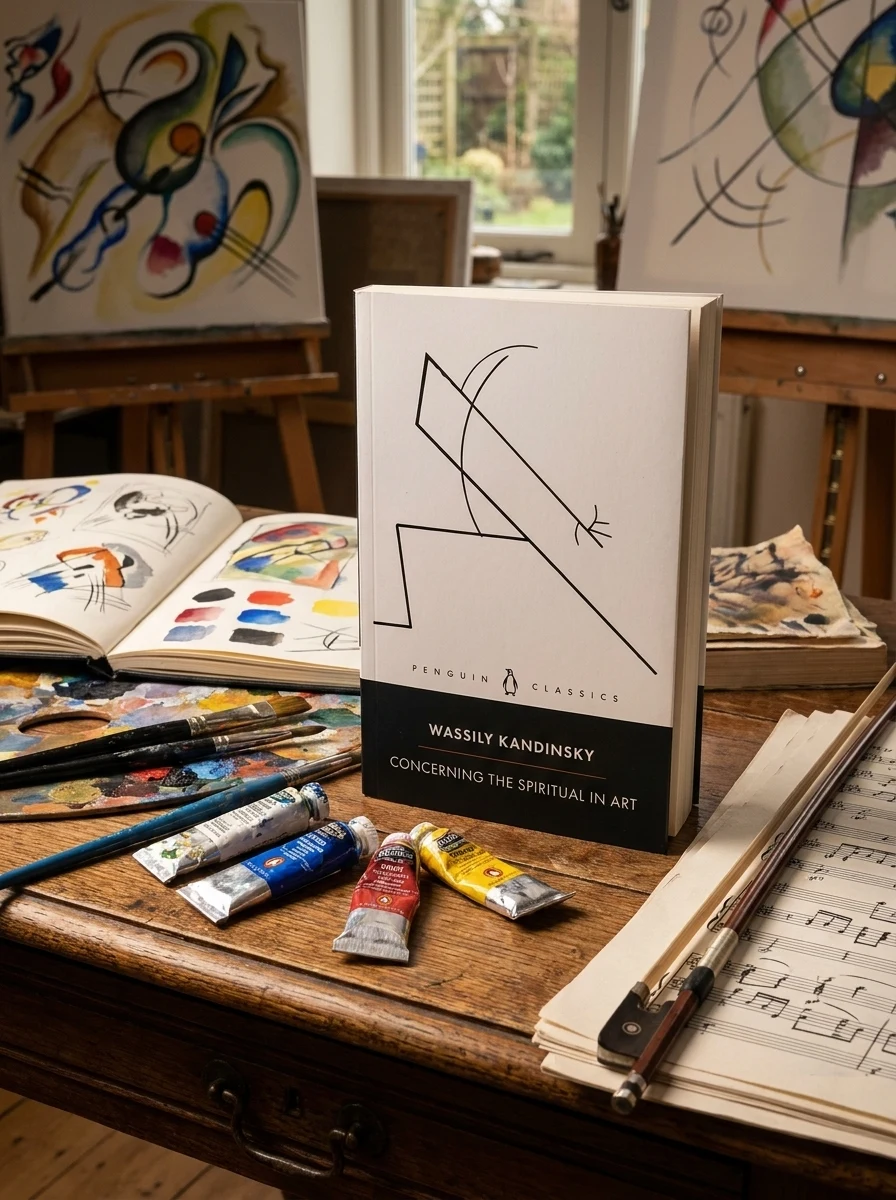
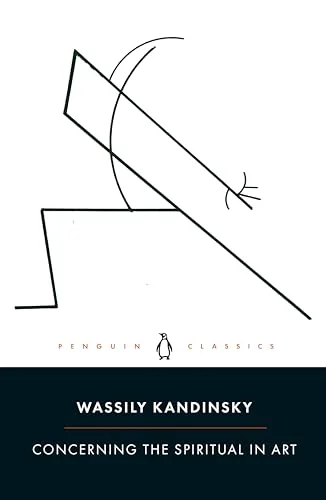
Concerning the Spiritual in Art
This volume presents a treatise on non-objective painting by pioneer Wassily Kandinsky. The author argues that painters should step away from capturing physical reality and instead express inner emotional states, drawing clear parallels between visual art and music. Through an investigation of form, colour, and tradition, the theoretical work establishes a framework for how abstract images touch the human soul. This paperback edition features an authoritative text supported by scholarly introduction and notes.


📝 Description: Concerning the Spiritual in Art
💎 Expert review
📖 Why choose it
Why this book is worth reading
Artists and spiritual seekers alike will find profound inspiration in Kandinsky’s radical vision. If you feel that traditional realism fails to capture the depth of human emotion, this book offers a liberating path forward. It is essential for creators who wish to unlock the resonant power of color and form to speak directly to the soul. By understanding how abstract shapes can mirror internal landscapes, readers gain tools to transcend material bounds in their own practice. This work serves as a foundational guide for anyone eager to explore the innate capacity of art to stir deep emotions and inspire perceptions beyond the everyday world.
⭐ Reader reviews
Reader rating
Kandinsky delivers a rigorous treatise that demands patience from those accustomed to straightforward narrative or technical instruction. While his call for abstract expression is revolutionary, readers seeking practical step-by-step painting techniques will likely feel frustrated by the philosophical density. It is not suitable for those who prefer art strictly as a mirror of external reality rather than a channel for inner spirit. However, for the dedicated esoteric artist, it remains an indispensable exploration of how form and spirituality intertwine to unlock new perceptions.
❓ Frequently asked questions
📖 Who should read this
For artists seeking deeper meaning, enthusiasts of modernism's spiritual roots, or anyone exploring the profound link between creativity and consciousness, this seminal work offers unparalleled insights into art's transcendent power and purpose.
🎯 Key themes and symbolism
Spiritual Revolution in Art
Kandinsky argues for a radical shift away from mere imitation of the physical world. He envisions art as a conduit for spiritual truths, proposing that artists should strive to express inner realities and profound metaphysical concepts, thereby elevating painting beyond its conventional role into a realm of deeper, soul-stirring significance.
Abstraction and Inner Expression
This work champions abstract forms as the purest language for an artist's inner life. Kandinsky draws parallels with music, suggesting that visual art can convey emotion and spiritual essence without direct representation, allowing color and shape to resonate directly with the viewer's soul and unlock deeper, non-material understandings.
Art's Transcendent Purpose
Beyond aesthetics or mimicry, Kandinsky posits that art's true purpose is to awaken and inspire the spirit. He explores how artistic elements can profoundly affect the viewer, stirring emotions and offering glimpses into realms beyond mundane perception, ultimately guiding humanity toward a more enlightened, spiritual existence.
📜 Historical context
📚 Glossary
- Non-Objective Art
- The Spiritual in Art
- Material Reality
📔 Questions to reflect on
- How does abstract art, or even color and form alone, evoke emotions or spiritual sensations within you?
- If art's primary purpose isn't to depict reality, what do you believe its most essential function truly is?
- Consider Kandinsky's 'inner necessity.' What personal truths or spiritual impulses would you express if freed from all external artistic conventions?