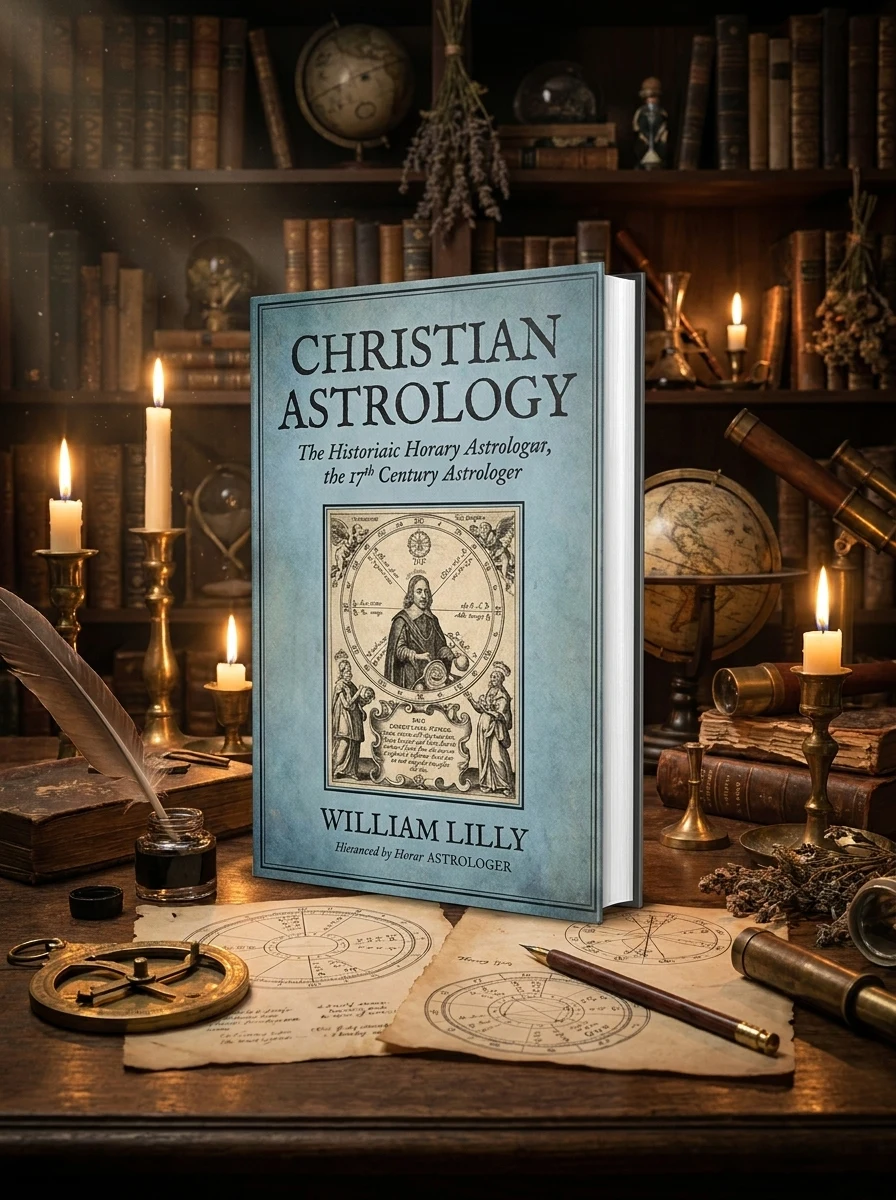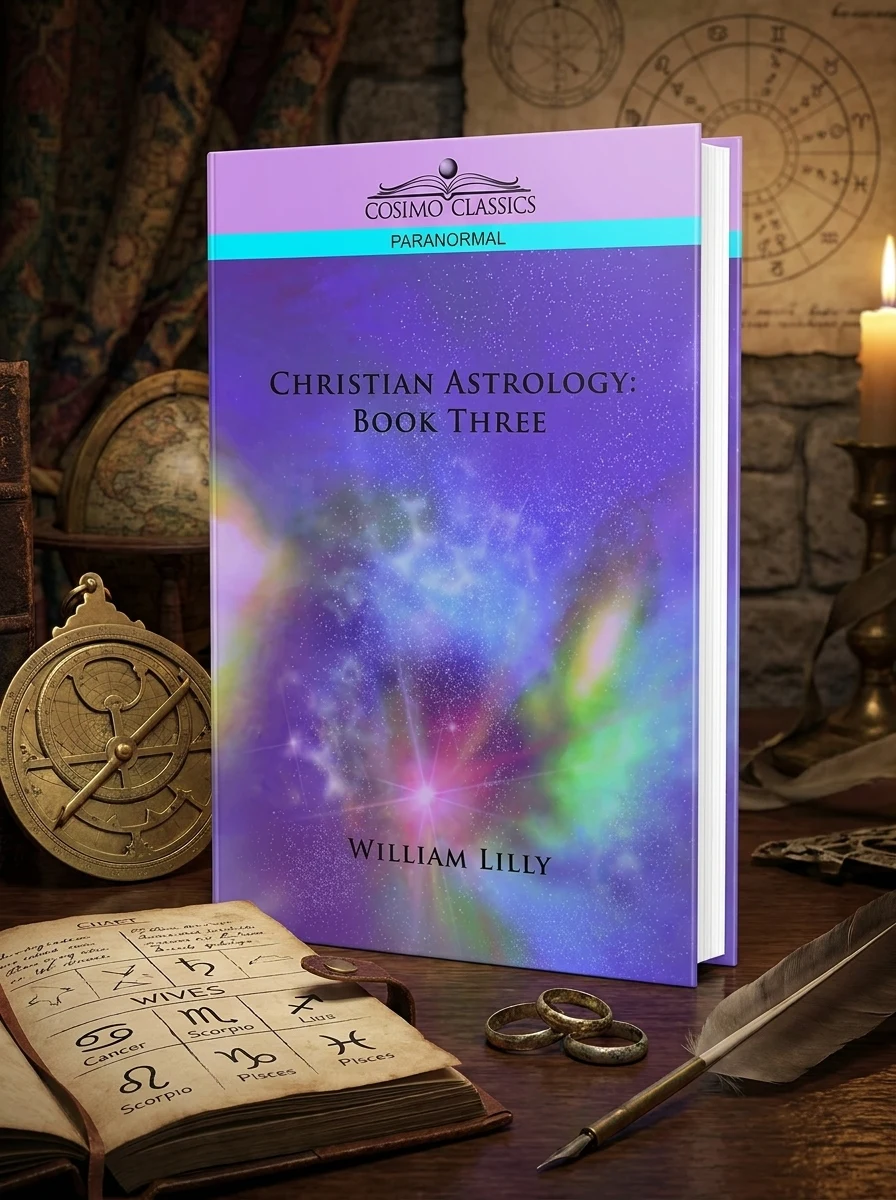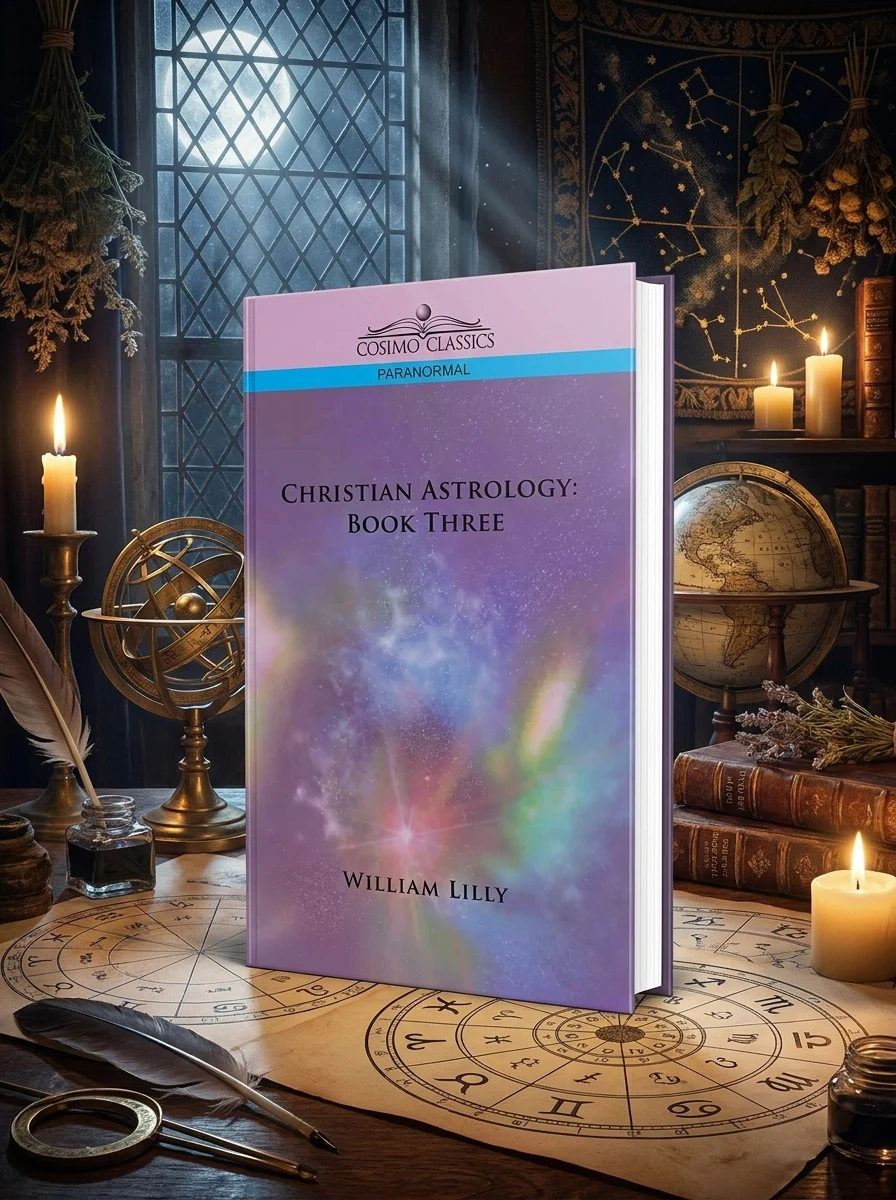
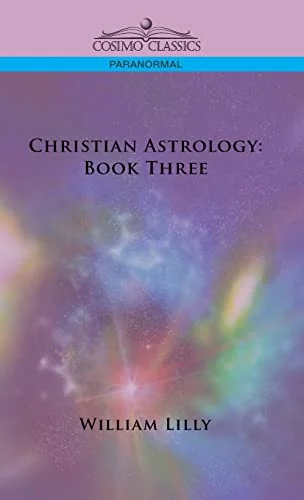
Christian Astrology: Book Three
✍️ Lilly, WilliamWilliam Lilly's seventeenth century text on English astrology published in hardcover by Cosimo Classics.
This 372 page hardcover release from Cosimo Classics collects the third book of English astrologer William Lilly. Lilly stands as the most prominent English astrologer of the seventeenth century. The work addresses traditional astrological subjects, covering mind, body, and spirit topics alongside general astrology. It includes specific discussions such as Of the number of Wives, examining how planetary significators in water signs indicate marriage outcomes. It suits students of historical English astrology and does not suit readers seeking modern guides.
This text originates from seventeenth century England, where author William Lilly worked as the most prominent English astrologer of his era. It reflects the astrological traditions and methods practiced during this historical period.


📝 Description: Christian Astrology: Book Three
💎 Expert review
📖 Why choose it
Why this book is worth reading
Scholars and serious practitioners of esoteric history will find immense value in this text, as it offers a direct window into the mind of William Lilly. Readers seeking to understand the foundational rules of interpretation and the specific methods used for discerning life events, such as marriage prospects via planetary placements, will appreciate the meticulous detail provided. It serves as an essential resource for those interested in the historical context and technical depth of 17th-century astrological practice, bridging the gap between theoretical knowledge and the practical application mastered by a true authority of the art.
⭐ Reader reviews
Reader rating
This volume is a rigorous academic and practical tool rather than casual reading. It appeals to historians of science and dedicated astrologers who require granular technical rules for horary and natal chart analysis. However, it does not suit readers seeking introductory guides or modern psychological interpretations. Those expecting accessible language or simplified advice will likely find the dense, period-specific terminology and complex celestial mechanics impenetrable. It is strictly for those willing to engage with the exacting standards of a master during astrology's golden age, demanding patience and a scholarly approach to historical occult texts.
❓ Frequently asked questions
📖 Who should read this
This is an indispensable volume for serious students of traditional astrology, historical astrologers, and anyone seeking to deepen their understanding of 17th-century occult practices. If you're ready to engage with the advanced techniques of a master, this book is for you.
🎯 Key themes and symbolism
Astrological Nuances
Lilly's work meticulously details the subtle interpretations required for precise astrological readings. He guides the reader through complex considerations, such as how planetary positions in specific zodiacal signs, like the 'watry Signes,' influence the outcomes of life events, demonstrating a profound grasp of symbolic and predictive astrology.
17th-Century Practices
This book offers an unparalleled window into the practical methods and prevalent beliefs of 17th-century astrological consultation. It showcases the rigorous, rule-based approach to celestial interpretation that defined the era, reflecting the intellectual and spiritual climate where astrology held significant influence and academic standing.
Predictive Techniques
At its core, the text is a comprehensive manual for foretelling specific aspects of an individual's life. Through detailed examples and interpretive guidelines, Lilly instructs on how to deduce outcomes, such as the number of marriages one might have, providing a practical framework for divining the future based on astrological charts.
📜 Historical context
📚 Glossary
- Significators
- Watry Signes
- Horary Astrology
📔 Questions to reflect on
- How might Lilly's detailed, rule-based approach to astrological interpretation compare to more modern, psychological approaches? What are the strengths and weaknesses of each?
- Consider the cultural context of 17th-century England. How would the advice given in this book have impacted an individual's life decisions, particularly regarding marriage or family planning?
- Choose a specific astrological configuration mentioned (e.g., 'watry Signes' for marriage) and reflect on how you would personally interpret or apply such a rule in a contemporary context, if at all.