
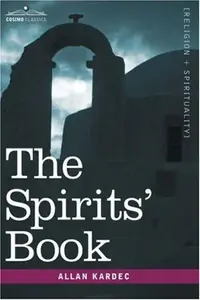
The Spirits' Book Kardec, Allan
Kardec, AllanStock reported in the catalog; fulfillment is confirmed with your request.
Uncover universal truths whispered by spirits, meticulously documented by a skeptical French academic.
Dive into the foundational text of Spiritism, born from Allan Kardec's rigorous inquiry into messages received through mediums. Initially a skeptic, Kardec compiled over a thousand questions and answers from various spirits, forming a comprehensive philosophy. This landmark work explores profound topics including the soul's journey, the nature of reincarnation, divine justice, human morality, and the purpose of suffering. It provides a systematic framework for understanding the spirit world and our place within a vast, evolving cosmos, challenging conventional thought with its methodical revelations.
This foundational text anchors the modern Spiritualist tradition, emerging from Allan Kardec's systematic inquiry into mediumship and the spirit world. It represents a pivotal moment where skeptical academic rigor met esoteric exploration, establishing Spiritism as a coherent philosophical framework rather than mere superstition.


📝 Description: The Spirits' Book Kardec, Allan
💎 Expert review
📖 Why choose it
Why this book is worth reading
Seekers of metaphysical clarity and those intrigued by the intersection of philosophy and spirituality will find profound value in this work. It offers a structured, logical approach to understanding life after death, reincarnation, and moral evolution, appealing specifically to minds that crave evidence-based esotericism. Readers who appreciate systematic theology or philosophical inquiry into consciousness will gain a comprehensive framework for interpreting spiritual phenomena. It serves as an essential guide for anyone wishing to understand the intellectual underpinnings of Spiritism, providing answers to existential questions through a lens of divine justice and cosmic order. Those tired of vague mysticism will appreciate its methodical revelations regarding the soul's journey and our place within the evolving cosmos.
⭐ Reader reviews
Reader rating
This landmark work is indispensable for adherents of Spiritism or scholars of comparative religion seeking primary source material on 19th-century occult inquiry. However, it does not suit readers expecting narrative storytelling, poetic mysticism, or unverified paranormal anecdotes. Those uncomfortable with dogmatic structures or the concept of rigid divine justice may find its systematic approach dry or restrictive. It is best for those willing to engage with dense philosophical arguments rather than seeking quick spiritual fixes. Skeptics might appreciate its origin story, but believers in chaotic supernatural forces may dislike its orderliness.
❓ Frequently asked questions
📖 Who should read this
If you are drawn to the philosophical underpinnings of spiritualism, seek a systematic understanding of the afterlife, or question humanity's purpose, this book is essential. Prepare for a profound intellectual and spiritual journey that has influenced millions worldwide.
🎯 Key themes and symbolism
The Soul's Evolution
Explore the intricate journey of the soul, delving into its origins, its progression through successive incarnations, and the ultimate purpose of its earthly existence. This book posits that life is a school for spiritual growth, with each experience contributing to the soul's advancement towards perfection and understanding.
Universal Moral Principles
Engage with ethical questions through the lens of spirit intelligence, examining concepts of good and evil, justice, and charity. The spirits offer guidance on humanity's moral obligations, emphasizing fraternal love and the natural laws that govern spiritual and material realms, providing a framework for ethical living.
Spirit Communication
Understand the mechanics and significance of communicating with discarnate entities. This foundational work outlines the different types of mediums, the nature of messages received, and the crucial discernment needed when interpreting spirit communications, establishing protocols for meaningful and safe interaction with the unseen world.
💬 Quotes from the book
“The soul's remembrance of past corporeal existence is often veiled, for direct recall would hinder present learning and growth, allowing us to focus on the lessons of the now.”
“True happiness on Earth is not an absolute state, but a relative condition found in the cultivation of virtues and the embrace of trials as opportunities for spiritual elevation.”
📜 Historical context
📚 Glossary
- Spiritism
- Mediumship
- Reincarnation
📔 Questions to reflect on
- Reflect on a personal challenge you've faced. How might viewing it as an opportunity for spiritual growth, as suggested by the spirits, change your perspective?
- If reincarnation is true, what virtues or lessons do you believe your soul is currently working to master in this lifetime?
- Consider the concept of universal moral principles. Do you believe there are truths that transcend cultural and societal norms, guiding humanity's ethical evolution?
✍️ More books by this author Kardec, Allan
All books by this author →







🏛 Books from this publisher Cosimo Classics
All books from this publisher →
 90
90



 87
87
 90
90
 89
89
You might also like
See more →


 89
89