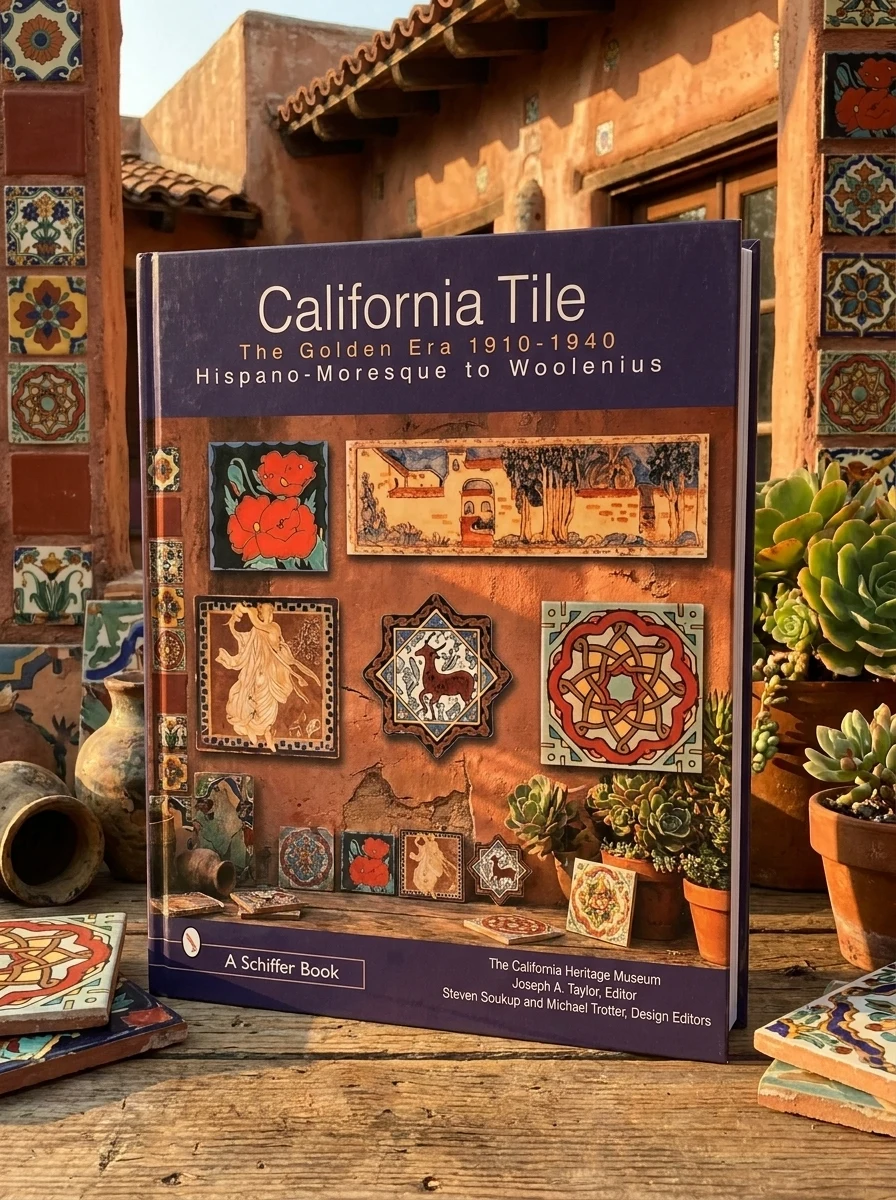
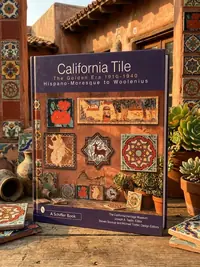
California Tile: The Golden Era, 1910-1940: Hispano-Moresque to Woolenius
California Heritage MuseumThis edition can be ordered. No arrival date is confirmed.
Discover the vibrant, sun-drenched tile art that defined California’s architectural soul during its golden age of craftsmanship.
This comprehensive two-volume set celebrates the zenith of California’s handcrafted tile industry between 1910 and 1940. It meticulously catalogs the evolution from Hispano-Moresque influences to the intricate designs of Woolenius, featuring over 1,700 color images. The work organizes hundreds of tiles by manufacturer, including notable names like Kraftile, Malibu, and Markoff, while also highlighting lesser-known artisans such as Cellini-Craft and Hillside Pottery. Beyond mere aesthetics, the text provides essential essays on early companies, rare archival photographs of historical installations, and practical guides to ceramic terminology, offering a deep dive into the region’s decorative arts legacy.
This work anchors itself in the rich tradition of American decorative arts history, specifically focusing on the intersection of craftsman movement aesthetics and regional architectural identity during the early twentieth century.


📝 Description: California Tile: The Golden Era, 1910-1940: Hispano-Moresque to Woolenius
💎 Expert review
📖 Why choose it
Why this book is worth reading
Architectural historians, ceramic enthusiasts, and preservationists will find immense value in this meticulous cataloging of California’s tile industry zenith. The book offers more than visual pleasure; it serves as a vital resource for understanding the material culture of the Golden Era. By organizing works by manufacturer like Kraftile and Woolenius, it aids researchers tracing provenance and stylistic evolution from Hispano-Moresque influences to complex geometric patterns. Those passionate about regional craftsmanship, early twentieth-century design trends, or the specific artisans who shaped California’s built environment will appreciate the depth of archival photography and practical ceramic terminology provided within these pages.
⭐ Reader reviews
Reader rating
Exactly what I was looking for. There's real depth here that reveals itself on a second reading. A text you study rather than simply read. Five stars from me.
Grabbed this during a weekend order. Some chapters demand a slow, careful read, and that's exactly the point. A text you study rather than simply read. Already eyeing my next order.
Perfect companion for my morning study sessions. I found myself reading passages aloud just to sit with them. Good, with the caveats above.
This comprehensive two-volume set is a definitive reference for specialists in decorative arts and architectural history. However, it does not suit casual readers seeking narrative storytelling or broad philosophical discourse. The dense categorization by manufacturer and focus on specific artisan groups like Cellini-Craft may feel overly technical to those uninterested in material culture specifics. While the 1,700 color images are stunning, the text’s utility relies heavily on one’s prior interest in early twentieth-century crafts. It is an essential archive for experts but likely too niche and specialized for general audiences looking for accessible cultural commentary.
❓ Frequently asked questions
📖 Who should read this
Architectural historians, ceramic collectors, and restoration specialists will find this indispensable. It is also ideal for anyone fascinated by the intersection of craft, commerce, and California’s cultural identity during the early twentieth century, offering both visual delight and rigorous reference material.
🎯 Key themes and symbolism
Artistic Innovation
The book explores how California makers blended traditional techniques with local aesthetics, creating unique surface patterns that defined regional architecture. It highlights the shift from imitation to distinct styles, showcasing how artisans like Helen Greenleaf Lane and Rhead pushed creative boundaries in glaze and form during this pivotal era of design evolution.
Industrial Heritage
By arranging works alphabetically by company, the text preserves the commercial history of the era. It details the rise of key manufacturers like L.A. Pressed Brick and West Coast, illustrating how these businesses operated, their collaborative networks, and their role in supplying both residential and commercial spaces across the state with distinctive ceramic furnishings and facade tiles.
Archival Preservation
This volume serves as a critical archive, featuring rarely seen photographs of original installations and factory histories. It bridges the gap between object and context, allowing readers to visualize tiles in their intended environments. The inclusion of terminology guides ensures that collectors and historians can accurately identify and appreciate the technical nuances of these surviving pieces.
💬 Quotes from the book
“Old California art tile is rich in tradition and innovation.”
“Over 1700 color images in two volumes comprise this comprehensive collection.”
📜 Historical context
📚 Glossary
- Hispano-Moresque
- Woolenius
- Archival Installation
📔 Questions to reflect on
- How did the blend of Middle Eastern and local influences shape the unique visual identity of early California architecture?
- Which manufacturer’s design philosophy resonates most with your personal aesthetic, and why?
- In what ways do these historical tiles reflect the economic and cultural aspirations of their time?
✍️ More books by this author California Heritage Museum
All books by this author →
🏛 Books from this publisher Schiffer Publishing
All books from this publisher →
 89
89




You might also like
See more → 89
89
 91
91
 91
91

 91
91

 91
91