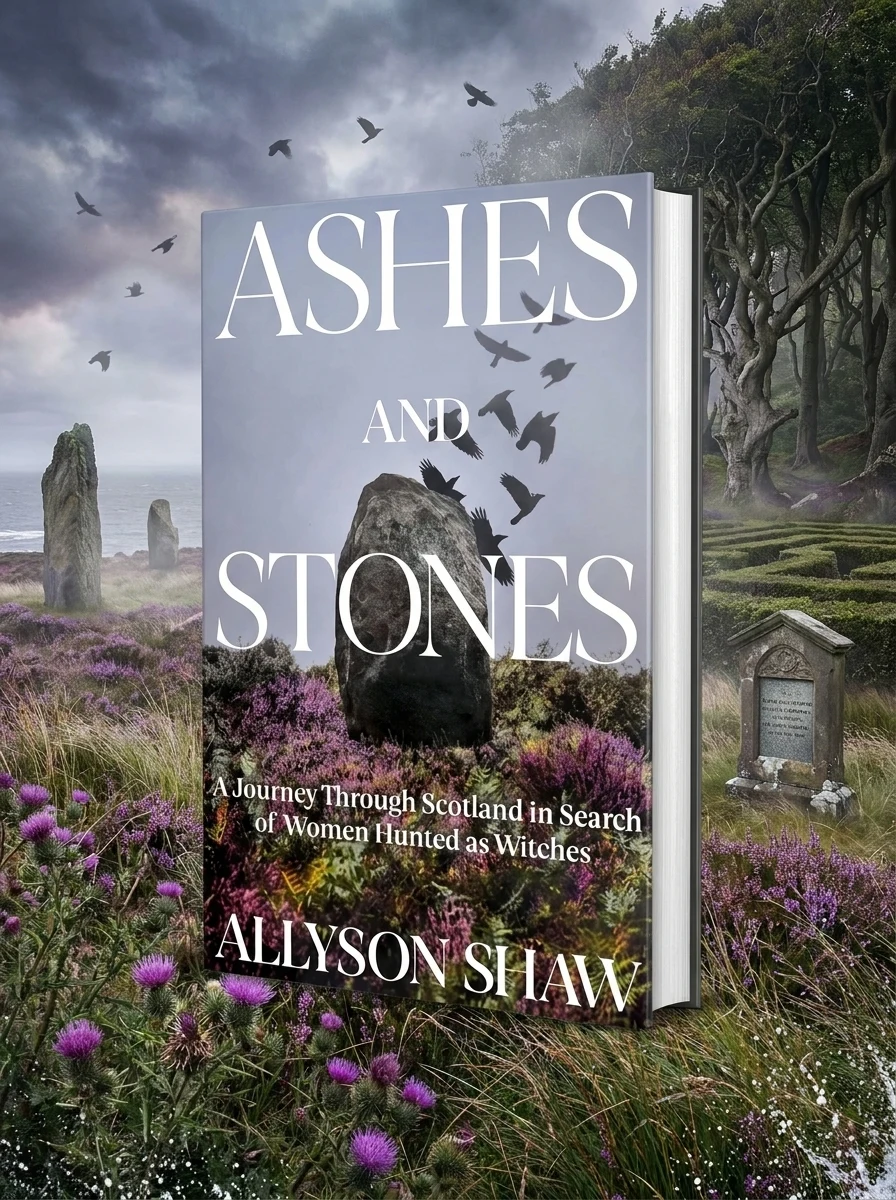
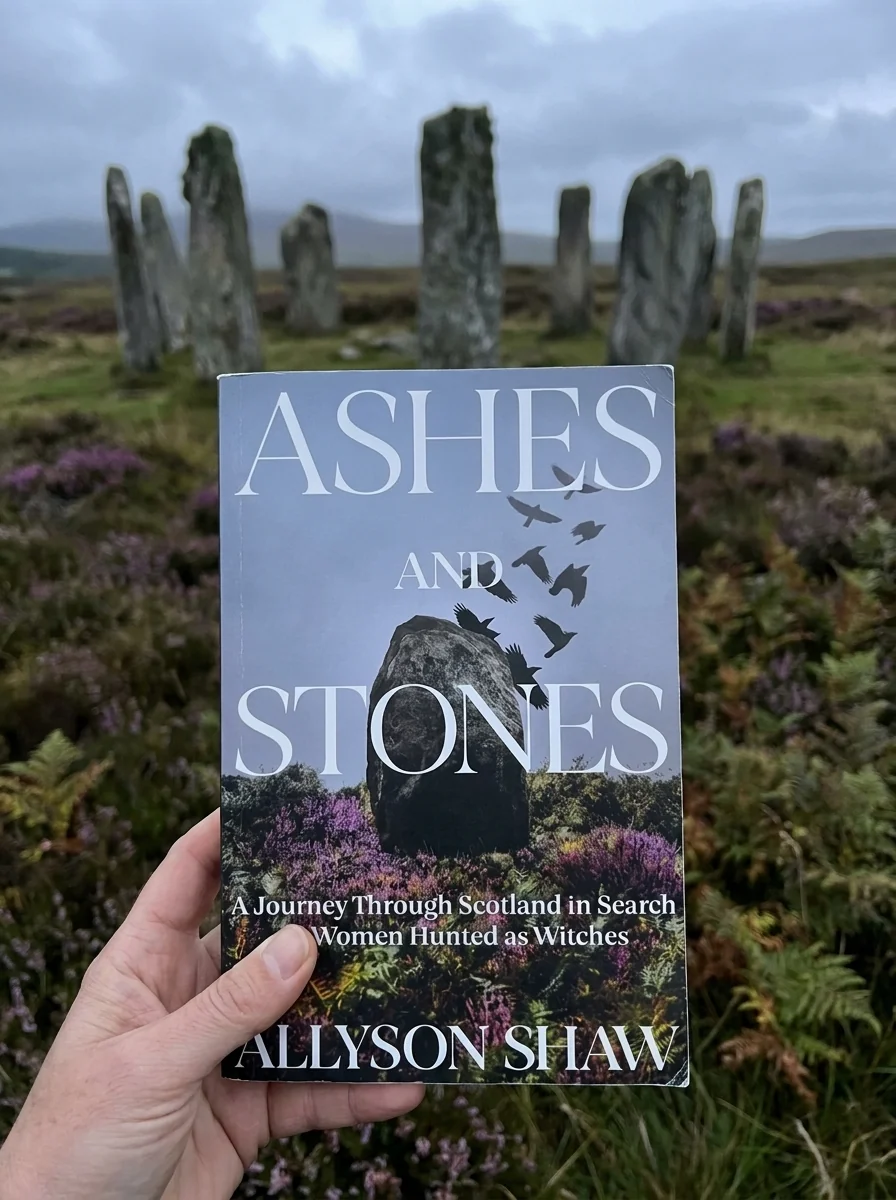
Ashes and Stones: A Journey Through Scotland in Search of Women Hunted as Witches
Allyson Shaw explores the rugged landscapes of Scotland to recover the erased histories of women targeted during seventeenth-century witch persecutions. Moving between ancient standing stones, fairy hills, hedge mazes, and coastal villages, the text examines how local communities currently commemorate victims of historical misogyny and political extremism. Shaw draws on thirty years of writing experience in folklore and history to link the physical environment of Great Britain with historical trial sites.


Praise for this book
“In Ashes and Stone Shaw has written a compelling and intimate pilgrimage across Scotland as she visits the sites of notorious witch trials to connect with and comment on the memorials left there to the murdered people who perished through greed, misogyny, and superstition. A fascinating exploration of the search for personal identity, the ever-present dangers of religious and political extremism, and how we examine and process the murderous injustices from our past.”
📝 Description: Ashes and Stones: A Journey Through Scotland in Search of Women Hunted as Witches
💎 Expert review
📖 Why choose it
Why this book is worth reading
Readers deeply connected to the earth and those who feel a spiritual resonance with ancestral trauma will find profound solace in this volume. It offers a vital opportunity to witness the resilience of silenced women, transforming their persecution into a vibrant memorial through landscape and story. Those seeking to bridge the gap between historical fact and personal spiritual reflection will appreciate Shaw’s intimate pilgrimage approach. The book serves as a powerful tool for those interested in reclaiming lost voices within the witchcraft tradition, providing a tangible connection to the wild Scottish terrain where these histories were etched into stone.
⭐ Reader reviews
Reader rating
Shaw delivers an evocative fusion of research and personal narrative that breathes life into Scotland’s forgotten witch trials. While it succeeds beautifully as a lyrical tribute to feminine resilience and landscape spirituality, it may not suit readers seeking dry, academic historiography or those uninterested in the mystical interpretation of place. The work demands patience with its reflective pacing, prioritizing emotional truth over rigid chronology. It is best appreciated by those comfortable with subjective storytelling and esoteric perspectives on history, rather than those expecting a conventional, detached account of legal proceedings.
❓ Frequently asked questions
📖 Who should read this
For those drawn to the intersection of feminist history, landscape mysticism, and the haunting echoes of the past, this book offers a deeply personal and illuminating journey. If you seek to connect with forgotten ancestral voices and understand the enduring power of place, "Ashes and Stones" awaits.
🎯 Key themes and symbolism
Land's Mystical Echoes
The book explores Scotland's physical environment—its coasts, forests, and ancient sites—not merely as settings, but as repositories of memory and magical energy. Shaw reveals how local folklore, natural features, and modern memorials combine to create a deeply spiritual and spellbound landscape.
Ancestral Feminine Resilience
Through a contemporary feminist lens, Shaw connects historical persecution of women to broader themes of societal power and marginalization. Her work is a powerful act of ancestral reverence, celebrating these women's strength and inviting readers to reflect on their own connection to a lineage of resilience.
📜 Historical context
📚 Glossary
- Witch Hunts (Scottish)
- Feminist Reclamation
- Standing Stones
📔 Questions to reflect on
- How do the landscapes you inhabit hold echoes of the past, and what forgotten stories might they tell if you listened closely?
- Reflect on a historical figure or event that resonates with you deeply. How might you personally honor or reclaim their narrative?
- In what ways do contemporary societal attitudes still marginalize or misrepresent women, and how can we actively challenge these narratives?