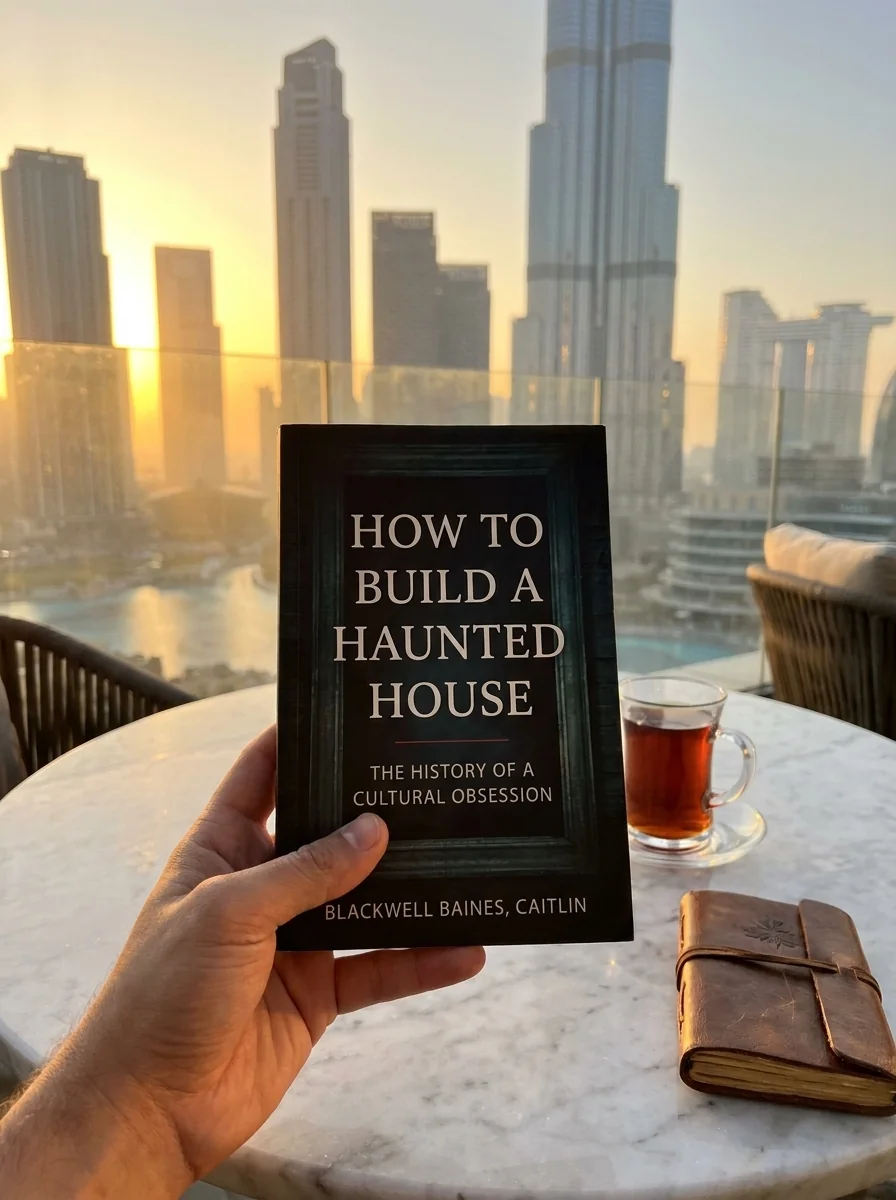

How to Build a Haunted House: The History of a Cultural Obsession
This study investigates why particular physical structures trigger feelings of dread while others leave visitors unaffected. Writing as an expert in Gothic art and architecture, Blackwell Baines isolates the specific features, contexts, and historical events that build a reputation for ghostliness. The narrative moves across various geographical locations and temporal settings, evaluating the precise elements that shape our shared understanding of creepy spaces.


Praise for this book
“A delightfully macabre history of the haunted house. Part travelogue and part architectural history, the book offers plenty of thrills. It's an entertaining expedition into eerie spaces.”
📝 Description: How to Build a Haunted House: The History of a Cultural Obsession
💎 Expert review
📖 Why choose it
Why this book is worth reading
Readers who have ever felt a chill in an old hallway or wondered why certain homes feel inherently wrong will find this book deeply satisfying. It appeals to those interested in the intersection of psychology, architecture, and folklore without requiring them to believe in ghosts. You will gain a profound appreciation for how design elements like layout, lighting, and history contribute to our collective sense of dread. It is perfect for curious minds who want to understand the mechanics of fear rather than just experience it. The book offers intellectual stimulation by dissecting why we are obsessed with haunted spaces, turning a common superstition into a fascinating cultural artifact that illuminates human nature itself.
⭐ Reader reviews
Reader rating
Baines provides a meticulous dissection of haunted house lore, tracing its roots from medieval keeps to modern suburban fears. While the scholarly approach is engaging for those interested in architectural history and Gothic art, it may disappoint readers seeking supernatural explanations or ghost-hunting guides. The book focuses on cultural obsession rather than paranormal evidence, which might feel dry to hardcore paranormal enthusiasts. However, for those willing to engage with the sociological aspects of fear, it offers a rich, insightful perspective on how our environment shapes our imagination. It is a thoughtful exploration that prioritizes history and design over spooky thrills.
❓ Frequently asked questions
📖 Who should read this
If you've ever pondered why certain buildings send shivers down your spine, or sought to understand the cultural roots of our obsession with the spectral, this book is for you. Whether a dedicated ghost hunter or a curious cultural observer, prepare to see familiar structures through a newly eerie lens.
🎯 Key themes and symbolism
Cultural Architecture of Fear
This book explores how societal beliefs, artistic representations, and architectural styles collectively shape our understanding of what constitutes a 'haunted house.' It argues that the eerie reputation of a building is often a product of shared human narratives and aesthetic interpretations, rather than purely supernatural occurrences, examining this phenomenon across diverse historical contexts.
Architecture and Dread
Baines meticulously analyzes how specific design elements and historical architectural trends contribute to a building's perceived creepiness. From the dark corners of ancient castles to the unsettling symmetry of Victorian homes, the text reveals how structural features and their historical contexts become integral components in establishing a dwelling's ominous identity, regardless of spectral presence.
Haunts Through History
The narrative traces the evolution of the haunted house concept across various historical periods and geographies. It journeys from the chilling tales of medieval Europe to the gothic sensibilities of the Enlightenment and the Victorian era, demonstrating how different cultures and epochs have cultivated distinct, yet interconnected, ideas about what makes a space truly unsettling and specter-ridden.
📜 Historical context
📚 Glossary
- Gothic Architecture
- Cultural History
- Antebellum
📔 Questions to reflect on
- Consider a building you've personally found unsettling. What specific architectural features or historical associations contributed to that feeling?
- How might local folklore or popular media influence your perception of a particular building's 'haunted' potential, even before you step inside?
- If you were to design a building intended to feel inherently eerie, what historical styles, materials, and spatial arrangements would you incorporate, and why?