A Philosophical Critique of Empirical Arguments for Postmortem Survival (2016)
✍️ Sudduth, MichaelA philosophical analysis of empirical arguments claiming evidence for life after death.
Michael Sudduth, a philosopher of religion at San Francisco State University who holds a D.Phil. from Oxford, examines the logical structure of empirical arguments for life after death. His work challenges the claim that data from paranormal phenomena provides valid evidence for personal survival. The book engages with analytic philosophy and religious studies, addressing topics such as mind-body relations and near-death experiences. Sudduth critiques classical approaches that attempt to link observed anomalies with postmortem existence. He analyzes how these arguments function within the Protestant theological tradition, referencing his earlier work on natural theology. The text is organized to systematically dismantle the premises used by proponents of survivalism. It focuses on the validity of inferences drawn from supposed psychic phenomena rather than accepting them as proof. This volume suits readers interested in the intersection of philosophy of religion and scientific skepticism. It addresses those who question the evidentiary weight of near-death experiences. The book does not offer comforting spiritual narratives but instead provides a rigorous logical assessment. It is designed for scholars and students in analytic philosophy who seek to understand the limits of empirical proof regarding survival.
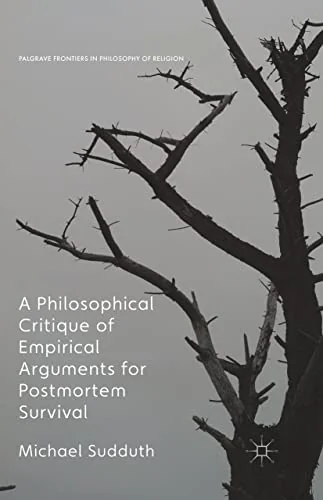
Published by Palgrave MacMillan in 2016, this paperback sits within the tradition of analytic philosophy and religious studies. It addresses debates on mind-body relations and psychic phenomena prevalent in contemporary academic discourse.


📝 Description: A Philosophical Critique of Empirical Arguments for Postmortem Survival (2016)
💎 Expert review
📖 Why choose it
Why this book is worth reading
This book is essential for the serious student of esotericism who craves intellectual honesty over comforting dogma. Readers who have grown weary of anecdotal evidence and wish to understand the logical underpinnings of survival claims will find profound value here. Sudduth offers a necessary corrective to popular spiritual narratives, providing a robust framework for evaluating what constitutes genuine proof. It is ideal for those ready to engage with complex arguments about consciousness without sacrificing critical thinking skills or accepting superficial explanations for the mysteries of death.
⭐ Reader reviews
Reader rating
Sudduth delivers a formidable academic dissection that will likely alienate casual seekers of spiritual comfort but will satisfy rigorous philosophers. The text does not suit readers looking for new age reassurances or simple answers to mortality; it is a cold, analytical examination of evidential failures. However, for those willing to endure dense philosophical scrutiny, it offers unparalleled clarity on the limitations of current survival arguments, making it a vital resource for serious inquiry into the boundaries of scientific proof regarding the afterlife.
❓ Frequently asked questions
📖 Who should read this
If you're fascinated by the question of life after death but demand intellectual honesty and rigorous logic, this book is for you. It's essential reading for skeptics, philosophers, and anyone seeking a critical lens on empirical claims of postmortem survival.
🎯 Key themes and symbolism
Paranormal Evidence Examined
Sudduth delves into the specific types of 'paranormal' data—such as psychic phenomena, apparitions, and communication with the deceased—that proponents cite as proof of survival. He investigates whether these experiences, often anecdotal or difficult to replicate, can truly withstand scientific and philosophical scrutiny as evidence.
Philosophy of Mind & Death
Beyond merely debunking, the work engages with fundamental questions about the nature of mind, body, and personal identity. It explores how our understanding of consciousness influences the debate on survival, prompting readers to consider the philosophical implications of accepting or rejecting postmortem existence.
📜 Historical context
📚 Glossary
- Empirical Argument
- Postmortem Survival
- Paranormal Phenomena
📔 Questions to reflect on
- How do your personal beliefs about consciousness influence your evaluation of evidence for postmortem survival?
- What standards of proof do you consider adequate for establishing the existence of phenomena beyond current scientific understanding?
- In what ways might philosophical rigor enhance or limit our understanding of experiences often labeled as 'paranormal'?
📖 Read on the blog
✍️ More books by this author Sudduth, Michael
All books by this author →


🏛 Books from this publisher Palgrave MacMillan
All books from this publisher →
You might also like
See more →

Have a question about this item?
Ask about the edition, condition, delivery or anything else — we reply by email or phone, usually within a day.
