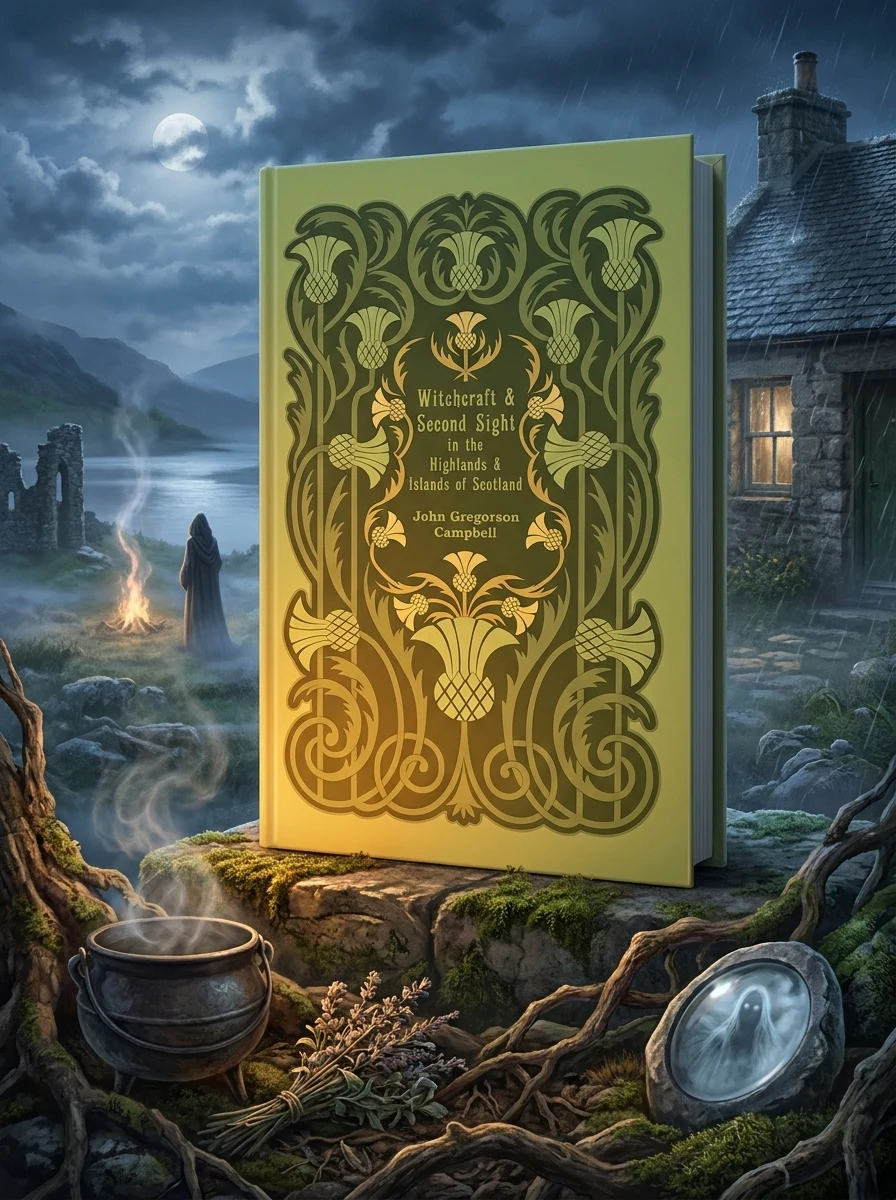
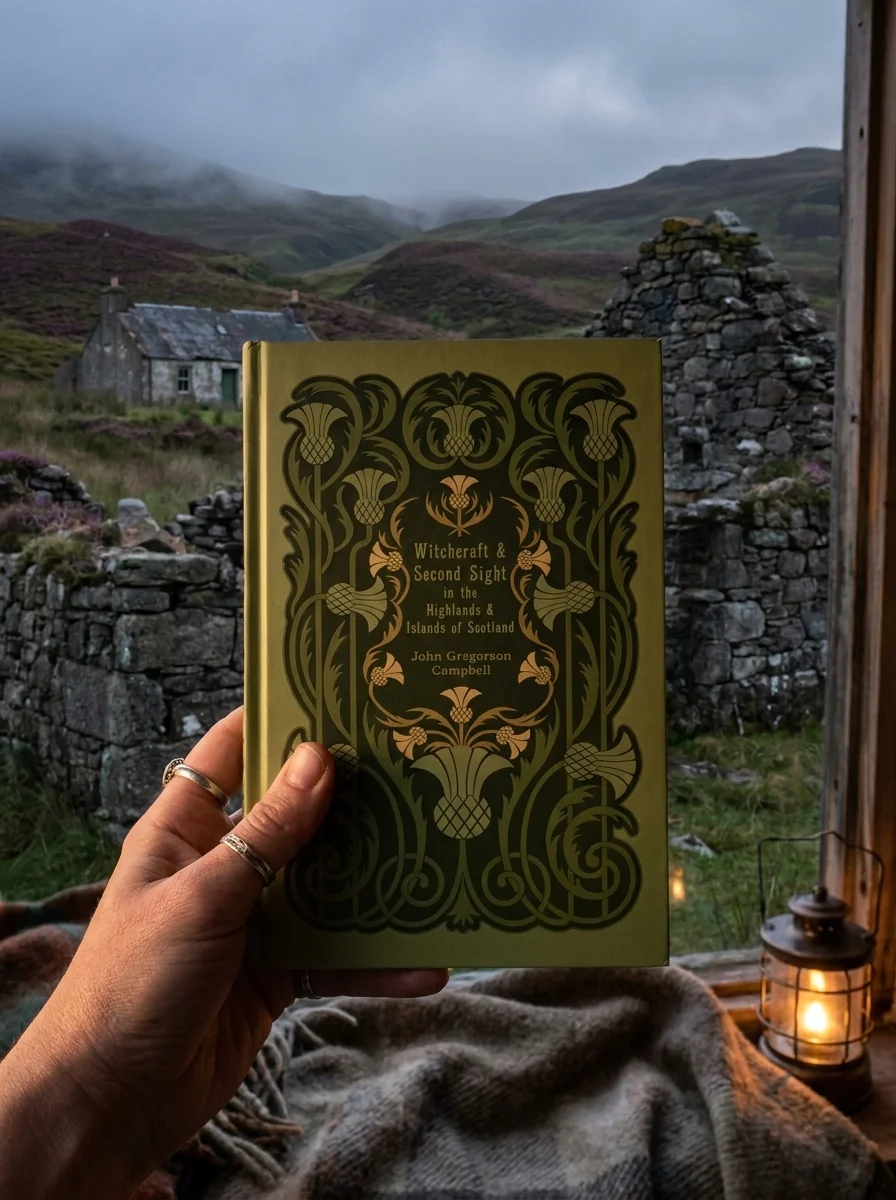
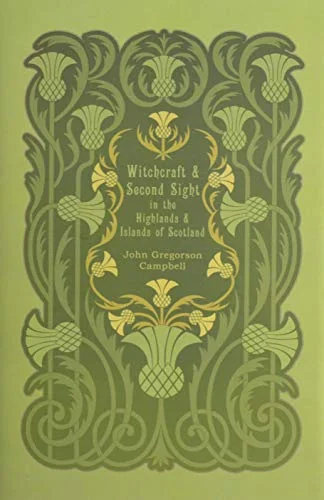
Witchcraft and Second Sight in the Highlands and Islands of Scotland
A 1902 collection of Highland folklore, spectral hauntings, and Scottish witchcraft collected by John Gregorson Campbell.
This hardcover volume presents authentic Scottish oral traditions gathered by Free Church minister John Gregorson Campbell. Drawing from his work across Argyll, Kingairloch, Tiree, and Coll, the text gathers regional accounts of weather working, second sight, spectral hauntings, and local witchcraft practices. It captures nineteenth-century Highland beliefs, offering direct access to the regional folklore Campbell originally published across notable periodicals of his era.
This material originates from nineteenth-century Scottish Highland and island communities. Collected by minister John Gregorson Campbell in Argyll, Kingairloch, Tiree, and Coll, these traditional stories reflect the living oral folklore, spiritual beliefs, and regional hauntings recorded prior to their posthumous 1902 publication.


📝 Description: Witchcraft and Second Sight in the Highlands and Islands of Scotland
💎 Expert review
📖 Why choose it
Why this book is worth reading
Readers fascinated by the raw, untamed magic of Scotland will find this book an invaluable treasure. It offers a unique window into the esoteric practices and profound beliefs of a land steeped in ancient tradition. Those interested in witchcraft, second sight, and spectral encounters will appreciate the authentic treasury gathered by John Gregorson Campbell. The book preserves the living oral history of 19th-century Scotland, providing an unparalleled glimpse into its spiritual world. It is essential for anyone seeking to understand the mystical tapestry of Highland and Island cultures through diligent folkloric collection.
⭐ Reader reviews
Reader rating
This text provides a compelling, albeit dense, look at Scottish occultism. While the historical value is undeniable for scholars of folklore, it may not suit readers seeking modern, practical magical instruction or fast-paced narrative fiction. The work is primarily an ethnographic record rather than an enchanting adventure story. Readers expecting contemporary interpretations of witchcraft might find the tone too academic or archaic. However, for those dedicated to understanding the authentic spiritual landscape of Scotland’s past, it remains a significant and necessary contribution to the field of esoteric studies.
❓ Frequently asked questions
📖 Who should read this
If you're drawn to authentic historical accounts of magic, eager to explore the spiritual tapestry of the Scottish Highlands, or fascinated by the raw power of oral tradition, this book is an indispensable journey. It offers a direct portal to the beliefs and practices of a bygone era.
🎯 Key themes and symbolism
Witchcraft's Everyday Power
Explore the practical applications of magic as understood by Highland communities. Campbell details how villagers engaged with supernatural forces for healing, harm, or influencing nature, providing a fascinating, unromanticized look at everyday sorcery rooted in local beliefs rather than formalized rituals.
Visions Beyond Sight
The book illuminates the phenomenon of second sight, a profound clairvoyance prevalent in the Scottish Highlands. Readers will encounter accounts of individuals gifted—or burdened—with premonitions, spectral visions, and insights into future events, revealing a deep cultural connection to an unseen world.
Preserving Oral Heritage
This work stands as a vital record of Scotland's disappearing oral traditions. Campbell's meticulous transcription of local stories, passed down through generations, ensures these unique tales of ghosts, charms, and ancient wisdom are not lost to time, offering invaluable cultural insight.
📜 Historical context
📚 Glossary
- Second Sight
- Weather Working
- Posthumous
📔 Questions to reflect on
- Reflect on how the concept of 'witchcraft' in these tales differs from modern interpretations. What does this suggest about societal perceptions of power and belief across different eras?
- Consider the role of oral tradition in preserving knowledge and culture, especially in isolated communities. What might be lost when such traditions fade?
- If you were to encounter someone claiming genuine second sight today, how might you react, compared to how people in Campbell's accounts responded?