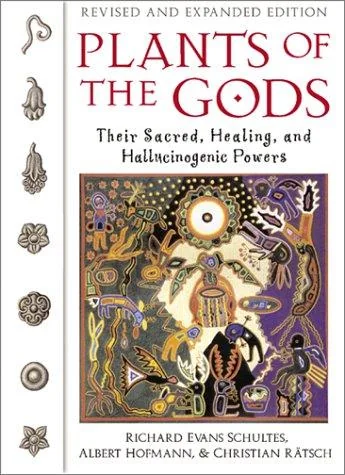
Plants of the Gods: Their Sacred, Healing, and Hallucinogenic Powers
This seminal work, meticulously updated by Christian Ratsch, delves into the ancient and global use of psychoactive plants. It explores their crucial role in shamanic rituals, healing practices, and cultural development across civilizations. Blending rigorous ethnobotanical research with ethnopharmacology, the book illuminates how these revered "plants of the gods" have shaped human consciousness and history. Richly illustrated, it offers a comprehensive understanding of their botanical, chemical, and spiritual significance, tracing their journey from ancient ceremonies to modern scientific inquiry, revealing their enduring power.


Praise for this book
“Richard Evans Schultes has been the nexus of almost everything interesting and supportive concerned with economic and cultural uses of plants. Plants of the Gods gives precise and illuminating portraits of the many peoples of the Earth who pay homage to and gain insights with the aid of psychedelic plants: an exquisite, thoroughly scholarly book.”
📝 Description: Plants of the Gods: Their Sacred, Healing, and Hallucinogenic Powers
📑 What's inside
- Plants of the Gods
- Their Sacred, Healing and Hallucinogenic Powers
- Preface
- Introduction
- 1. What are Plant Hallucinogens
- 2. The Plant Kingdom
- 3. Phytochemical Research on Sacred Plants
- 4. Geography of Usage and Botanical Range
- 5. Plant Lexicon
- 6. Users of Hallucinogenic Plants
- 7. Overview of Plant Use
- 8. Fourteen Major Hallucinogenic Plants
- 9. Mainstay of the Heavens
- 10. The Hexing Herbs
- 11. The Nectar of Delight
- 12. St. Anthony's Fire
- 13. Holy Flower of the North Star
- 14. Guide to the Ancestors
- 15. Beans of the Hekula Spirit
- 16. Seeds of Civilization
- 17. The Magic Drink of the Amazon
- 18. Ayahuasca Analogs
- 19 Trumpets of the Angels
- 20. The Tracks of the Little Deer
- 21. Little Flowers of the Gods
- 22. Diviner's Sage
- 23. Cactus of the Four Winds
- 24. Vines of the Serpent
- 25. Semen of the Sun
- 26. Gateway to Dreamtime
- 27. Chemical Structures of Hallucinogens
- 28. Uses of Hallucinogens on Medicine
- Epilogue
- Picture Credits
- Bibliography
- Acknowledgments
- Index
💎 Expert review
📖 Why choose it
Why this book is worth reading
Readers seeking a deep, scholarly understanding of the intersection between botany and spirituality will find this book invaluable. It is perfect for those interested in the historical roots of psychoactive substances and their role in cultural development. By combining scientific rigor with respect for ancient wisdom, it offers a comprehensive view of how these plants have shaped human consciousness. Those who appreciate detailed illustrations alongside ethnopharmacological data will gain a profound appreciation for the enduring power of sacred flora. It serves as an essential resource for understanding the botanical, chemical, and spiritual dimensions of these revered entities.
⭐ Reader reviews
Reader rating
This seminal text provides a meticulous exploration of psychoactive plants through the lens of ethnobotany and pharmacology. While it offers rich illustrations and a comprehensive historical overview, its academic tone may alienate casual readers seeking simple recreational guidance. It is not suited for those looking for quick, practical gardening advice or unscientific spiritual claims. Instead, it demands patience and an interest in rigorous research. The blend of scientific inquiry with cultural context creates a dense but rewarding experience for the dedicated scholar. However, readers expecting light entertainment or simplistic mystical narratives should look elsewhere, as this work prioritizes factual accuracy and historical depth over accessible storytelling.
❓ Frequently asked questions
📖 Who should read this
For the curious seeker, the aspiring ethnobotanist, or anyone drawn to the intersection of ancient wisdom and modern science, this book offers an unparalleled journey. If you wish to understand humanity's timeless connection to nature's most potent teachers, this volume is essential reading.
🎯 Key themes and symbolism
Sacred Plant Entheogens
The book meticulously documents how various cultures have revered and utilized specific plants for their consciousness-altering properties. It explores the spiritual dimensions and ritualistic contexts in which these botanicals facilitate communion with the divine, healing, and profound insight, transcending mere physical effects to reveal their sacred status.
Ethnobotany and Pharmacognosy
This volume offers a deep dive into the scientific understanding of these potent plants. It details their botanical classifications, geographical distribution, and the specific chemical constituents responsible for their effects. The cross-referenced data provides a foundational resource for understanding the complex interplay between plant chemistry and human physiology within a cultural framework.
Cultural and Historical Impact
Beyond their immediate effects, the text examines the pervasive influence of these plants on human societies throughout history. It chronicles their integral role in shaping myths, religions, healing traditions, and social structures, demonstrating how these "plants of the gods" have been central to humanity's quest for knowledge and spiritual understanding.
📜 Historical context
📚 Glossary
- Ethnobotany
- Ethnopharmacology
- Psychoactive
📔 Questions to reflect on
- How might the reintegration of sacred plant knowledge impact contemporary perspectives on healing and spiritual well-being?
- Reflect on how your own cultural traditions acknowledge or overlook the profound connections between humans and the plant kingdom.
- Consider the ethical responsibilities inherent in studying and sharing knowledge about powerful psychoactive plants from indigenous cultures.
📖 Read on the blog
🏛 Books from this publisher Healing Arts Press
All books from this publisher →





You might also like
See more →




Have a question about this item?
Ask about the edition, condition, delivery or anything else — we reply by email or phone, usually within a day.
