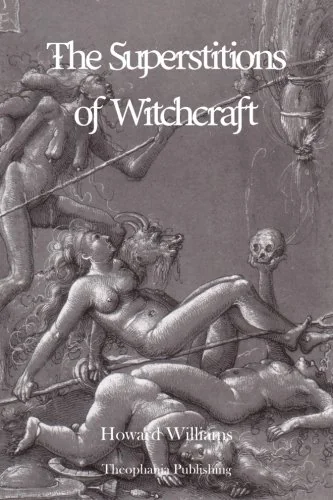
The Superstitions of Witchcraft
✍️ Williams, HowardHoward Williams's 'The Superstitions of Witchcraft' provides a meticulously researched historical overview of witchcraft beliefs. This compelling study traces the evolution and societal impact of a creed that once held formidable, tangible power, particularly throughout the 17th century. Williams examines its characteristic forms and foundational facts, contrasting its past vibrancy and terror with its current, largely perceived innocuous status within Christian cultures. It's an essential read for understanding how these powerful convictions shaped the past.


📝 Description: The Superstitions of Witchcraft
💎 Expert review
📖 Why choose it
Why this book is worth reading
This book is an essential resource for the serious student of esoteric history who wishes to understand the tangible power witchcraft beliefs once held over society. Readers will gain a meticulously researched overview of how these convictions shaped the past, contrasting their former vibrancy and terror with their current status in Christian cultures. It is perfect for those intrigued by the evolution of societal fears and the foundational facts of a creed that influenced generations. If you seek to comprehend the chilling legacy of witchcraft beyond mere folklore, this study provides the necessary historical depth and context to appreciate how these powerful beliefs operated within Christendom.
⭐ Reader reviews
Reader rating
Williams delivers a compelling, meticulously researched historical overview that traces the evolution of witchcraft beliefs with clarity. The text effectively contrasts the formidable terror of the past with its current perceived innocence, offering valuable insights into societal impacts during the 17th century. However, this book is not suited for readers seeking practical spellwork or modern Wiccan practice; it is strictly a historical analysis. Those looking for sensationalized accounts or fictional narratives may find the academic tone dry. It is best appreciated by historians and esoteric scholars who value factual rigor over dramatic flair in understanding the societal structures of past centuries.
❓ Frequently asked questions
📖 Who should read this
Are you a history enthusiast or a student of esoteric traditions? If you're fascinated by the social dynamics of belief and the pervasive power of superstition, this book offers a profound dive into historical witchcraft, tracing its trajectory from a terrifying reality to a cultural curiosity.
🎯 Key themes and symbolism
Evolution of Belief
Williams expertly charts the changing nature of witchcraft belief systems across centuries, revealing how specific doctrines and practices gained and lost prominence. The book highlights the dynamic interplay between cultural shifts and the interpretation of magical phenomena, illustrating how what was once a terrifying reality transformed into a subject of historical curiosity.
Societal Fear & Control
The author delves into how the belief in witchcraft fueled widespread societal anxieties, particularly in the 17th century. This examination uncovers the mechanisms through which these fears were propagated and used, impacting legal systems, community structures, and individual lives, often leading to tragic outcomes for those accused.
Dissecting Superstition
Williams approaches witchcraft primarily as a form of superstition, offering an analytical perspective on its underlying psychological and cultural roots. The book dissects the 'facts' and 'forms' of this creed, providing insight into the human propensity for irrational belief and the enduring power of unfounded convictions, even when demonstrably false.
📜 Historical context
📚 Glossary
- Witchcraft
- Creed
- Christendom
📔 Questions to reflect on
- How do historical beliefs like witchcraft continue to influence contemporary society or spiritual practices, even if subtly?
- What parallels can you draw between past 'superstitions' discussed in the book and modern-day anxieties or widespread belief systems?
- How does understanding the historical context of belief systems change your perception of them, and your own beliefs?