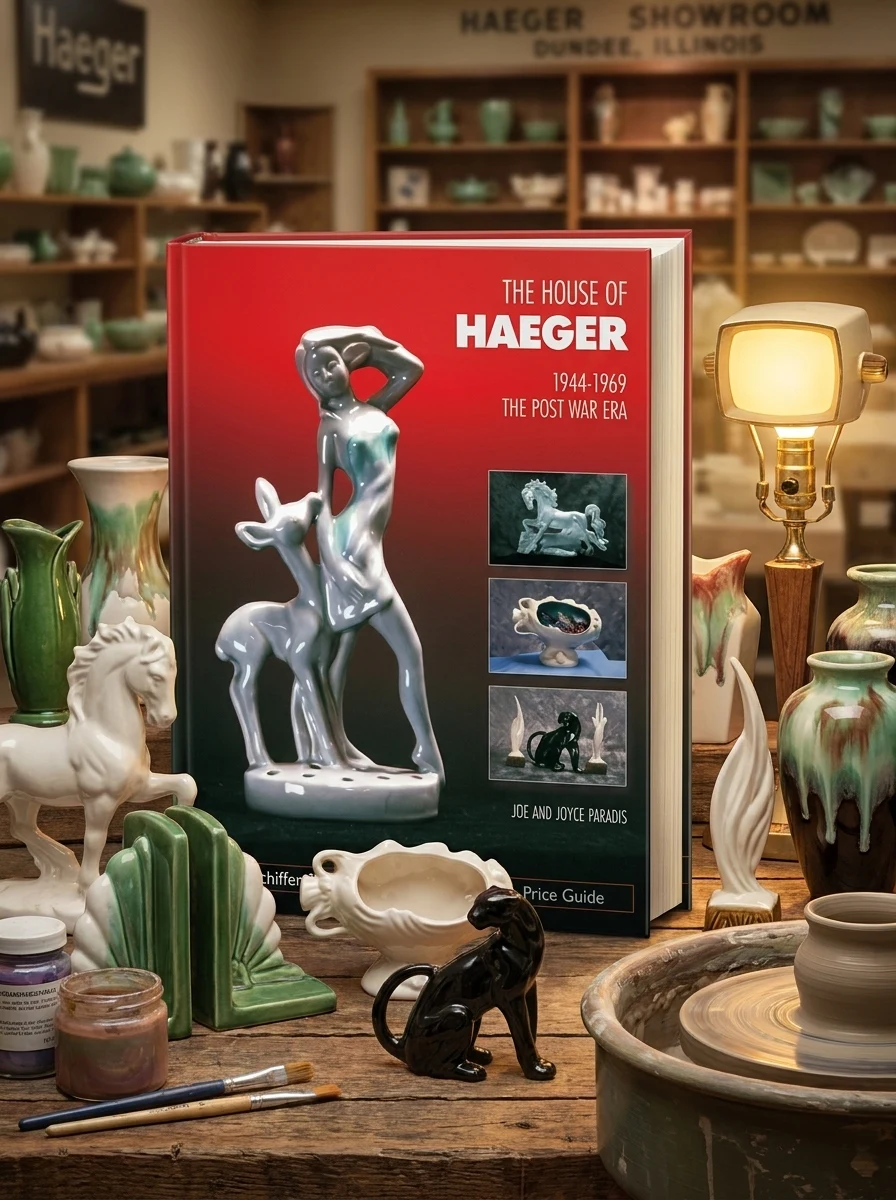

The House of Haeger 1944-1969: The Post-War Era Paradis
This edition can be ordered. No arrival date is confirmed.
Unearth the hidden spirits of mid-century design through Haeger's visionary ceramic artistry.
This comprehensive volume meticulously charts the captivating ceramic output of Haeger Potteries from 1944 to 1969. Through a wealth of over 370 striking photographs, it illuminates the distinctive forms and surface treatments that defined their post-war creations. From whimsical figurines to elegant vases and practical household items, the book explores the breadth of their artware. It also introduces the creative minds behind the designs, offering biographical sketches of key figures like Eric Olsen and Sebastiano Maglio, while providing essential market valuations for discerning collectors.
This volume situates Haeger Potteries within the vibrant post-war era of mid-century design, highlighting the intersection of artistic vision and industrial production during a transformative period for American craft ceramics. It serves as a historical record of how visionary artistry shaped household aesthetics and collector culture in the decades following 1944.


📝 Description: The House of Haeger 1944-1969: The Post-War Era Paradis
💎 Expert review
📖 Why choose it
Why this book is worth reading
This book is an essential treasure for dedicated collectors and design historians who wish to understand the nuanced evolution of Haeger Potteries during its most prolific years. Readers will gain profound appreciation for the distinctive forms and surface treatments that defined mid-century ceramic artistry, supported by over 370 striking photographs that bring each piece to life. The inclusion of biographical sketches regarding key figures like Eric Olsen and Sebastiano Maglio adds a deeply human layer to the technical details, while the provided market valuations offer practical utility for those navigating the collector's marketplace. It bridges the gap between aesthetic admiration and scholarly understanding, making it invaluable for anyone seeking to contextualize these whimsical figurines and elegant vases within their proper historical framework.
⭐ Reader reviews
Reader rating
Paradis delivers a meticulously researched chronicle of Haeger Potteries, offering unparalleled visual documentation through its extensive photographic archive. The text effectively balances artistic analysis with practical collector guidance, making it a robust reference tool for serious enthusiasts. However, readers seeking purely theoretical art criticism or abstract philosophical discourse may find the focus on market valuations and specific design histories somewhat dry. It is not suited for those uninterested in the tangible aspects of ceramics or the biographical details of mid-century designers. The work shines brightest as a comprehensive guide for identification and appreciation rather than a narrative exploration, requiring a reader who values concrete data and visual evidence over speculative interpretation.
❓ Frequently asked questions
📖 Who should read this
If you're a devoted Haeger collector, an admirer of mid-century design, or simply fascinated by the material culture that shaped post-war American homes, this volume will serve as an indispensable guide. Discover the stories behind the glazes and forms that define an era.
🎯 Key themes and symbolism
Post-War Aesthetic Evolution
Explore how Haeger's designs mirrored and shaped the changing tastes of a nation recovering from war. From bold, dramatic forms to playful, whimsical pieces, this book showcases the innovative ways ceramic art reflected the era's evolving domestic and artistic sensibilities, becoming integral to the mid-century home.
Masters of Ceramic Craft
Delve into the artistry and technical prowess behind Haeger's enduring appeal. Featuring insights into the work of design director Eric Olsen and ceramic engineer Helmut Bruchmann, the text highlights the company's commitment to high-quality glazes and often trend-setting shapes, revealing the hands and minds that brought these pieces to life.
The Collector's Compass
For enthusiasts and seasoned collectors, this guide offers invaluable insights into specific Haeger lines, including Studio Haeger and Flowerware. Each featured piece includes contemporary market valuations, providing a practical tool for assessing acquisitions and understanding the economic landscape of vintage ceramic art.
💬 Quotes from the book
“The 'Black Panther' planter, with its sleek, elongated form and obsidian-like glaze, embodies the dramatic flair and daring elegance that defined Haeger's most sought-after mid-century pieces.”
“Recognizing the visionary talent of Sebastiano Maglio, an eighth-generation Italian potter, Haeger embraced a lineage of craft that infused their later works with an unparalleled sense of sculptural grace.”
📜 Historical context
📚 Glossary
- Artware
- Glaze
- Studio Haeger
📔 Questions to reflect on
- Consider a mass-produced object from your own home. What story does its design tell about the era it was created in?
- How might the work of designers like Eric Olsen or potters like Sebastiano Maglio influence your own creative endeavors, even outside of ceramics?
- Reflect on the idea of 'collecting.' What draws us to gather objects, and what deeper meaning do these assemblages hold for us?
📖 From the series “Schiffer Book for Collectors”
All books in the series →
 88
88


 85
85

🏛 Books from this publisher Schiffer Publishing
All books from this publisher → 89
89






You might also like
See more →
 91
91
 91
91

 91
91
 91
91