US shipping Secure card payment Occult and esoteric books

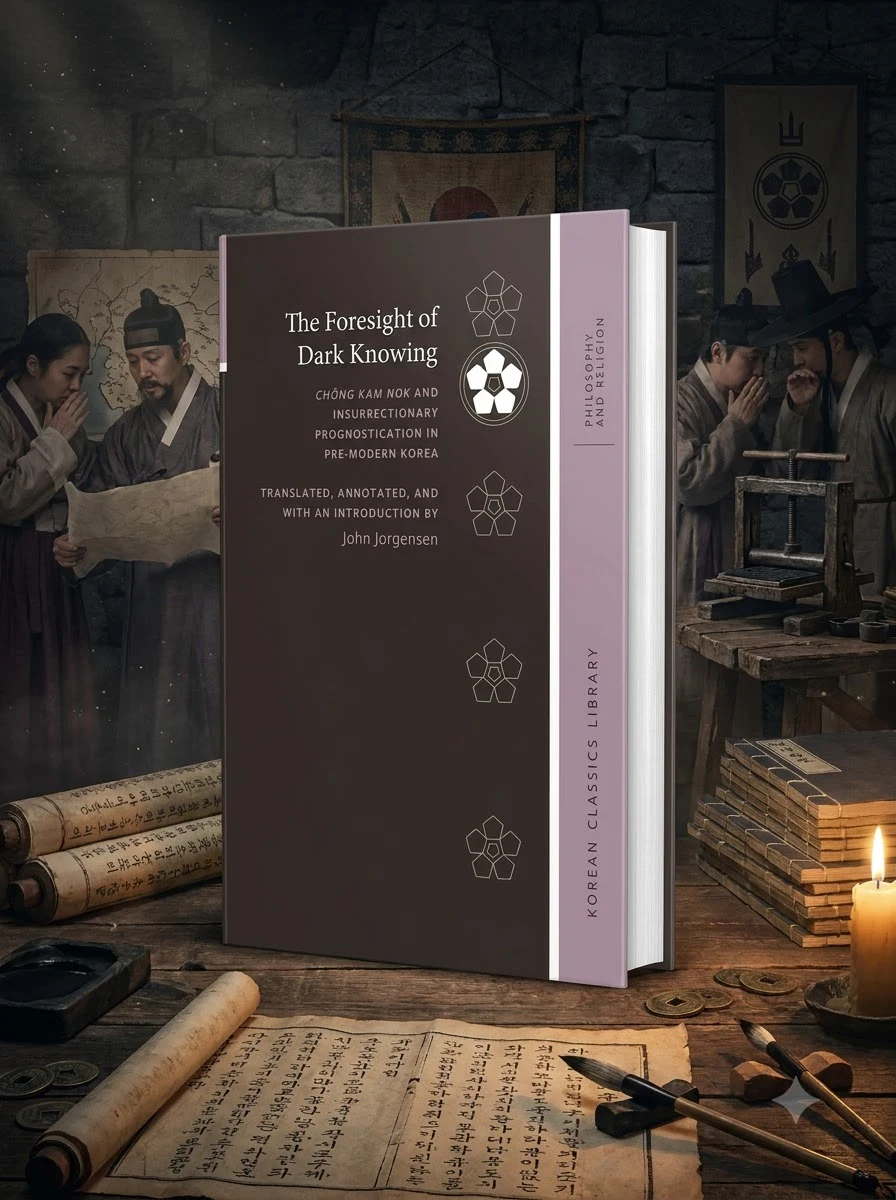
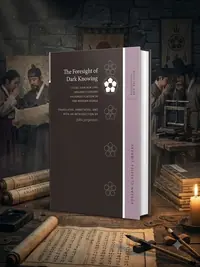
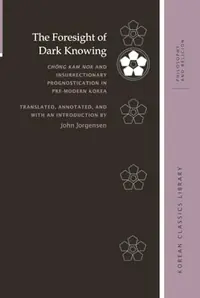
The Foresight of Dark Knowing: Chŏng Kam Nok and Insurrectionary Prognostication in Pre-Modern Korea Jorgensen, John

Jorgensen, John; , Buswell, Robert E
Reader rating
4.6
(1 reviews) 157 sold
Availability to be confirmed

This edition can be ordered. No arrival date is confirmed.

📚 ABOUT THE BOOK

Unearth Korea's secret prophecies that sparked uprisings and reshaped history.

Step into the shadowy world of pre-modern Korea with John Jorgensen's groundbreaking translation of the Chŏng Kam nok. This seminal collection of anonymous, undated texts served as a powerful underground literature, predicting the downfall of the Yi Dynasty and igniting numerous revolts. Jorgensen's meticulous work not only presents the first English translation but also delves into the unique blend of Chinese geomancy and indigenous prognostic codes that fueled these insurrectionary prophecies, revealing how ancient divinatory practices shaped political dissent and inspired movements even into modern times.

Key themes
Insurrectionary Prophecy Korean Dynastic History Divinatory Codes & Geomancy
Historical context

This work situates itself within the realm of pre-modern Korean esoteric literature, specifically focusing on the underground tradition of insurrectionary prognostication that utilized geomancy and indigenous codes to challenge political authority.


Difficulty
●●● Demanding
Fans will love it
Historical scholars of East Asian dynastic transitions · Readers interested in the intersection of divination and political dissent · Academics studying comparative esoteric traditions in Asia
🌌 Mysticism
🏛 University of Hawaii Press 📅 2018 📖 462 pages 📔 Hardcover 📐 Hardcover ISBN: 9780824875381
Fun fact
Jorgensen's 'The Foresight of Dark Knowing' is a monumental achievement, offering an unparalleled window into a crucial aspect of Korean esoteric and political history. Its rigorous scholarship and the first English translation make it indispensable for serious students of divination and East Asian studies. While not a light read, those seeking a deep dive into the complex interplay of prophecy, power, and culture will find it profoundly rewarding. It might disappoint casual readers looking for simpler narratives, but it firmly establishes itself as a foundational text in its field.

📝 Description: The Foresight of Dark Knowing: Chŏng Kam Nok and Insurrectionary Prognostication in Pre-Modern Korea Jorgensen, John

Korea has long had an underground insurrectionary literature. The best-known example of the genre is the Chŏng Kam nok, a collection of premodern texts predicting the overthrow of the Yi Dynasty (1392-1910) that in recent times has been invoked by a wide range of groups to support various causes and agendas: from leaders of Korea's new religious movements formed during and after the Japanese occupation to spin doctors in the South Korean elections of the 1990s to proponents of an aborted attempt to move the capital from Seoul in the early 2000s. Written to inspire uprisings and foment dissatisfaction, the Chŏng Kam nok texts are anonymous and undated. (Most were probably written between the seventeenth and late nineteenth centuries.) In his expansive introduction to this first English translation, John Jorgensen notes that the work employs forms or codes of political prediction (Ch. tuch'en; Kor. toch'am) allied with Chinese geomancy (fengshui) but in a combination unique to Korea. The two types of codes appear to deal with different subjects--the potency of geographical locations and political predictions derived from numerological cycles, omens, and symbols--but both emerge from a similar intellectual sphere of prognostication arts that includes divination, the Yijing (Book of Changes), physiognomy, and astrology in early China, and both share theoretical components, such as the fluctuation of ki (Ch. qi). In addition to ambiguous and obscure passages, allusion and indirection abound; many predictions are attributed to famous people in the distant past or made after the fact to lend the final outcome an air of authority. Jorgensen's invaluable introduction contains a wealth of background on the history and techniques of political prediction, augury, and geomancy from the first-century Han dynasty in China to the end of the nineteenth century in Korea, providing readers with a thorough account of East Asian geomancy based on original sources. This volume will be welcomed by students and scholars of premodern Korean history and beliefs and those with an interest in early, arcane sources of political disinformation that remain relevant in South Korea to this day.

💎 Expert review

💎
Esoterica Books editorial team
Occult literature desk
Jorgensen’s work is a rigorous academic contribution that will deeply satisfy specialists in Korean history and esoteric studies. However, it is decidedly not suited for casual readers seeking narrative adventure or accessible pop-history. The dense analysis of geomancy and insurrectionary codes may overwhelm those without a background in Asian political theory or occult traditions. While the translation is groundbreaking, the text demands patience and scholarly focus. Readers expecting a straightforward historical chronicle will likely find it too abstract and theoretical. It is a vital resource for researchers but remains inaccessible to the general public due to its specialized nature and lack of narrative flair.
✓ EDITOR'S REVIEW

📖 Why choose it

📖

Why this book is worth reading

Scholars and enthusiasts of Korean history will find immense value in Jorgensen’s meticulous translation of the Chŏng Kam nok, a seminal collection that offers rare insight into how ancient divinatory practices fueled political dissent. This book is essential for those seeking to understand the mechanisms behind pre-modern uprisings and the power of secret prophecies in reshaping societal structures. By revealing the blend of Chinese geomancy and indigenous codes, Jorgensen provides a unique lens through which to view the enduring influence of esoteric thought on modern movements. It is not merely a historical text but a vital key to understanding the spiritual undercurrents of resistance that have persisted across centuries.

⭐ Reader reviews

The starting rating comes from the team Esoterica Books —
⭐ Esoterica editorial review Editorial rating 4.6/5
★★★★
If you're fascinated by the intersection of prophecy, political dissent, and East Asian history, this volume is an essential addition to your collection. Delve into the hidden currents that shaped a dynasty and discover the enduring power of subversive texts.

Reader rating

4.6
Based on 1 reviews
5
0
4
1
3
0
2
0
1
0
E
Esoterica Books editorial team

Jorgensen’s work is a rigorous academic contribution that will deeply satisfy specialists in Korean history and esoteric studies. However, it is decidedly not suited for casual readers seeking narrative adventure or accessible pop-history. The dense analysis of geomancy and insurrectionary codes may overwhelm those without a background in Asian political theory or occult traditions. While the translation is groundbreaking, the text demands patience and scholarly focus. Readers expecting a straightforward historical chronicle will likely find it too abstract and theoretical. It is a vital resource for researchers but remains inaccessible to the general public due to its specialized nature and lack of narrative flair.

❓ Frequently asked questions

It is a collection of anonymous, undated pre-modern Korean texts that predict the overthrow of the Yi Dynasty, often used to inspire insurrections.
This is the first comprehensive English translation of the Chŏng Kam nok, offering unprecedented access to a pivotal work of Korean political and esoteric thought.

📖 Who should read this

If you're fascinated by the intersection of prophecy, political dissent, and East Asian history, this volume is an essential addition to your collection. Delve into the hidden currents that shaped a dynasty and discover the enduring power of subversive texts.

🎯 Key themes and symbolism

Insurrectionary Prophecy

This book unveils how the Chŏng Kam nok texts were deliberately crafted to sow discord and inspire rebellion against the ruling powers. It explores the sophisticated methods used to forecast dynastic change, examining how these anonymous works became potent tools for challenging authority and shaping the political landscape through mystical foresight, from ancient rebellions to contemporary social movements.

Korean Dynastic History

Discover the turbulent backdrop of the Yi Dynasty (1392-1910), a period ripe for mystical intervention and political upheaval. The Chŏng Kam nok is presented not just as a collection of prophecies, but as a living document that profoundly influenced Korea's historical trajectory, acting as a catalyst for numerous movements seeking to overthrow or reform the established order over centuries.

Divinatory Codes & Geomancy

Explore the intricate divinatory systems at play, a unique Korean fusion of Chinese geomancy (fengshui) and indigenous political prediction methods known as tuch'en or toch'am. The book meticulously details how geographical potency, numerological cycles, omens, and symbolic interpretations converged to form a complex prognostic framework, offering insights into the cosmological underpinnings of ancient Korean political thought.

💬 Quotes from the book

“When the dragon's breath falters, a new star shall rise from the south, challenging the old order.”

“The mountain's chi flows not to the capital, but to the hidden valleys where rebellion gathers strength.”

📜 Historical context

The Chŏng Kam nok emerged during the long reign of the Yi Dynasty, a period marked by political intrigue and social unrest in Korea. These texts provided a spiritual and intellectual framework for resistance, offering a perceived divine justification for overthrowing the established order, deeply embedding themselves in the nation's cultural and political consciousness for centuries.

📚 Glossary

Chŏng Kam nok
Yi Dynasty
Geomancy (Fengshui)

📔 Questions to reflect on

  1. How might a society's divination practices influence its political stability or revolutionary movements?
  2. Consider how 'underground literature' today might function similarly to the Chŏng Kam nok in shaping public sentiment.
  3. Reflect on the ethical implications of using prophetic texts to justify political actions or inspire insurrections.

You might also like

See more →