

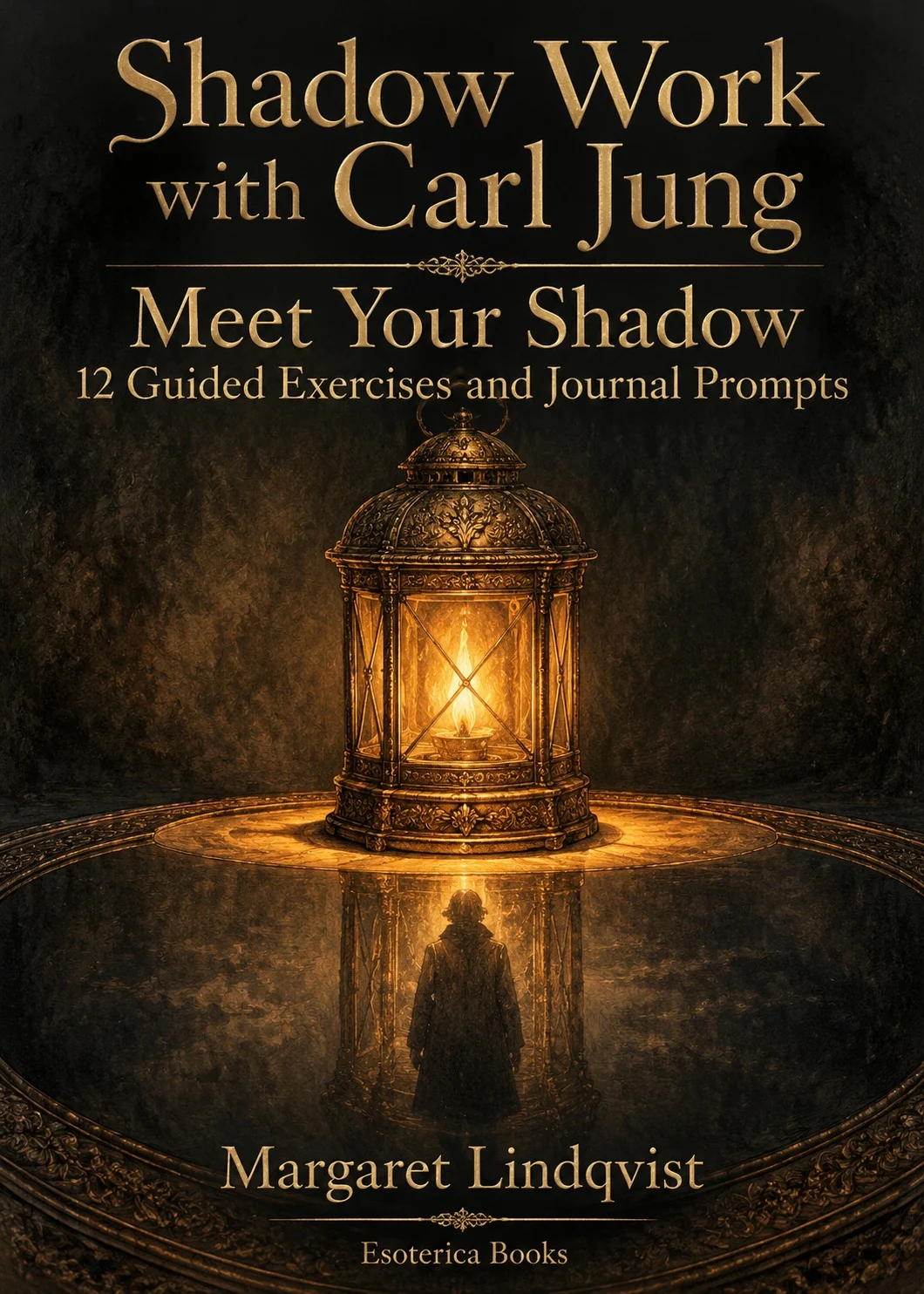
Shadow Work with Carl Jung: Meet Your Shadow
Meet your shadow through 12 guided exercises and discover what your strongest reactions may reveal about you.
Shadow Work with Carl Jung introduces beginners to the Jungian concept of the shadow: the overlooked, hidden, or rejected aspects of personality that the conscious self struggles to acknowledge. Margaret Lindqvist offers a practical approach through twelve guided exercises and The Lantern Practice, a four-step method of Notice, Name, Listen, and Choose. Readers explore emotional triggers, envy, judgment, projection, childhood expectations, hidden desires, and recurring relationship patterns. With structured journal questions and accessible explanations, the workbook turns abstract Jungian ideas into manageable exercises in self-observation, personal reflection, and conscious integration.
The book draws on Carl Gustav Jung's analytical psychology, particularly its understanding of the shadow, persona, projection, and individuation. It presents shadow work as a contemporary reflective practice rooted in Jungian concepts, with personal journaling as its central activity.


📝 Description: Shadow Work with Carl Jung: Meet Your Shadow
📖 Why choose it
Why this book is worth reading
Jung's concept of the shadow can sound abstract until you connect it with an ordinary experience: resenting someone's confidence, feeling unexpectedly defensive, or hiding an ambition you secretly admire. This workbook makes those connections its starting point. The four-step Lantern Practice provides a repeatable structure, while twelve exercises gradually expand the inquiry from everyday irritation to projection, hidden desires, and conscious integration. Its greatest appeal is practicality: you are not simply reading about Jungian ideas but putting them to work on your own journal pages.
⭐ Reader reviews
Reader rating
Margaret Lindqvist takes a sensible approach to introducing Jungian shadow work: begin with something ordinary, such as irritation toward a colleague, and use it as material for careful self-observation. The Lantern Practice gives the workbook a recognizable structure, while its twelve exercises cover a useful range of subjects, from envy and shame to projection, hidden desires, and integration. Particularly welcome is the instruction to separate observable behavior from personal interpretation. This prevents the concept of projection from becoming an automatic explanation for every disagreement. The main limitation is its introductory scope: readers seeking detailed engagement with Jung's original writings or advanced analytical psychology will need additional reading. As a practical first workbook, however, its organization is clear and approachable.
❓ Frequently asked questions
📖 Who should read this
Ideal for beginners curious about Carl Jung, personal shadow work, and the meaning of recurring emotional reactions or relationship patterns. Particularly suitable for readers who prefer guided journaling, practical exercises, and clear explanations over dense psychological theory.
🎯 Key themes and symbolism
Jungian Shadow Work
Emotional Self-Observation
Projection and Envy
Conscious Integration
📜 Historical context
📚 Glossary
- Shadow
- Persona
- Ego
- Projection
- Integration
- Individuation
📔 Questions to reflect on
- Which three qualities in other people provoke the strongest reactions in me, and could any of those qualities reflect something I have difficulty acknowledging in myself?
- What parts of my personality have I learned to hide to meet family expectations, social roles, or other people's ideas of who I should be?
- Which two apparently opposing qualities coexist within me, and how might I make room for both when choosing my next action?
📖 Read on the blog
✍️ More books by this author Margaret Lindqvist



🏛 Books from this publisher Esoterica Books
All books from this publisher →






You might also like
See more →
Have a question about this item?
Ask about the edition, condition, delivery or anything else — we reply by email or phone, usually within a day.
A teacher featured in this book: Carl Gustav Jung
