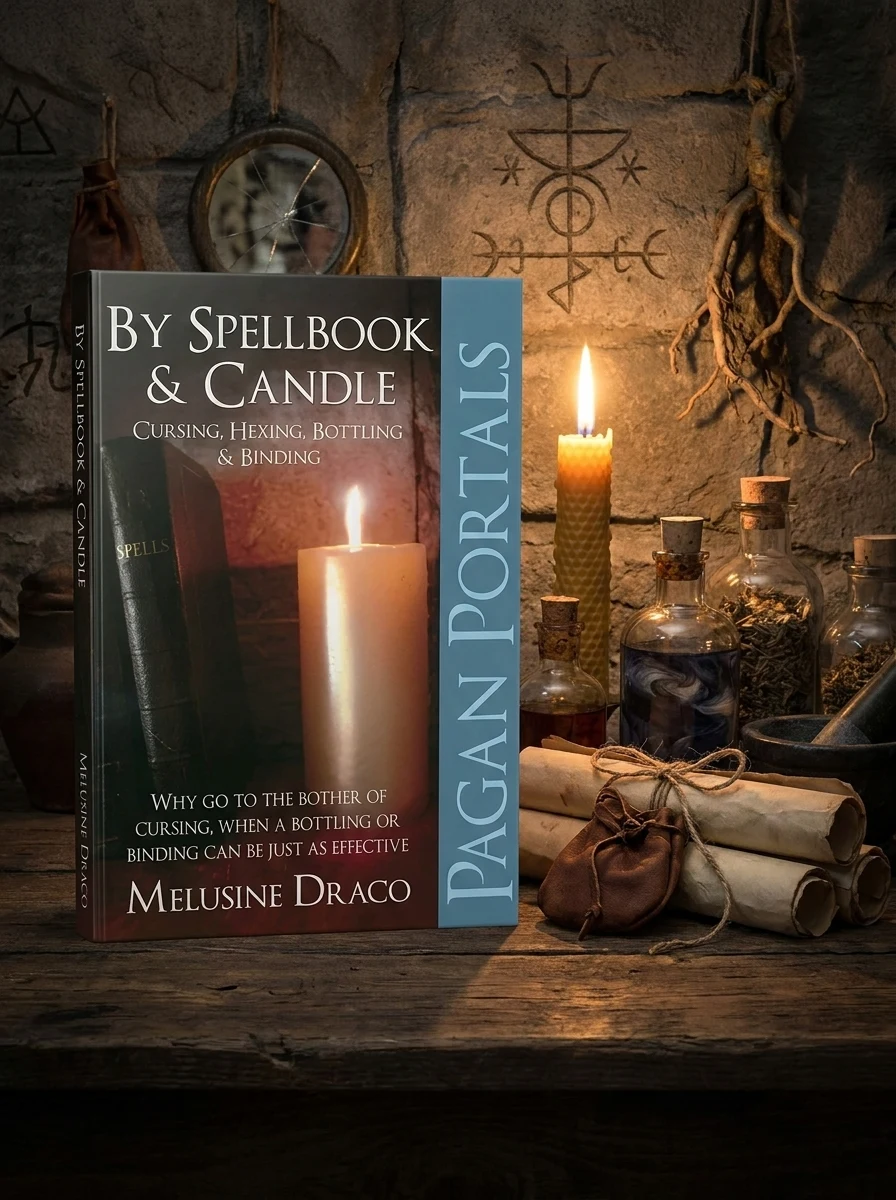
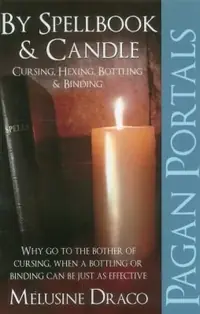
Pagan Portals - Spellbook & Candle: Cursing, Hexing, Bottling & Binding
Draco, MelusineThis edition can be ordered. No arrival date is confirmed.
Dare to explore the shadowed ethics of ill-wishing and the potent power of the curse.
Melusine Draco delves into the often-misunderstood world of curses, hexes, and binding spells. This insightful volume moves beyond sensational folklore, examining how ill-wishing manifests across cultures and throughout history, not solely within formal magical traditions. It provocatively questions the definitions of 'curse' and 'evil,' prompting readers to consider the circumstances under which such actions might be justified. Draco encourages a critical perspective, urging practitioners and curious minds alike to ponder the deep ethical implications before casting judgment or intent.
This volume situates itself within the broader witchcraft and Wicca tradition by examining ill-wishing practices across various cultures and historical periods, rather than limiting its scope to formal magical lineages.


📝 Description: Pagan Portals - Spellbook & Candle: Cursing, Hexing, Bottling & Binding
💎 Expert review
📖 Why choose it
Why this book is worth reading
Practitioners seeking to deepen their ethical framework will find this book invaluable. Melusine Draco invites readers to look past sensationalized folklore and confront the complex, shadowed ethics of ill-wishing. It is essential for those who wish to understand how curses and hexes manifest historically across different cultures, providing a nuanced view that challenges simple definitions of 'evil.' By questioning when such actions might be justified, Draco empowers curious minds and serious magickal workers to ponder the profound implications of their intent. This text serves as a necessary mirror for those ready to explore the potent power of binding and bottling spells with critical perspective and moral awareness, ensuring that their magical work is grounded in thoughtful consideration rather than impulse.
⭐ Reader reviews
Reader rating
Draco offers a provocative exploration of curses and hexes, moving beyond sensationalism to examine cultural history and ethical ambiguity. While intellectually stimulating for those willing to grapple with the shadowed aspects of magic, this book is not suited for beginners seeking quick spell instructions or readers who prefer strictly benevolent, light-only practices. It demands a willingness to confront uncomfortable questions about justification and intent. The text is dense with philosophical inquiry rather than practical ritual steps, which may disappoint those looking for immediate operational guidance. However, for the ethically minded witch, it provides a crucial framework for understanding the weight of ill-wishing in a nuanced, historically grounded manner.
❓ Frequently asked questions
📖 Who should read this
For those seeking to understand the deeper ethical and psychological currents behind ill-wishing, this book offers a challenging exploration. If you move beyond simplistic good/evil notions in magic, and desire critical insight, this volume is essential.
🎯 Key themes and symbolism
The Nature of Curses
Explores curses not just as magical acts but as universal expressions of harm, rooted in human emotion and intent, regardless of formal magical practice. It dissects the fundamental impulse behind ill-wishing.
Ethical Justification
Challenges readers to critically assess whether ill-wishing can ever be warranted, moving beyond simplistic good/evil binaries to explore complex moral considerations. It asks where the line is drawn.
Universal Practice
Highlights that the impulse to 'curse' or wish harm is a pervasive human behavior, transcending specific races, cultures, or religious beliefs, making it accessible to anyone, practitioner or not.
💬 Quotes from the book
“The impulse to direct ill will is as old as humanity itself, a primal whisper in the collective unconscious, not solely the domain of the ritual circle.”
“To dismiss all cursing as 'evil' without examining its context is to ignore the complex tapestry of human grievance and the desperate search for justice.”
📜 Historical context
📚 Glossary
- Cursing
- Hexing
- Binding
📔 Questions to reflect on
- Reflect on a time you felt an intense desire for someone to experience misfortune. What were the circumstances, and what did that feeling reveal about your own sense of justice or harm?
- Consider the difference between a spontaneous ill-wish and a ritualized curse. Do you perceive one as more 'magical' or 'potent' than the other, and why?
- If a curse is defined as "wishing evil upon," can any act of self-defense or protection, if it causes harm to an aggressor, be considered a form of justified cursing?
✍️ More books by this author Draco, Melusine
All books by this author →
 75
75
🏛 Books from this publisher Moon Books
All books from this publisher →
 81
81
 89
89
You might also like
See more →
 87
87