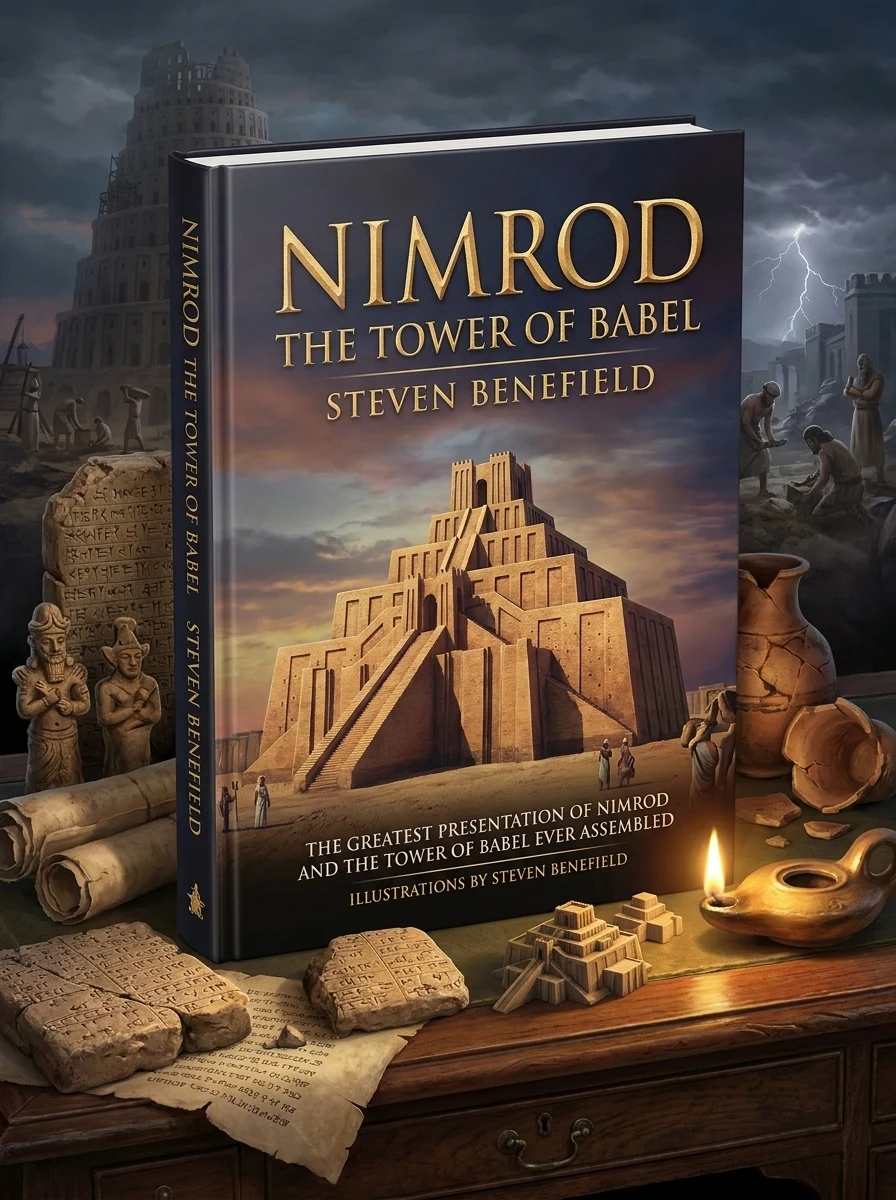
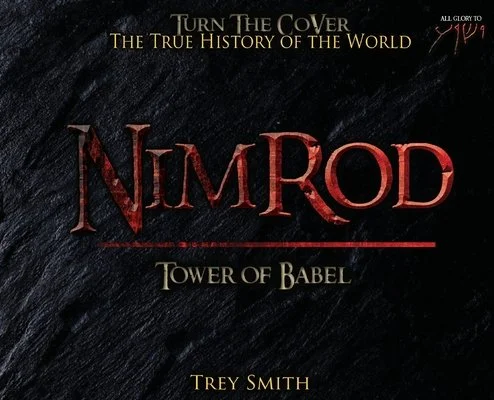
Nimrod: The Tower of Babel by Trey Smith (Nimrod)
A 90-page illustrated study comparing Sumerian texts and Hebrew scripture regarding Nimrod and the Tower of Babel.
This hardcover volume analyzes ancient Mesopotamian and Biblical narratives to reconstruct the story of Nimrod. Smith correlates the Sumerian figure Enmerkar with the Biblical builder of the Tower of Babel, pulling accounts from Jasher, Enoch, Genesis, and Gilgamesh. The work explores early post-flood history near Mount Ararat, detailed conflicts between Nimrod and Noah, and Abraham's encounters with ancient rulers. Maps, charts, and archaeological photography accompany the translations throughout all eight structured chapters.
The book sits at the intersection of ancient Near Eastern history, Sumerian literature, and biblical prophecy studies. It focuses on the early post-flood era around Mount Ararat, Uruk, and ancient Eridu, drawing directly from the oldest surviving written documents on earth.


📝 Description: Nimrod: The Tower of Babel by Trey Smith (Nimrod)
📑 What's inside
- 1) Blood-Lines
- 2) The Two Trees Light & Darkness
- 3) Tower of Babel
- 4) Signs
- 5) The War of Noah
- 6) Enmerkar & the Lord of Aratta
- 7) Abraham & the Fire of Nimrod
- 8) Abraham: The Fight of Faith
💎 Expert review
📖 Why choose it
Why this book is worth reading
Readers fascinated by the intersection of archaeology, theology, and ancient mystery will find this volume deeply rewarding. Trey Smith offers a compelling reconstruction of Nimrod’s legacy, inviting enthusiasts to look beyond standard biblical accounts into the rich tapestry of the Eridu Genesis and Gilgamesh. If you are drawn to uncovering forbidden secrets or exploring the audacious ambition behind humanity's earliest legends, this book provides a fresh, illustrated perspective. It is ideal for those who enjoy piecing together disparate ancient sources to form a cohesive, albeit reimagined, historical narrative about deities, timelines, and enigmatic figures like Noah.
⭐ Reader reviews
Reader rating
Smith delivers a richly illustrated, multidisciplinary exploration that synthesizes Genesis with Sumerian texts. While the ambition to reconstruct Nimrod’s identity through archaeological wonders is commendable, the approach relies heavily on speculative interpretation rather than strict academic rigor. Readers seeking dry, peer-reviewed historiography or strictly literal biblical exegesis may find the narrative too imaginative or disjointed. However, for those who appreciate esoteric history and enjoy weaving together mythological threads with archaeological findings, it serves as a stimulating, if unconventional, guide to the Tower of Babel’s enigmatic origins.
❓ Frequently asked questions
📖 Who should read this
For seekers of forgotten histories, biblical scholars open to reinterpretation, and enthusiasts of ancient mysteries, this volume offers a deeply researched and visually rich journey into the foundational myths of civilization. It challenges conventional views, inviting a broader understanding of early human narratives.
🎯 Key themes and symbolism
Ancient Genesis Narratives
This book intricately weaves together diverse ancient texts—from Hebrew scriptures like Genesis and Jasher to Sumerian tablets such as the Eridu Genesis—to construct a unified, yet provocative, account of early human history. It offers a panoramic view of creation myths and pre-deluge civilization, inviting readers to consider how these narratives might interlock.
Nimrod's Esoteric Role
Beyond conventional interpretations, the text explores Nimrod not merely as a biblical antagonist but as a complex figure, identifying him with the Sumerian 'Enmerkar,' meaning 'mighty hunter.' It delves into his ambitions, his relationship with Noah, and his connection to the 'summoning of Enki' at Babel, presenting a radical reinterpretation of this pivotal character.
Reclaiming Lost History
Utilizing a wealth of visual evidence, including actual archaeological sites, artifacts, and translated ancient documents, the book reconstructs the events surrounding the Tower of Babel. It aims to make distant history tangible and comprehensible, bridging gaps between ancient myth and physical evidence to offer a grounded, yet speculative, historical account.
📜 Historical context
📚 Glossary
- Nimrod
- Enki
- Eridu Genesis
📔 Questions to reflect on
- How might understanding diverse ancient narratives like the Eridu Genesis shift your perception of biblical accounts of early human history?
- Consider Nimrod's ambition to build the Tower of Babel. What contemporary parallels exist for projects driven by similar aspirations for power or defiance?
- If ancient texts contain hidden or reinterpreted meanings that challenge established history, what does this imply about the nature of historical truth and ongoing discovery?
You might also like
See more →







Have a question about this item?
Ask about the edition, condition, delivery or anything else — we reply by email or phone, usually within a day.
