
Journey to Mexico


Stock reported in the catalog; fulfillment is confirmed with your request.
Artaud's desperate flight from Europe plunges him into Mexico's primal heart, seeking a lost vital culture.
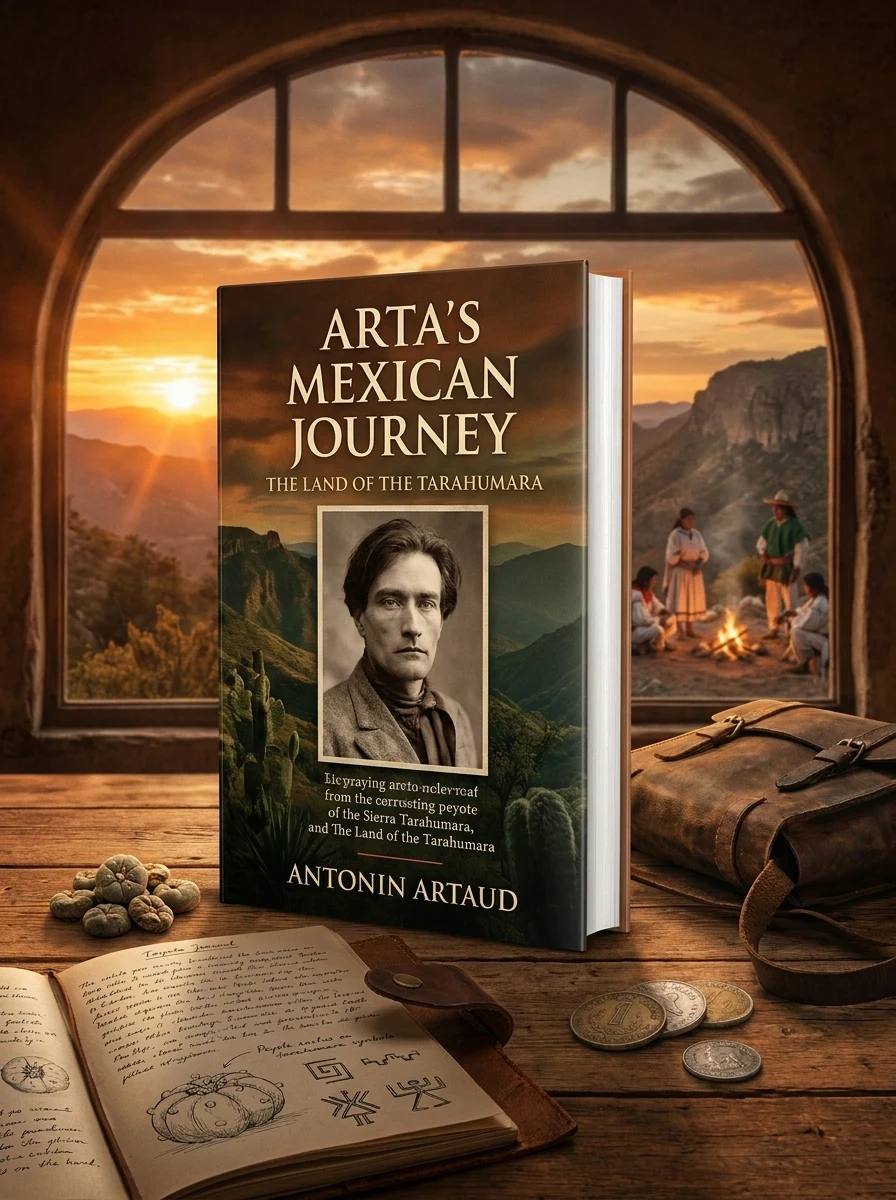
In 1936, the visionary Antonin Artaud abandoned Europe, driven by a profound disillusionment with Western civilization. His ten-month odyssey led him to Mexico, culminating in an intense period among the Tarahumara people in the remote Sierra. This collection chronicles his fervent quest for a "vital form of culture"—one where communal life and sacred rituals forged an authentic connection between humanity, the earth, and the cosmos. Artaud's journey was not merely physical; it demanded a rigorous aesthetic, religious, political, and philosophical decolonization, exacting a significant psychological toll on his very being.
This work sits at the intersection of surrealist literature and anti-colonial philosophy, documenting Artaud’s radical departure from Western intellectual norms in the mid-20th century. It serves as a visceral testament to the esoteric pursuit of primal authenticity amidst the collapse of European cultural confidence.


📝 Description: Journey to Mexico
💎 Expert review
📖 Why choose it
Why this book is worth reading
This book is essential for the seeker who feels suffocated by the artificiality of modern Western existence and craves a raw, unfiltered encounter with the human spirit’s primal roots. Artaud offers not just a travelogue, but a rigorous map of decolonization—psychological, aesthetic, and political. Readers drawn to the Tarahumara’s sacred rituals will find here a profound exploration of how communal life can forge an authentic connection between humanity, the earth, and the cosmos. It is for those willing to endure the psychological toll of such intense transformation in exchange for glimpses of a vital culture that transcends conventional civilization. If you seek to understand the desperate flight from disillusionment toward spiritual rebirth, this text provides the necessary, albeit difficult, path to that lost vital heart.
⭐ Reader reviews
Reader rating
Artaud’s narrative is an intense, often grueling immersion into the Sierra’s remote depths, demanding much from its audience. It is not suited for readers seeking light travelogues or comfortable cultural critiques; rather, it requires a tolerance for psychological strain and philosophical abstraction. Those expecting conventional historical analysis may find themselves alienated by the fervent, decolonial urgency that drives every page. However, for those prepared to engage with the aesthetic and religious rigor of his quest, the work offers a powerful, albeit exhausting, vision of authentic connection. It is a demanding text that rewards only those willing to confront the heavy price of seeking a vital culture beyond Western confines.
❓ Frequently asked questions
📖 Who should read this
If you're drawn to radical thought, the intersection of performance and spirituality, or the profound search for alternative cultural models, this book is for you. Engage with Artaud's raw, uncompromising vision and his challenging critique of modernity.
🎯 Key themes and symbolism
Rejection of the West
Artaud abandoned a Europe he deemed spiritually bankrupt, seeking an authentic, uncorrupted existence beyond its confines. His journey was a deliberate severing of ties with what he perceived as a decaying civilization, driven by a profound need for renewal and a departure from its intellectual and artistic constraints.
Quest for Primal Culture
He yearned for a society deeply connected to its land, where ritual and belief organically linked humanity to the earth and cosmos. The indigenous Tarahumara offered a glimpse of this ancient, vibrant way of life he desperately sought, a stark contrast to the modern world he had left behind.
Internal Decolonization
Artaud understood that embracing a new cultural paradigm required a rigorous dismantling of his own ingrained Western perspectives. This intellectual and spiritual unlearning process, an "aesthetic, religious, political, and philosophical decolonization," carried a significant psychological toll, reshaping his very being and worldview.
💬 Quotes from the book
“I came to Mexico to escape European civilization ... I hoped to find a vital form of culture.”
“a vital form of culture ... wherein the rituals of religion, reinforced a connection in human lives between the earth and the sun.”
📜 Historical context
📚 Glossary
- Theater of Cruelty
- Tarahumara (Rarámuri)
- Decolonization
📔 Questions to reflect on
- What aspects of contemporary society do you find yourself wanting to 'escape,' and what might a 'vital form of culture' look like for you personally?
- Consider Artaud's notion of 'aesthetic, religious, political, and philosophical decolonization.' How might one begin this process in their own life to challenge ingrained perspectives?
- Artaud's journey carried a 'psychological cost.' Reflect on moments in your own life where profound personal or intellectual transformation came with significant internal struggle.
You might also like
See more →