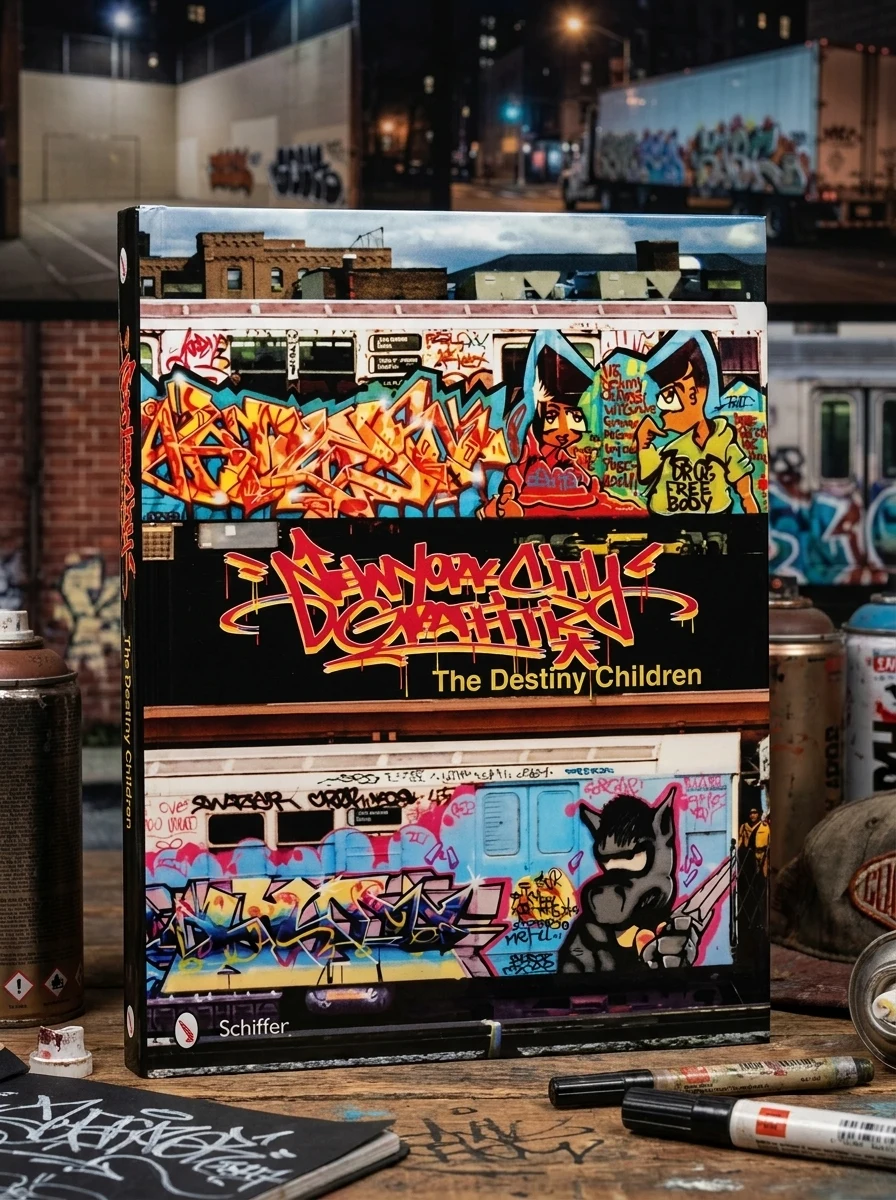
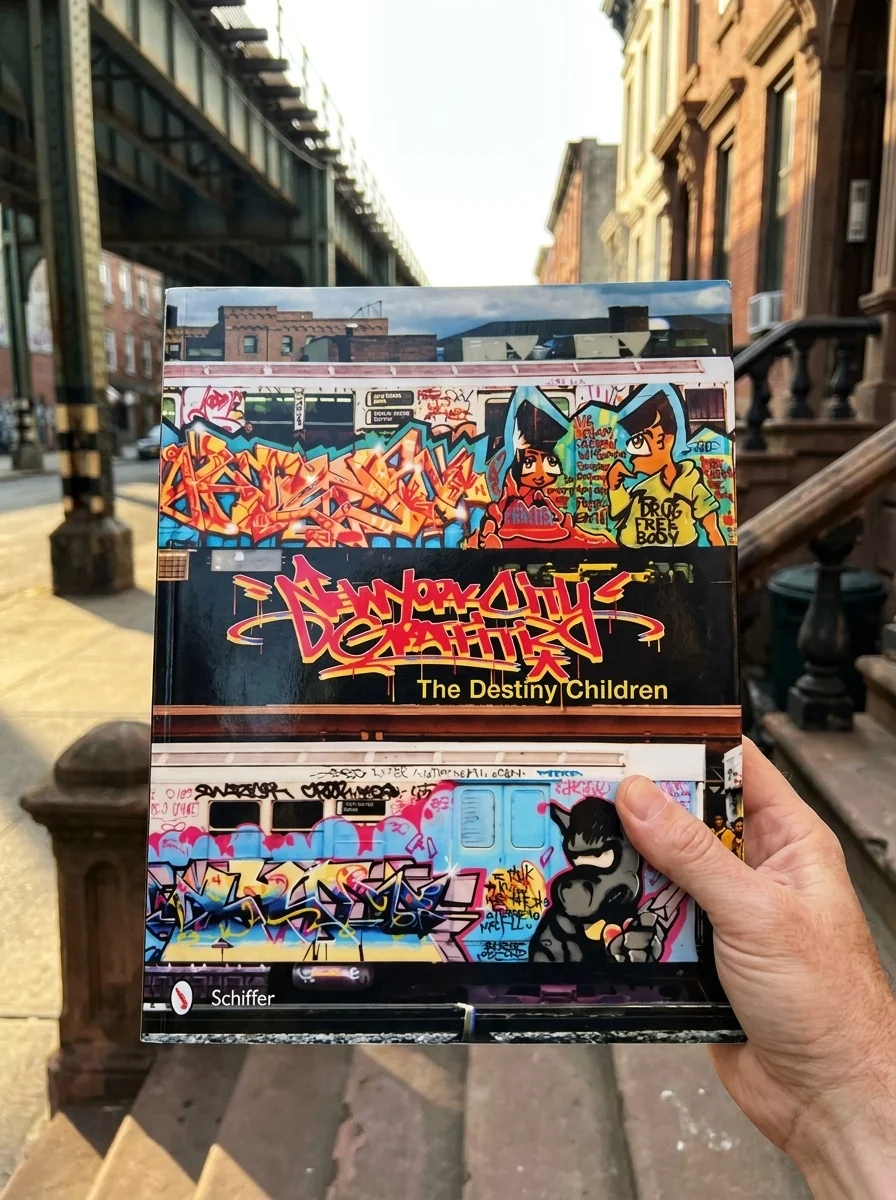

New York City Graffiti: The Destiny Children
This volume chronicles the twenty-five-year journey of the Destiny Children, a formidable graffiti collective emerging from Long Island during the golden age of subway art. It serves as a visual and narrative archive, preserving the crew's evolution from 1985 to 2000. The book features hundreds of vibrant photographs capturing their most daring pieces, from massive train cars to handball court murals. Beyond the art, it offers gritty firsthand accounts of the culture's underground life, detailing the camaraderie, conflicts, and risks that defined this pivotal era in street art history.


📝 Description: New York City Graffiti: The Destiny Children
💎 Expert review
📖 Why choose it
Why this book is worth reading
This book is an essential read for anyone fascinated by the raw energy and colorful legacy of New York City’s legendary Destiny Children graffiti crew. It offers readers a unique visual and narrative archive, preserving the crew's twenty-five-year journey from their emergence in Long Island to their peak influence. Through hundreds of vibrant photographs of daring pieces on train cars and handball courts, it captures the aesthetic brilliance of the golden age. Beyond the art, the gritty firsthand accounts provide deep insight into the camaraderie, conflicts, and risks that defined this underground life. It is perfect for collectors of street art history, sociologists studying urban subcultures, and fans of authentic, unfiltered cultural documentation from the late twentieth century.
⭐ Reader reviews
Reader rating
Ordered this after seeing it referenced in another book I was studying. I appreciated how the argument builds steadily from first principles. My only quibble is the cover feels thinner than expected.
Arrived faster than expected and well packaged. The material is presented clearly and the structure makes it easy to revisit key passages. The print is clean and easy on the eyes for long sessions. My only quibble is the cover feels thinner than expected. Still worth having on the shelf.
Took a chance on this and glad I did. The symbolism is layered and generous to patient readers. I found myself reading passages aloud just to sit with them. The font runs small in the appendices.
McAvoy’s work stands as a formidable visual archive, celebrating the Destiny Children’s impact on subway art with hundreds of vibrant photographs. While it succeeds beautifully in preserving the crew's evolution and offering gritty firsthand accounts of their underground life, it is not for readers seeking polished literary fiction or academic sociological theory. Those expecting high-brow philosophical discourse will find the narrative style too direct and grounded in street reality. However, enthusiasts of urban history, graffiti collectors, and those interested in the raw, unfiltered dynamics of 1980s and 1990s New York will find immense value in this candid look at a pivotal era. It is a celebration of art born from risk and camaraderie.
❓ Frequently asked questions
📖 Who should read this
Readers fascinated by urban history, street art aesthetics, and the documentary style of countercultural movements will find this collection deeply engaging and visually stunning.
🎯 Key themes and symbolism
Subway Art Legacy
The text explores how TDC artists navigated the chaotic, dangerous landscape of the New York City subway system, treating trains as mobile canvases for public expression.
Crew Dynamics
It examines the internal bonds and rivalries within the Destiny Children, highlighting how collaboration and competition fueled the creative output of writers like DC3, SHO, and ZOO.
Street Culture Reality
The narrative delves into the visceral experiences of the graffiti lifestyle, including police evasion, territorial disputes, and the adrenaline of painting in high-stakes urban environments.
📜 Historical context
📚 Glossary
- Burners
- Lay Ups
- Racking
📔 Questions to reflect on
- How does the risk of capture influence the aesthetic choices of street artists?
- What role does crew identity play in the development of a unique artistic style?
- How might the transition from subway cars to gallery walls change the meaning of street art?
📖 Read on the blog
🏛 Books from this publisher Schiffer Publishing
All books from this publisher →








You might also like
See more →








Have a question about this item?
Ask about the edition, condition, delivery or anything else — we reply by email or phone, usually within a day.
