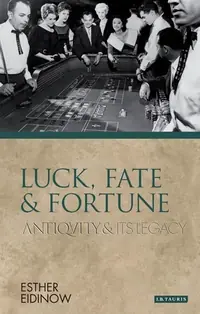
Luck, Fate and Fortune: Antiquity and Its Legacy Eidinow, Esther
Eidinow, Esther; , Vasunia, Phiroze 90
90
 Editorial score
How we rate
Editorial score
How we rate
Stock reported in the catalog; fulfillment is confirmed with your request.
Unravel humanity's enduring quest to predict and comprehend destiny, from ancient Greece to today.
Esther Eidinow's compelling work delves into the timeless human impulse to anticipate the future and find meaning in life's seemingly random events. She skillfully analyzes how ancient Greeks, through figures like Homer and Thucydides, grappled with notions of luck, fate, and fortune, exploring their diverse divination practices beyond just the famous Delphic Oracle. Eidinow seamlessly traces the evolution of these concepts through social and political shifts, demonstrating their profound legacy in our contemporary understanding of destiny, even drawing parallels to modern cultural narratives.
This work sits within the scholarly tradition of classical studies and historical anthropology, bridging ancient Greek thought with contemporary cultural analysis. It explores the enduring legacy of antiquity's concepts of destiny in modern understanding.


📝 Description: Luck, Fate and Fortune: Antiquity and Its Legacy Eidinow, Esther
💎 Expert review
📖 Why choose it
Why this book is worth reading
Readers fascinated by the philosophical underpinnings of human agency and cosmic order will find this book deeply rewarding. It is ideal for those who enjoy intellectual history that connects ancient textual analysis with modern psychological patterns. If you are interested in how societies construct meaning from randomness, this text provides a rigorous yet accessible framework. It appeals to students of classics seeking to understand the social functions of divination, as well as general readers curious about the historical roots of our current obsession with fate and fortune. The seamless tracing of these concepts offers a unique lens through which to view both ancient political shifts and contemporary cultural narratives.
⭐ Reader reviews
Reader rating
Eidinow presents a compelling scholarly argument that successfully links Homeric and Thucydidean perspectives on luck to modern destiny. However, it may not suit readers seeking practical divination techniques or esoteric rituals, as the focus remains strictly on historical and social analysis rather than occult practice. Those looking for a light, narrative-driven story might find the academic tone dry, as the work prioritizes rigorous examination of ancient figures over entertainment. It is best appreciated by those who enjoy dense, analytical texts that challenge our understanding of how ancient Greeks grappled with the unknown through diverse practices beyond the famous Delphic Oracle.
❓ Frequently asked questions
📖 Who should read this
If you're fascinated by the origins of our understanding of fate, the historical roots of divination, or the intersection of ancient philosophy with modern psychology, this book offers a profound journey. It's for anyone seeking to understand humanity's persistent grapple with the unknown.
🎯 Key themes and symbolism
Ancient Divination Practices
This book extensively examines the myriad ways ancient Greek society attempted to foresee outcomes, from widespread oracular sanctuaries to the personal philosophies of significant writers. It moves beyond simplistic views to reveal a complex cultural landscape of prediction and the profound human need to understand the unknown.
Evolving Concepts of Destiny
Eidinow illustrates how the understanding of fate and fortune was not static in antiquity. She traces its development through the works of authors like Herodotus and Demosthenes, showing how societal changes, political currents, and philosophical discourse influenced these fundamental beliefs about predetermined paths over time.
Legacy in Modern Thought
The author masterfully connects ancient Greek interpretations of luck and destiny to contemporary thought, utilizing approaches from cognitive anthropology. She reveals how these age-old ideas continue to shape our modern perceptions of chance, personal agency, and predetermined paths, even appearing in popular culture.
💬 Quotes from the book
“The human desire to impose order on the chaos of existence is as old as civilization itself, finding its earliest expressions in the anxious inquiries directed towards the oracles.”
“Far from a monolithic concept, fate in antiquity was a fluid construct, reshaped by political upheaval, philosophical discourse, and the evolving narratives of epic poetry.”
📜 Historical context
📚 Glossary
- Oracle
- Divination
- Cognitive Anthropology
📔 Questions to reflect on
- How do you personally distinguish between luck, fate, and fortune in your own life? What events or beliefs have shaped these distinctions for you?
- Consider a time you tried to predict an outcome or make sense of a random event. What methods or beliefs did you employ, consciously or unconsciously?
- If ancient Greek concepts of destiny continue to resonate today, what modern stories, films, or cultural phenomena best reflect their enduring influence?
📖 From the series “Ancients and Moderns”
All books in the series →
✍️ More books by this author Eidinow, Esther; , Vasunia, Phiroze
All books by this author →🏛 Books from this publisher I. B. Tauris & Company
All books from this publisher →
You might also like
See more →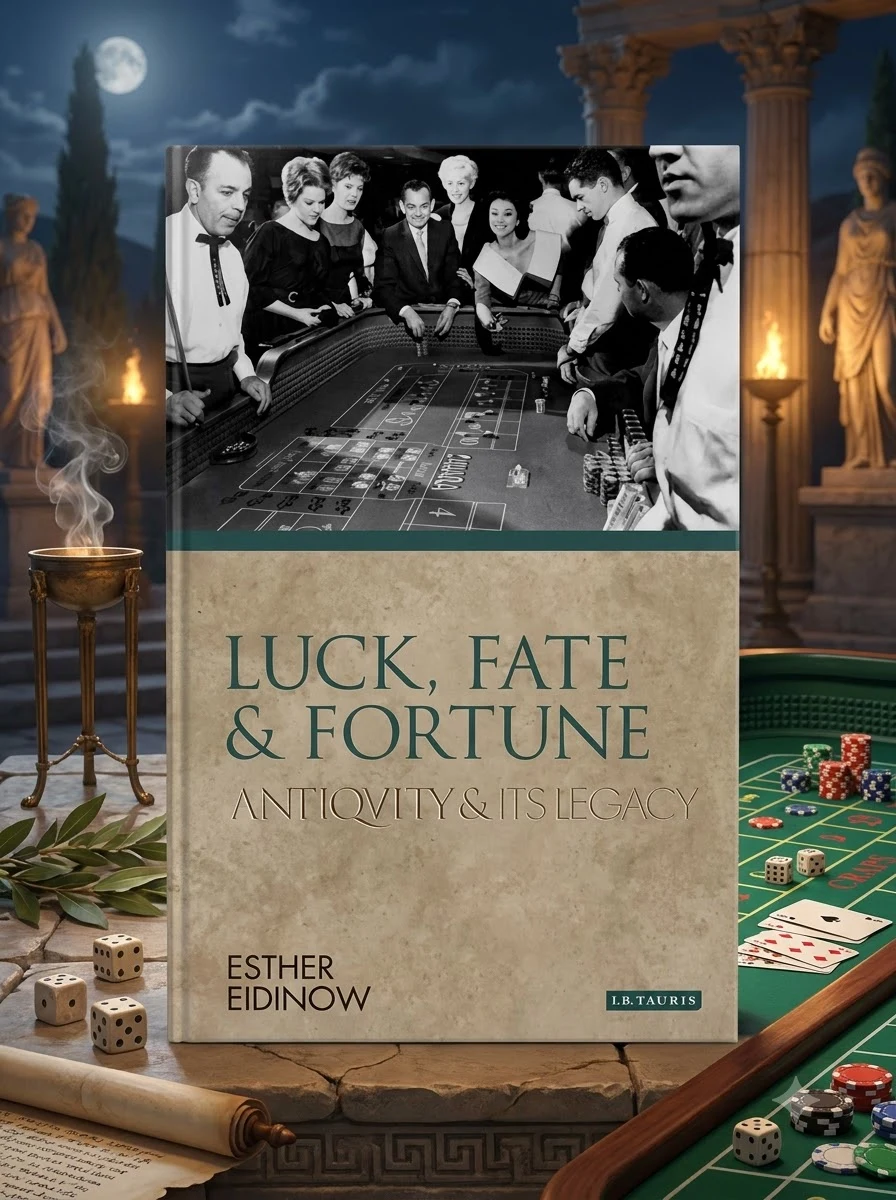
 91
91

 91
91