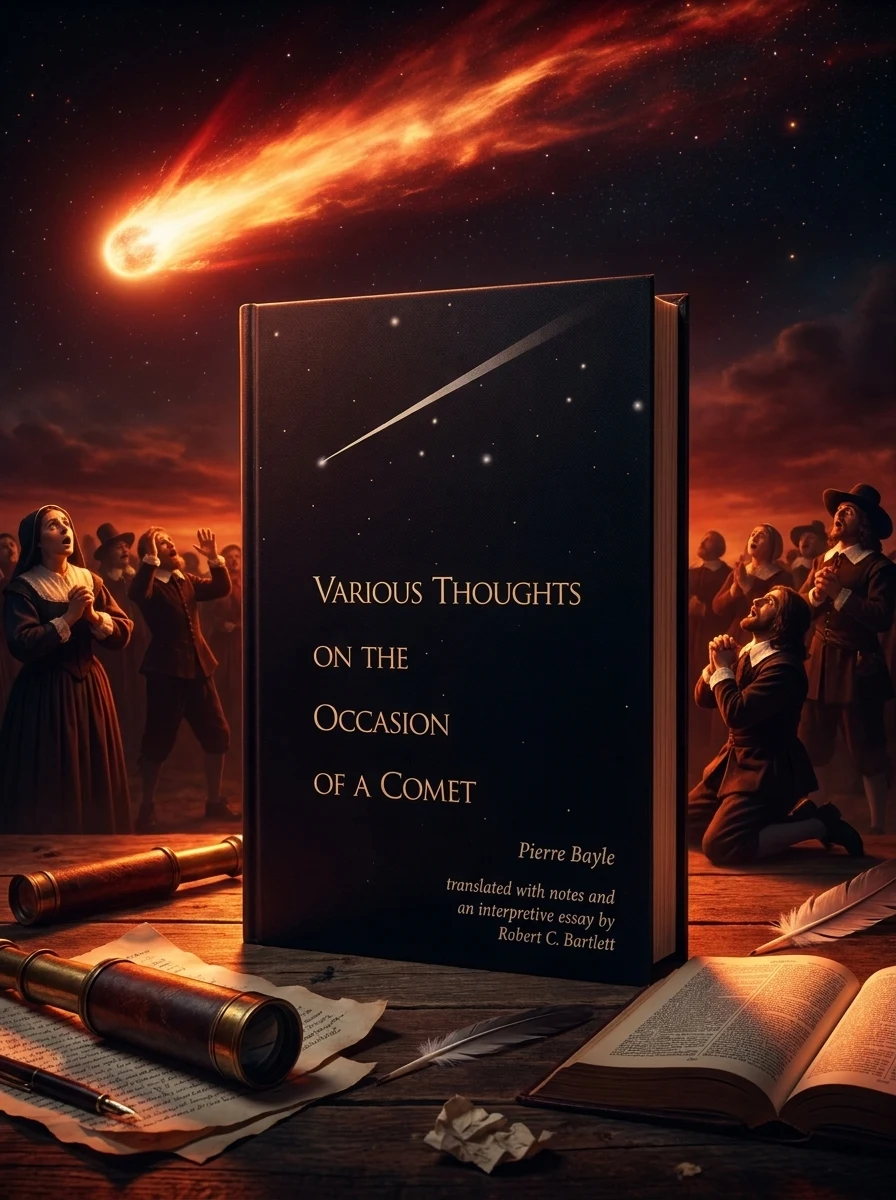
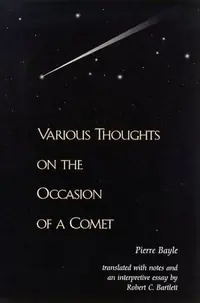
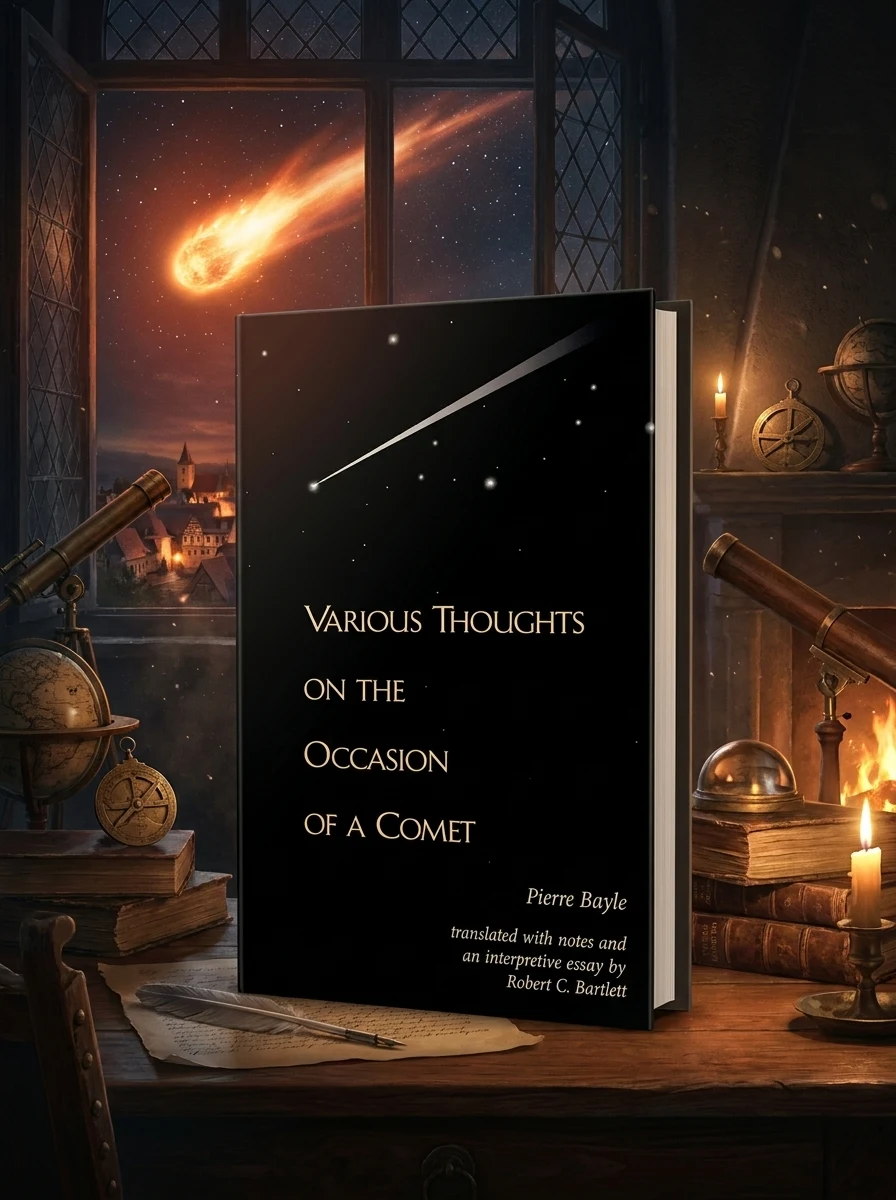
Various Thoughts on the Occasion of a Comet
This edition can be ordered. No arrival date is confirmed.
A celestial omen sparks panic; a philosopher ignites reason against fervent superstition.
In the wake of a terrifying 1680 comet, public fear and widespread superstition compelled Pierre Bayle, a seminal Enlightenment thinker, to pen this groundbreaking work. Bayle directly addresses the anxieties of his time, aiming to dismantle the hold of irrational belief on political thought. He famously posits the then-radical notion that a morally upright society could exist entirely independently of religious faith, a truly revolutionary idea for the era. This essential text lays foundational groundwork for secular governance and rational inquiry, offering a powerful intellectual counterpoint to fear-mongering.
This work stands as a pivotal artifact of the early Enlightenment, marking a decisive shift toward secular governance and rational inquiry amidst the backdrop of widespread religious superstition. It bridges the gap between theological fear-mongering and the emerging philosophical demand for moral independence from faith.


📝 Description: Various Thoughts on the Occasion of a Comet
💎 Expert review
📖 Why choose it
Why this book is worth reading
Readers deeply interested in the intellectual origins of secularism and the historical struggle against irrational fear will find this text profoundly rewarding. It offers a rare glimpse into how one seminal thinker dismantled panic-driven superstition to advocate for a morally upright society independent of religious dogma. For those fascinated by the roots of Enlightenment thought, this book provides essential context on how rational inquiry began to challenge political and social anxieties. It is particularly valuable for scholars and enthusiasts who appreciate the courage required to propose radical ideas that separate ethics from theology, making it a crucial addition to any library focused on the history of reason.
⭐ Reader reviews
Reader rating
This text is a formidable intellectual exercise rather than light reading. While its argument for secular morality is historically significant, the dense philosophical discourse may alienate casual readers seeking narrative or simple answers. It does not suit those looking for practical divination techniques, despite its placement in esoteric sections, nor will it appeal to individuals who prefer religious frameworks as the sole basis for ethics. Readers expecting a straightforward historical account of comets will likely find the focus on political thought and rational inquiry too abstract. However, for those willing to engage with rigorous Enlightenment argumentation, it remains an indispensable, albeit demanding, primary source.
❓ Frequently asked questions
📖 Who should read this
If you are fascinated by the origins of secular thought, the birth of the Enlightenment, or the historical struggle between faith and reason, this book is indispensable. It's for anyone who appreciates a philosopher daring to challenge the prevailing dogmas of his time.
🎯 Key themes and symbolism
Reason Over Superstition
Bayle meticulously dissects the panic surrounding the comet, arguing forcefully that celestial events are natural phenomena, not divine omens of earthly catastrophe. He champions empirical observation and rational deduction as superior to fear-driven interpretations, advocating for a societal shift away from unfounded beliefs toward logical understanding.
The Atheist Society's Morality
Perhaps the most audacious concept presented, Bayle controversially suggests that a community of atheists could, in principle, be just as moral and well-ordered as any religious society. This challenged centuries of thought by divorcing ethics from divine mandate, paving the way for secular humanism and political tolerance.
Challenging Political Dogma
The work critiques how religious superstition was often manipulated to influence or control political life. Bayle's analysis implicitly argues for a separation of church and state, or at least a governance system free from the sway of irrational fears, thereby reinforcing the autonomy of political thought and decision-making.
💬 Quotes from the book
“"I tremble when I recall the terrible appearance [the comet] had on Saturday evening in the clear sky, when it was observed by everybody with inexpressible astonishment."”
“"O wonderful almighty God! The heavens show thy might and the earth thy handiwork!"”
📜 Historical context
📚 Glossary
- Comet
- Enlightenment
- Atheism
📔 Questions to reflect on
- How do contemporary societal fears or anxieties parallel the 17th-century reaction to the comet, and how might Bayle's emphasis on reason apply today?
- If a virtuous society of atheists is indeed possible, what non-religious ethical frameworks or principles would be most crucial for its sustained moral order?
- Reflect on a current public debate or event where emotional or superstitious interpretations seem to override factual analysis. How would Bayle's analytical approach dissect and reframe that narrative?
🏛 Books from this publisher State University of New York Press
All books from this publisher →
You might also like
See more →
 84
84
 82
82

 91
91
 91
91