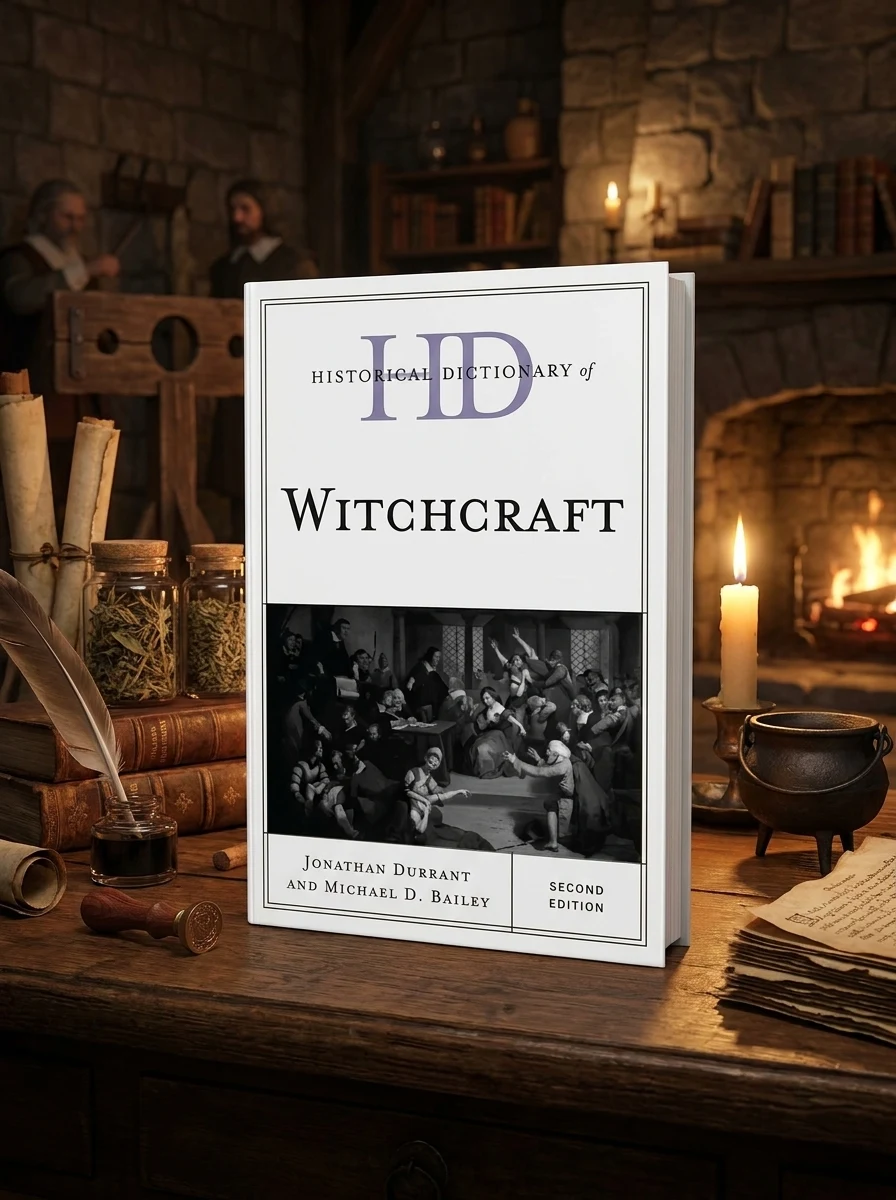

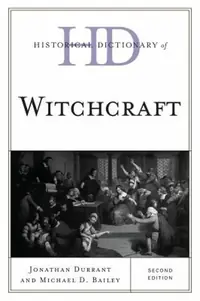
Historical Dictionary of Witchcraft Durrant, Jonathan
 82
82
 Editorial score
How we rate
Editorial score
How we rate
Stock reported in the catalog; fulfillment is confirmed with your request.
A comprehensive guide tracing the shadowed lineage of witchcraft from ancient codes to modern rituals.
Jonathan Durrant’s expanded second edition serves as an indispensable compass for navigating the complex history of magical practice. Moving beyond the narrow lens of early modern Europe, this volume spans from the Hammurabi Code’s prohibitions to the final English trials of 1944. It meticulously documents global witch hunts and legal frameworks while also charting the rise of contemporary Wiccan traditions. With over three hundred cross-referenced entries, a chronological timeline, and a robust bibliography, it offers both academic rigor and accessible reference for understanding how societies have feared, prosecuted, and revered the occult throughout millennia.
This volume occupies the scholarly intersection of historical anthropology and esoteric studies, serving as a definitive reference for the study of witchcraft's evolution across millennia. It bridges the gap between academic legal history and the lived experience of modern magical traditions.


📝 Description: Historical Dictionary of Witchcraft Durrant, Jonathan
💎 Expert review
📖 Why choose it
Why this book is worth reading
This book is an essential resource for anyone seeking a rigorous, comprehensive understanding of witchcraft’s vast historical arc, from ancient legal codes to modern Wiccan practices. It is particularly valuable for students, researchers, and practitioners who desire a structured, cross-referenced guide that avoids mere sensationalism in favor of factual depth. By documenting global witch hunts and the rise of contemporary traditions, it provides context often missing in more niche occult texts. Readers will appreciate its accessible yet scholarly tone, making complex legal frameworks and historical timelines understandable without sacrificing academic integrity. It serves as a reliable compass for navigating the shadowed lineage of magical practice.
⭐ Reader reviews
Reader rating
Durrant’s second edition stands as a formidable reference work, offering unparalleled breadth in tracing witchcraft from Hammurabi to 1944. Its strength lies in its meticulous documentation and robust bibliography, catering well to those seeking academic rigor or deep historical context. However, it is not suited for casual readers seeking narrative flair or quick anecdotes; the density of cross-referenced entries and legal frameworks may overwhelm those looking for light entertainment. Additionally, while it covers modern Wicca, it remains firmly rooted in history rather than instructional magic. It is best appreciated by serious scholars and dedicated hobbyists willing to engage with substantial textual analysis.
❓ Frequently asked questions
📖 Who should read this
Seekers of occult history, historians of religion, and practitioners of Wicca will find this volume essential. It bridges the gap between academic study and spiritual heritage, offering context for those who wish to understand the roots of their craft or the societal forces that shaped it.
🎯 Key themes and symbolism
Legal Persecution History
The text meticulously maps the evolution of laws punishing sorcery, beginning with ancient Mesopotamian codes and extending through European witch trials. It analyzes how legal systems weaponized fear against alleged practitioners, detailing specific trials and the societal mechanisms that fueled mass hysteria and judicial murder.
Global Witchcraft Traditions
Rather than focusing solely on the West, the dictionary explores witchcraft as a universal human phenomenon. It examines how different cultures defined magic, the roles of shamans and healers, and the diverse practices that were often conflated under the singular, pejorative label of witchcraft by dominant powers.
Modern Wiccan Revival
A significant portion addresses the twentieth-century resurgence of witchcraft as a religion. It tracks the development of Wicca and neo-paganism, exploring how modern adherents reconstructed ancient practices into coherent spiritual paths, distinct from the historical persecution they sought to transcend.
💬 Quotes from the book
“Witchcraft has proven an important, if difficult, historical subject to investigate and interpret.”
“Tease out the worldview of ordinary people in 16th- and 17th-century England.”
📜 Historical context
📚 Glossary
- Hammurabi Code
- Neo-paganism
- Cross-referenced
📔 Questions to reflect on
- How does the legal definition of 'witchcraft' in ancient codes reflect the societal anxieties of its time?
- In what ways do modern neo-pagan rituals reinterpret or reject the historical narratives of persecution described in the trials?
- Compare the portrayal of the 'witch' in legal documents versus folk folklore. How do these perspectives contradict each other?
🏛 Books from this publisher Scarecrow Press
All books from this publisher →
You might also like
See more → 84
84
 91
91