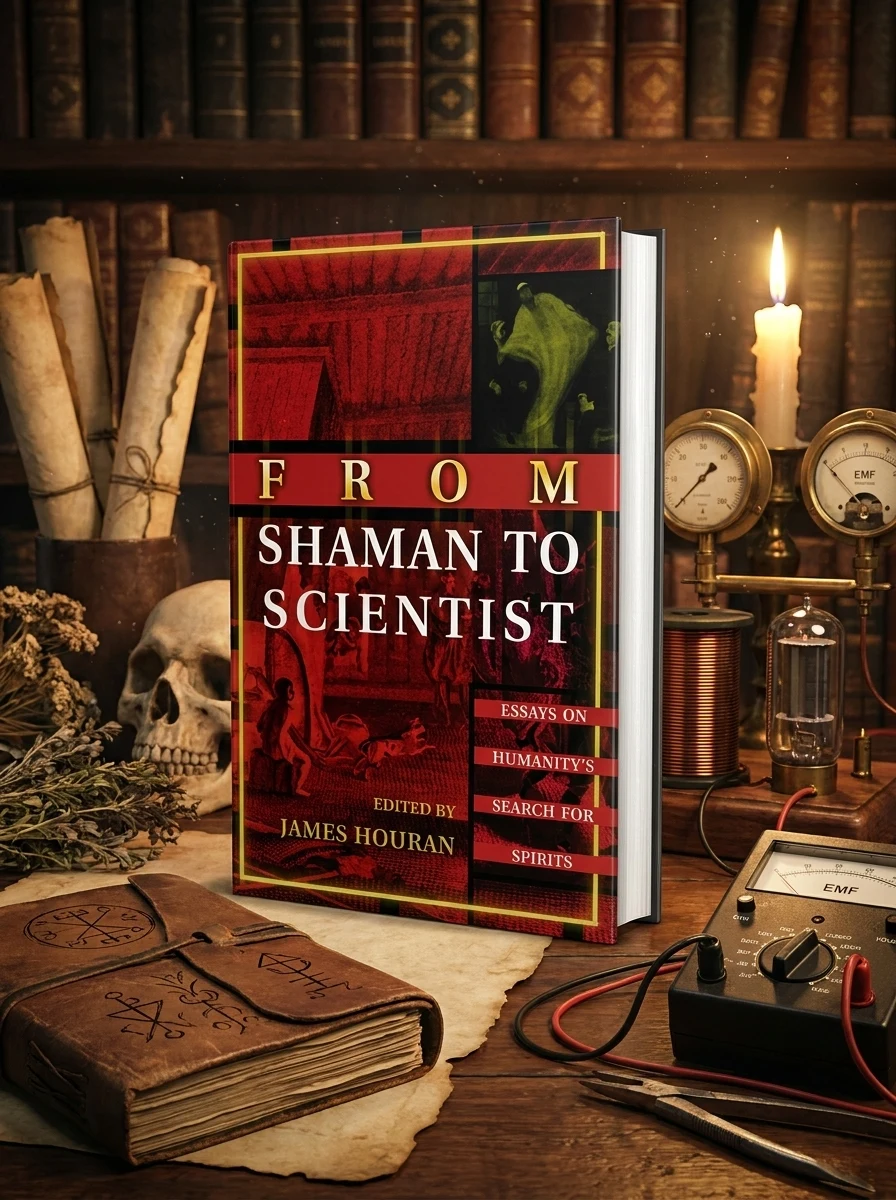

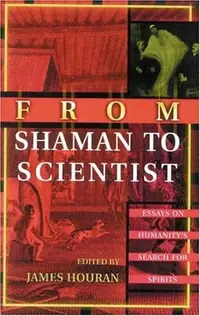
From Shaman to Scientist: Essays on Humanity's Search for Spirits
 89
89
 Editorial score
How we rate
Editorial score
How we rate
Stock reported in the catalog; fulfillment is confirmed with your request.
Ghost hunting is a cultural mirror reflecting our collective psyche, not a hunt for the dead.
James Houran’s work transcends the binary debate of whether spirits exist, instead probing why we are compelled to seek them. By treating paranormal investigation as a sociological and psychological phenomenon, the text dissects the evolution of ghost hunting from Victorian séance rooms to modern digital forums. It analyzes the methodologies employed by researchers, the psychological drivers behind anomalous experiences, and the technological advancements in parapsychology. This is a rigorous examination of human curiosity, framing the search for ghosts as a fundamental aspect of our shared history and mental landscape.
This work sits at the intersection of sociological inquiry and parapsychology, bridging the historical gap between Victorian spiritualism and contemporary digital ghost hunting cultures.


📝 Description: From Shaman to Scientist: Essays on Humanity's Search for Spirits
💎 Expert review
📖 Why choose it
Why this book is worth reading
Readers fascinated by the psychology of belief and the sociology of the paranormal will find this text deeply rewarding. It offers a refreshing departure from binary debates regarding the existence of spirits, instead illuminating why humans are compelled to seek them. By treating ghost hunting as a mirror for our collective psyche, Houran provides a rigorous framework for understanding anomalous experiences. Those who enjoy analyzing cultural trends through a psychological lens will appreciate how this book dissects the evolution of methodologies from séance rooms to online forums. It is essential for anyone wanting to understand the human mind’s persistent engagement with the unknown.
⭐ Reader reviews
Reader rating
My book club chose this last month. There's real depth here that reveals itself on a second reading. Some chapters demand a slow, careful read, and that's exactly the point. Recommended if you're ready to do the work.
Houran delivers a sophisticated analysis that prioritizes human psychology over supernatural verification, making it a valuable resource for academics and serious enthusiasts alike. The text successfully reframes paranormal investigation as a study of societal needs rather than evidentiary proof. However, readers seeking practical ghost-hunting guides or validation of spiritualist beliefs will likely find this dry and dismissive. It is not suitable for those who prefer anecdotal evidence over sociological theory. The rigorous academic tone may alienate casual hobbyists, but it remains a compelling examination of the mental landscape driving our shared history with the occult.
❓ Frequently asked questions
📖 Who should read this
Readers fascinated by the intersection of psychology and folklore. Ideal for skeptics seeking rational frameworks for paranormal reports, and investigators tired of dogmatic beliefs who crave a grounded, historical perspective on the persistence of ghost hunting.
🎯 Key themes and symbolism
Cultural Construction of Hauntings
The book argues that ghosts are not external entities but projections of collective anxiety and desire. It traces how societal values shape the forms spirits take, demonstrating that the 'haunting' is often a narrative constructed by the living to process trauma, grief, or fear of the unknown.
Methodological Evolution in Parapsychology
Houran details the shift from spiritualist mediums to scientific instrumentation. He critiques the reliance on EMF meters and EVPs while highlighting the rigorous statistical approaches used in modern parapsychology, showing how the field attempts to bridge the gap between anecdotal evidence and empirical data.
Psychology of the Anomalous
Rather than validating supernatural claims, the text explores the cognitive mechanisms that lead individuals to perceive spirits. It examines pareidolia, suggestibility, and the human brain's tendency to impose pattern and agency on random environmental stimuli, offering rational explanations for perceived paranormal activity.
💬 Quotes from the book
“We do not find ghosts; we find ourselves reflected in the shadows of our own making.”
“The仪器 does not detect the dead; it detects the observer's anticipation of the dead.”
📜 Historical context
📚 Glossary
- Parapsychology
- Anomalous Experience
- Digital Séance
📔 Questions to reflect on
- What cultural narratives about death influence your perception of 'haunted' spaces?
- How might your own psychological state alter your interpretation of ambiguous environmental stimuli?
- In what ways does the modern digital age change our collective relationship with the concept of the spirit?
🏛 Books from this publisher Scarecrow Press
All books from this publisher →
You might also like
See more →
 91
91