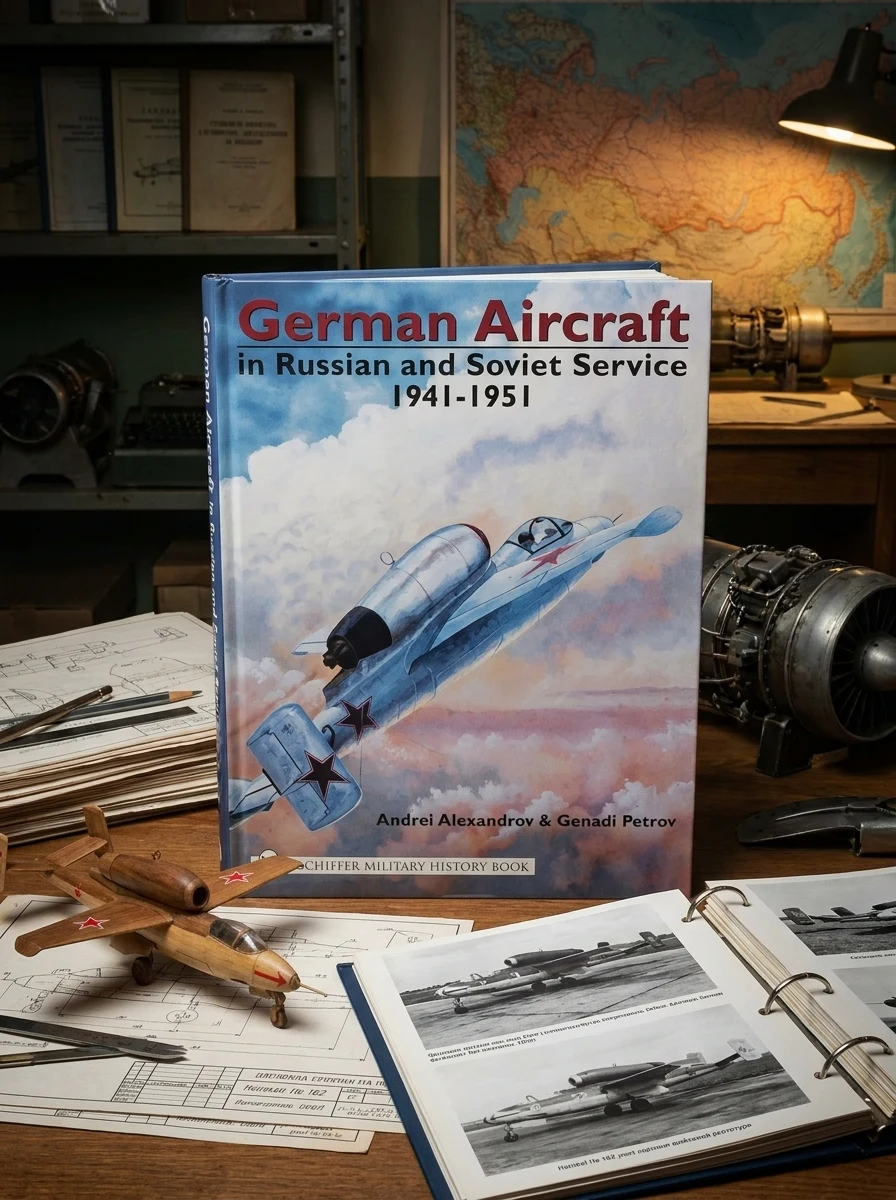
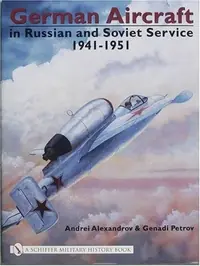
German Aircraft in Russian and Soviet Service 1914-1951: Vol 2: 1941-1951 Alexandrov, Andrei
This edition can be ordered. No arrival date is confirmed.
Capturing the clandestine evolution of Soviet aviation through captured German engineering.
This volume illuminates the critical decade from 1941 to 1951, revealing how the Soviet aviation industry rapidly matured by reverse-engineering German technology. Alexandrov and Petrov document the influx of captured Luftwaffe aircraft, which provided essential technical insights that accelerated Soviet design capabilities. Through rare, previously unseen photography, the authors trace the lineage from battlefield salvage to industrial innovation, showing how enemy hardware became the foundation for Soviet aerial dominance during the post-war era.
This volume belongs to the niche tradition of military aviation history and technical reverse-engineering studies, specifically focusing on the post-World War II technological exchange between defeated Axis powers and emerging superpowers.


📝 Description: German Aircraft in Russian and Soviet Service 1914-1951: Vol 2: 1941-1951 Alexandrov, Andrei
💎 Expert review
📖 Why choose it
Why this book is worth reading
This book is an essential resource for aviation historians, military engineers, and enthusiasts interested in the clandestine evolution of Soviet aerial capabilities during the critical decade from 1941 to 1951. It offers a unique perspective on how the rapid maturation of the Soviet aviation industry was accelerated by reverse-engineering captured Luftwaffe technology. Readers who appreciate rare, previously unseen photography and detailed documentation of battlefield salvage transforming into industrial innovation will find this work invaluable. It illuminates the technical lineage that laid the foundation for Soviet aerial dominance in the post-war era, providing deep insights into the intersection of wartime capture and peacetime engineering prowess.
⭐ Reader reviews
Reader rating
Ordered this after seeing it referenced in another book I was studying. Plenty of passages worth underlining; my copy is already full of margin notes. The font runs small in the appendices. Good, with the caveats above.
Alexandrov and Petrov provide a meticulously documented account of how captured German aircraft influenced Soviet design capabilities between 1941 and 1951. The use of rare photography adds significant value to this technical history. However, it is strictly a specialized study for aviation buffs and historians; it does not suit general readers seeking narrative war stories or those uninterested in mechanical details. The focus on engineering insights over human drama may alienate casual readers. It is a dense, factual work that serves its specific audience well but lacks the accessibility required for broader historical appreciation.
❓ Frequently asked questions
📖 Who should read this
Aviation historians, military engineers, and collectors interested in the clandestine technological exchanges between Axis and Allied powers during and after the Second World War.
🎯 Key themes and symbolism
Reverse Engineering Legacy
The text details how Soviet engineers dismantled captured German planes to understand advanced aerodynamics and metallurgy, directly influencing subsequent domestic production lines.
Captured Airpower Utilization
It explores the operational use of seized aircraft by Soviet test pilots and units, evaluating their performance against native designs during critical combat scenarios.
Industrial Knowledge Transfer
The authors analyze the specific technological data extracted from German engines and airframes, demonstrating how this intelligence bridged the gap to modern Soviet aviation standards.
💬 Quotes from the book
“The silence of the wrecked airfield spoke louder than any treaty, revealing the secrets of flight to the victors.”
“Iron wings fell, yet their lessons flew higher, shaping the sky for generations yet unborn.”
📜 Historical context
📚 Glossary
- Reverse Engineering
- Luftwaffe Salvage
- Aerospace Maturation
📔 Questions to reflect on
- How does the appropriation of enemy technology challenge our understanding of 'national' innovation in military science?
- What ethical implications arise when studying the technical lineage of aircraft designed for war crimes?
- In what ways did the physical capture of hardware accelerate theoretical aerospace advancements compared to pure academic study?
🏛 Books from this publisher Schiffer Publishing
All books from this publisher →
 89
89






You might also like
See more →
 91
91
 91
91
 91
91


 91
91
 91
91