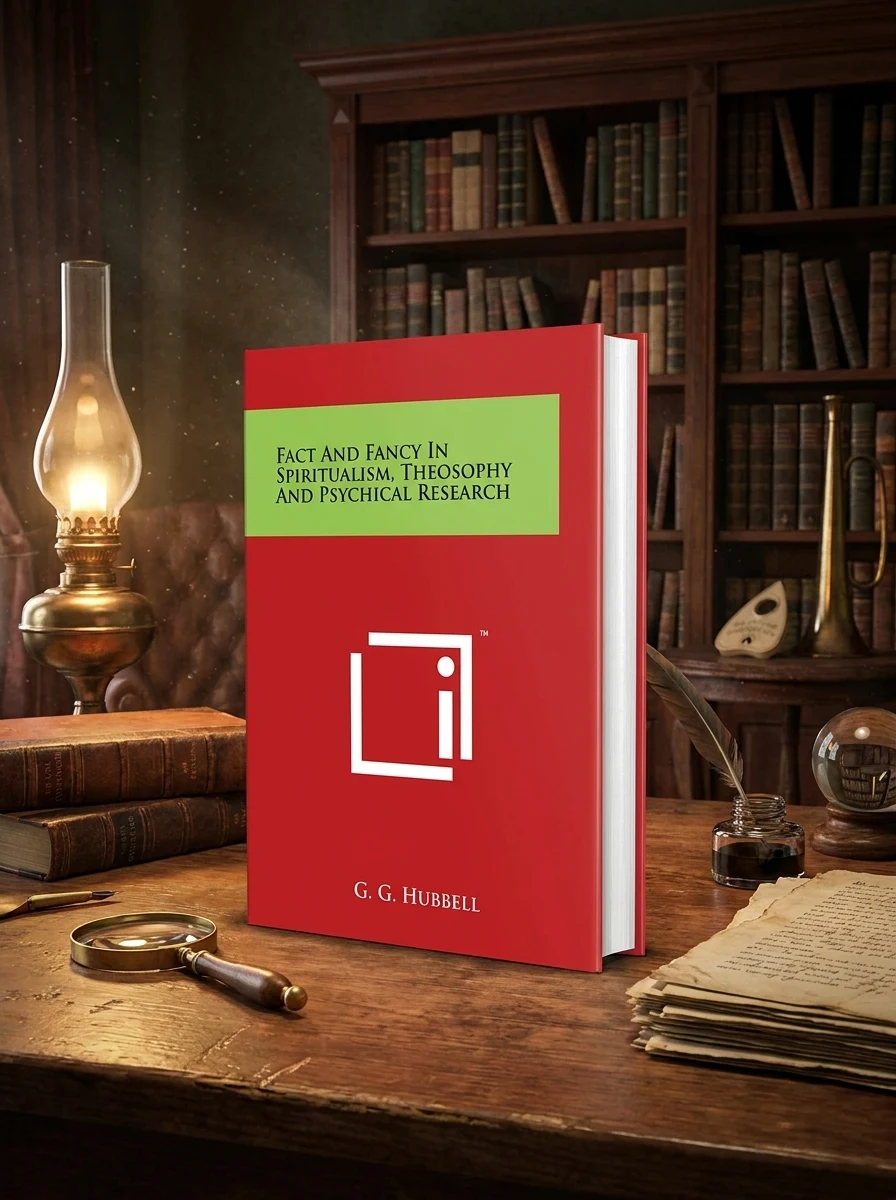
Fact and Fancy in Spiritualism, Theosophy and Psychical Research
Stock reported in the catalog; fulfillment is confirmed with your request.
Unravel the spectral threads of belief, discerning truth from illusion in early 20th-century esotericism.
Delve into G. G. Hubbell’s incisive 1901 exploration of the burgeoning spiritual movements at the turn of the last century. This seminal work meticulously scrutinizes the claims and practices of Spiritualism, Theosophy, and the then-emerging field of Psychical Research. Hubbell, with a discerning eye, endeavors to separate verifiable phenomena and genuine insight from the widespread speculation and misinterpretation. It offers a crucial historical document, providing a unique snapshot of how these influential traditions were perceived and debated in their nascent stages of public prominence.
This work sits at the intersection of early twentieth-century spiritualism and the nascent field of psychical research, serving as a critical historical document that scrutinizes the boundaries between verifiable phenomena and widespread speculation within emerging esoteric traditions.


📝 Description: Fact and Fancy in Spiritualism, Theosophy and Psychical Research
💎 Expert review
📖 Why choose it
Why this book is worth reading
Readers deeply invested in the intellectual history of Western esotericism will find immense value in this meticulous examination of turn-of-the-century spiritual movements. Hubbell’s incisive approach offers a rare, discerning perspective on how Spiritualism and Theosophy were perceived during their public prominence. It is essential for those seeking to understand the rigorous debate between genuine insight and illusion in early psychical research. By separating verifiable claims from speculation, this text provides a crucial snapshot of the era's intellectual climate, allowing modern scholars and enthusiasts to appreciate the complexity of these traditions as they first gained traction in society.
⭐ Reader reviews
Reader rating
This book is not for casual seekers of mystical experiences or those expecting straightforward validation of supernatural beliefs. Hubbell’s critical scrutiny may feel overly academic or dismissive to devotees of the specific movements discussed. However, for historians and skeptics alike, it serves as an indispensable resource. The work demands patience and a willingness to engage with dense analysis rather than inspirational narratives. It is best suited for readers who prioritize historical accuracy and intellectual rigor over spiritual comfort, offering a candid look at the era's debates without romanticizing the results or the participants involved in these early investigative efforts.
❓ Frequently asked questions
📖 Who should read this
If you are drawn to the historical intersections of science and spirituality, or seek to understand the critical perspectives applied to occult phenomena, this book is for you. It offers valuable insight for those who appreciate a discerning approach to esoteric traditions.
🎯 Key themes and symbolism
Spiritualism's Veracity
Explores the communication with spirits, mediumship, and materializations, questioning their authenticity. Hubbell examines both compelling accounts and instances of fraud, aiming to establish a grounded understanding of this often sensationalized practice. It's a critical look at early spirit contact and its perceived validity in society.
Theosophical Insights
Investigates the complex philosophical teachings of Theosophy, as propagated by figures like Helena Blavatsky. The book likely dissects its cosmic doctrines, concepts of spiritual evolution, and claims of ancient wisdom, assessing their intellectual rigor against prevailing scientific thought of the era.
Psychical Research Foundations
Examines the nascent scientific efforts to study psychic phenomena, such as telepathy, clairvoyance, and precognition. Hubbell evaluates the methodologies and findings of early psychical researchers, distinguishing rigorous empirical inquiry from anecdotal evidence in pursuit of objective understanding.
💬 Quotes from the book
“The earnest seeker after truth must diligently sift the wheat from the chaff, for in the realm of the unseen, imagination often masquerades as revelation.”
“While the credulous embrace every marvel, the truly scientific mind maintains an open skepticism, willing to explore but demanding rigorous proof.”
📜 Historical context
📚 Glossary
- Spiritualism
- Theosophy
- Psychical Research
📔 Questions to reflect on
- How do our contemporary views on psychic phenomena differ from those presented in 1901, and what historical or scientific developments have caused these shifts?
- Reflect on the distinction between 'fact' and 'fancy' in your own spiritual or esoteric explorations. Where do you draw the line between belief and evidence?
- Considering Hubbell's critical approach, what methodologies might we apply today to assess claims of the paranormal with intellectual rigor and academic integrity?
🏛 Books from this publisher Literary Licensing, LLC
All books from this publisher →
 82
82
 86
86
 82
82
You might also like
See more →

 91
91
 91
91

 90
90