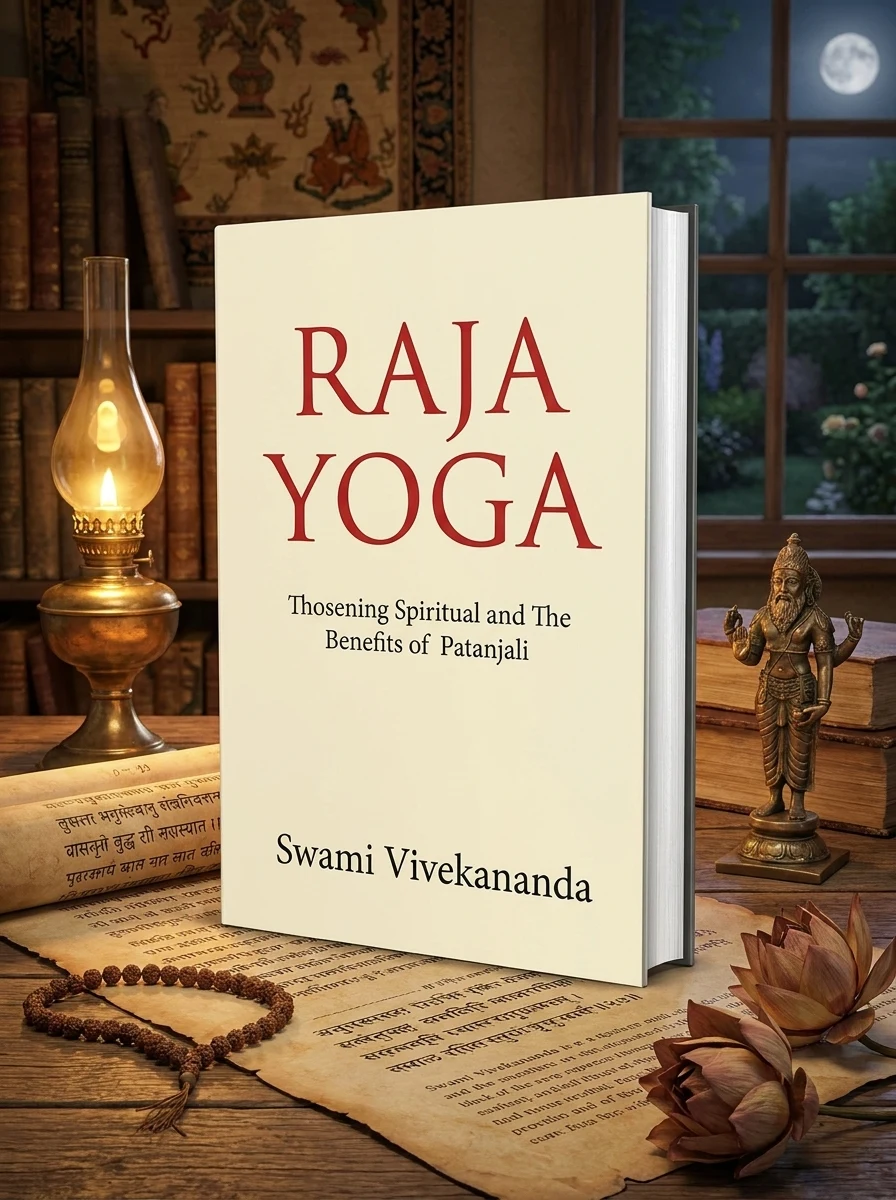

Raja Yoga
Stock reported in the catalog; fulfillment is confirmed with your request.
Unearth the profound synthesis where ancient yogic wisdom meets the vibrant currents of Western esoteric thought.
Swami Vivekananda’s "Raja Yoga" offers a seminal interpretation of Patanjali's Yoga Sutras, specifically tailored for a Western audience. Through transcribed lectures and a freely translated, commented edition of the Sutras, Vivekananda deftly weaves traditional Hindu philosophy with elements of Western science, Idealism, and various esoteric movements. This includes Neo-Vedantic esotericism, Brahmo Samaj, mesmerism, and American Harmonial religion. The text introduces his influential 'four yogas' model, presenting Raja Yoga as a systematic path to self-mastery, making profound spiritual principles accessible and relevant to a new generation of seekers.
This work sits at the vibrant intersection of Neo-Vedantic esotericism and Western esoteric thought, bridging ancient Hindu philosophy with contemporary Idealism and scientific inquiry. It reflects a period where Eastern yogic traditions were being actively synthesized with movements like the Brahmo Samaj and American Harmonial religion for a global audience.


📝 Description: Raja Yoga
💎 Expert review
📖 Why choose it
Why this book is worth reading
Readers seeking a systematic path to self-mastery will find profound value in this accessible interpretation of Patanjali's teachings. It is ideal for those interested in the historical dialogue between Eastern wisdom and Western science, offering a unique lens through which to view traditional Hindu concepts. Those drawn to esoteric syntheses, mesmerism, or Idealism will appreciate how Vivekananda makes these complex spiritual principles relevant and understandable for modern seekers without diluting their depth.
⭐ Reader reviews
Reader rating
Vivekananda’s presentation is a seminal bridge between cultures, effectively translating Yogic theory for Western minds through lectures and commentary. While the synthesis of science and spirituality is engaging for those open to esoteric blends, it may frustrate purists seeking strict adherence to traditional Sanskrit exegesis or those uninterested in Victorian-era scientific metaphors. It is not suited for readers preferring dry academic analysis over spiritual application. However, for the eclectic seeker, it remains an indispensable guide to understanding the practical mechanics of Raja Yoga within its specific historical and philosophical context.
❓ Frequently asked questions
📖 Who should read this
If you are a seeker intrigued by the intersection of Eastern spirituality and Western esotericism, curious about the roots of modern yoga, or wish to explore a practical path to mental mastery beyond dogma, this foundational text is an essential read for your journey.
🎯 Key themes and symbolism
Westernizing Ancient Yoga
Vivekananda masterfully reframes Patanjali's classical Yoga Sutras, presenting them in a manner comprehensible and appealing to the Western mind. He filters the teachings through a lens familiar to those accustomed to Western philosophical and spiritual traditions, making the profound principles of yogic discipline both relatable and practically applicable for non-Eastern practitioners.
Eclectic Spiritual Synthesis
This work stands out for its bold integration of diverse spiritual currents. Beyond traditional Hinduism, Vivekananda incorporates concepts from Western science, Idealism, and various esoteric traditions like mesmerism and American Harmonial religion. This unique blend reflects a broad, inclusive vision of spirituality, seeking common ground across seemingly disparate paths to truth and self-realization.
The Fourfold Path of Yoga
A cornerstone of Vivekananda's legacy, this book introduces his groundbreaking 'four yogas' model, with Raja Yoga taking a central role. This innovative framework categorizes spiritual practice into distinct yet interconnected paths – knowledge, action, devotion, and mental control – providing a structured and comprehensive approach for seekers to navigate their journey toward spiritual enlightenment and inner peace.
💬 Quotes from the book
“The ancient wisdom of the East, when illuminated by the discerning light of modern scientific inquiry, reveals not contradiction, but a profound unity of spirit and matter.”
“True Raja Yoga is not mere dogma, but a systematic, practical path to mastery over the mind itself, unlocking the inherent divinity within each soul.”
📜 Historical context
📚 Glossary
- Raja Yoga
- Patanjali's Yoga Sutras
- Neo-Vedantic Esotericism
📔 Questions to reflect on
- Considering Vivekananda's synthesis of Eastern and Western spiritual ideas, how do these different traditions resonate with or challenge your own understanding of spirituality?
- Vivekananda emphasizes 'mind control' as central to Raja Yoga. What personal challenges do you face in mastering your own mind, and how might his teachings offer a new approach?
- The book integrates elements of Western occultism. Reflect on your perception of 'occult' practices and how their inclusion in a yoga text might broaden or shift your perspective on spiritual exploration.
You might also like
See more →


 91
91
 91
91
 90
90