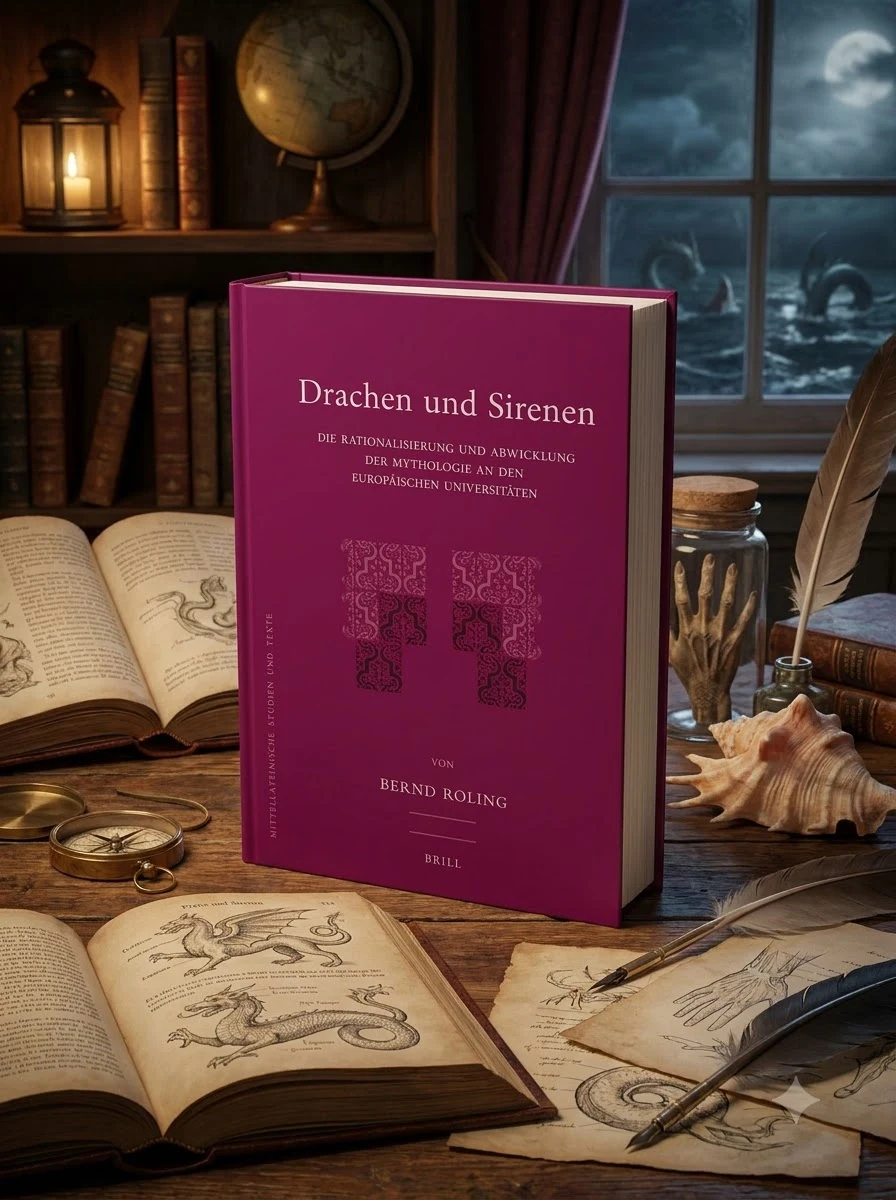

Drachen Und Sirenen: Die Rationalisierung Und Abwicklung Der Mythologie an Den Europäischen Universitäten - Ingram Academic Roling, Bernd
 85
85
 Editorial score
How we rate
Editorial score
How we rate
Stock reported in the catalog; fulfillment is confirmed with your request.
Uncover how European universities transformed mythical beasts into zoological inquiries.
Before the age of scientific classification, how did learned minds interpret encounters with mermaids or dragons? Bernd Roling's compelling study explores the intellectual journey of Europe's universities, tracing their efforts to categorize and understand creatures inherited from ancient natural history. From medieval demonological interpretations to early modern rationalization, this work meticulously charts the paradigm shift, utilizing examples like sirens, satyrs, giants, pygmies, and dragons to illuminate humanity's evolving relationship with the unknown and the fantastic within an academic framework.
This scholarly work sits at the intersection of intellectual history and the history of science, examining how European universities navigated the transition from medieval demonology to early modern rationalization. It explores the academic framework through which mythical beasts were reinterpreted as zoological subjects during a period of significant paradigm shift in natural history.


📝 Description: Drachen Und Sirenen: Die Rationalisierung Und Abwicklung Der Mythologie an Den Europäischen Universitäten - Ingram Academic Roling, Bernd
💎 Expert review
📖 Why choose it
Why this book is worth reading
This book offers a fascinating deep dive for scholars of intellectual history, historians of science, and enthusiasts of esoteric traditions who wish to understand the rigorous academic mechanisms behind the rationalization of myth. Readers interested in how universities systematically dismantled medieval demonological interpretations to create early modern zoological categories will find immense value here. It is essential for those seeking to trace the precise lineage of how creatures like sirens, dragons, and giants were stripped of their supernatural aura and reclassified within an academic framework. By illuminating humanity's evolving relationship with the unknown, this study provides critical insight into the institutional processes that shaped our modern understanding of the fantastic and the natural world.
⭐ Reader reviews
Reader rating
Roling delivers a meticulous, albeit dense, examination of how European academia transformed mythical beasts into zoological inquiries. The text is rigorously academic, focusing heavily on the intellectual journey from medieval demonology to early modern rationalization. It will appeal strongly to specialists in the history of science and medieval studies who appreciate detailed archival analysis. However, it does NOT suit casual readers seeking narrative adventure or those looking for practical occult guidance. If you expect a lively exploration of dragon lore rather than a dry cataloging of academic paradigm shifts, this scholarly tome may prove too abstract and technically demanding for your preferences.
❓ Frequently asked questions
📖 Who should read this
If you're fascinated by the history of science, the demystification of folklore, or the intellectual evolution of European thought, this book is for you. It offers a detailed look at how academic institutions grappled with the fantastic and the unknown.
🎯 Key themes and symbolism
Rationalizing Mythical Beings
This book examines the profound shift in academic thought from viewing creatures like sirens as demonic entities to attempting to explain them through naturalistic, proto-scientific lenses. It highlights how early modern scholars embarked on a rigorous process to integrate these once-supernatural beings into emerging frameworks of natural science, signaling a major intellectual turning point in European history.
Evolution of Natural History
Tracing a long historical arc, the work illustrates how ancient traditions of natural history informed medieval scholarship, which then paved the way for the radical changes of the early modern period. It demonstrates the continuity and rupture in humanity's attempts to classify and comprehend the natural world, even when confronted with creatures believed to be both real and legendary.
Hybrid Creatures as Case Studies
By focusing on specific examples—sirens, satyrs, giants, pygmies, and dragons—the author provides concrete illustrations of broader intellectual debates. These 'hybrid creatures' become more than just mythical figures; they are lenses through which to observe the evolving methodologies and epistemological shifts within European academic discourse, revealing the struggle between belief and empirical observation.
💬 Quotes from the book
“The intellectual journey from monstrous omen to anatomical curiosity reveals a profound reorientation in humanity's engagement with the unknown.”
“Hundreds of academic disputations stand as testament to the rigorous, often contentious, efforts to categorize and comprehend the world's most elusive inhabitants.”
📜 Historical context
📚 Glossary
- Rationalization
- Hybrid Creatures
- Longue Durée
📔 Questions to reflect on
- Consider a mythical creature you're familiar with. How might early modern scholars have attempted to rationalize its existence using the scientific understanding of their time?
- How does the historical process of rationalizing mythical beings relate to contemporary efforts to explain unexplained phenomena? Are there parallels in how we approach the unknown today?
- Reflect on a time when your own understanding of something shifted from a more mystical or unexplainable view to a rational or scientific one. What was that process like?
🏛 Books from this publisher Brill
All books from this publisher →

You might also like
See more →