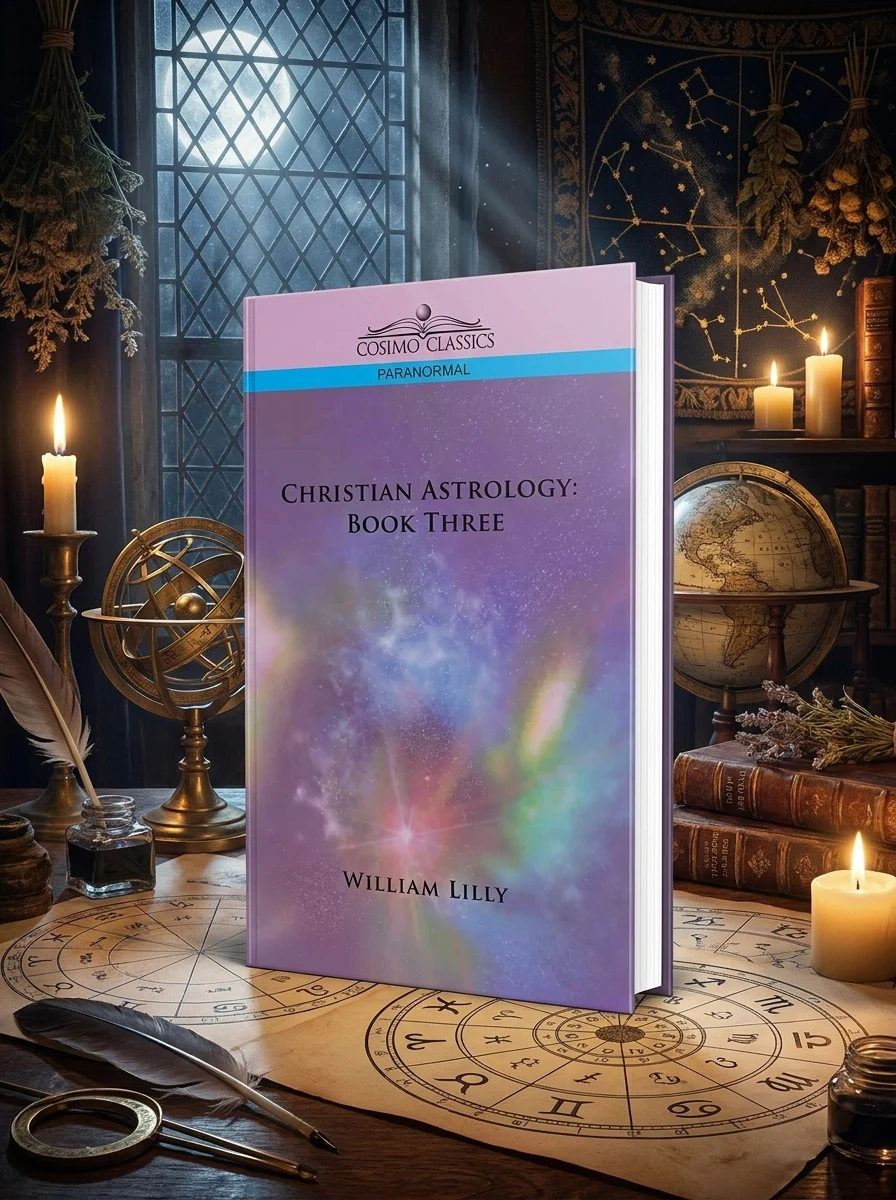
Christian Astrology: Book Three
✍️ Lilly, WilliamWilliam Lilly's "Christian Astrology: Book Three" offers a profound dive into the practical applications of celestial interpretation. This volume meticulously details methods for analyzing natal charts and addressing specific life inquiries, such as matrimonial prospects. As the preeminent English astrologer of his era, Lilly provides unparalleled insights into the intricate symbolic language of the stars. This work serves as both a historical cornerstone and a practical guide for those seeking to understand the divinatory art through a classical lens, revealing how planetary positions were once thought to influence earthly events and personal destinies.


📝 Description: Christian Astrology: Book Three
💎 Expert review
📖 Why choose it
Why this book is worth reading
This volume is essential for the serious student of historical astrology who seeks to move beyond superficial sun-sign readings. Readers interested in the intricate symbolic language of the stars and the practical application of celestial interpretation will find immense value here. It offers unparalleled insights into how planetary positions were once thought to influence specific life inquiries, such as matrimonial prospects. By providing a classical lens for understanding divinatory art, it serves both as a historical record and a functional guide. Those wishing to grasp the foundational mechanics of 17th-century fate analysis will discover a profound dive into natal chart interpretation that remains relevant for its depth and rigor in the esoteric community.
⭐ Reader reviews
Reader rating
William Lilly’s work stands as a monumental piece of astrological literature, meticulously detailing methods for analyzing natal charts and addressing specific inquiries. While it is an indispensable resource for historians and traditionalists seeking to understand the classical lens on divination, it is not suited for casual readers or those preferring modern psychological astrology. The dense, 17th-century prose and complex celestial mechanics may alienate beginners looking for quick answers or simplified interpretations. It demands patience and a willingness to engage with outdated cosmological frameworks. However, for those dedicated to the rigorous study of how planetary positions influence earthly events, this masterwork provides an unmatched depth of insight into the symbolic language of the stars.
❓ Frequently asked questions
📖 Who should read this
If you're a serious student of traditional astrology, a historian of esotericism, or simply curious about the profound influence of celestial divination in early modern England, this foundational text offers indispensable knowledge. Prepare to immerse yourself in the authentic voice of a master.
🎯 Key themes and symbolism
Classical Predictive Techniques
The book presents a comprehensive system for foretelling events based on astrological principles prevalent in the 17th century. It details the precise calculations and interpretations necessary for discerning future trends and individual destinies, offering a window into the structured and rule-based practice of early modern astrology.
17th-Century Occult Practice
As a work by England's foremost astrologer of the era, this text illuminates the societal and intellectual context of astrological consultation. It demonstrates how celestial mechanics were integrated into daily life and decision-making, providing a valuable historical document of esoteric thought during a pivotal period of scientific and spiritual inquiry.
📜 Historical context
📚 Glossary
- Significators
- Watery Signs
- Natal Chart
📔 Questions to reflect on
- How might the cultural perceptions of marriage in the 17th century influence the astrological interpretations presented in this text?
- Consider a personal life event. How would a 17th-century astrologer, using Lilly's methods, have approached its prediction or explanation?
- What are the ethical implications of a system that purports to predict aspects of a person's life, such as the number of spouses, and how do those compare to modern divination practices?