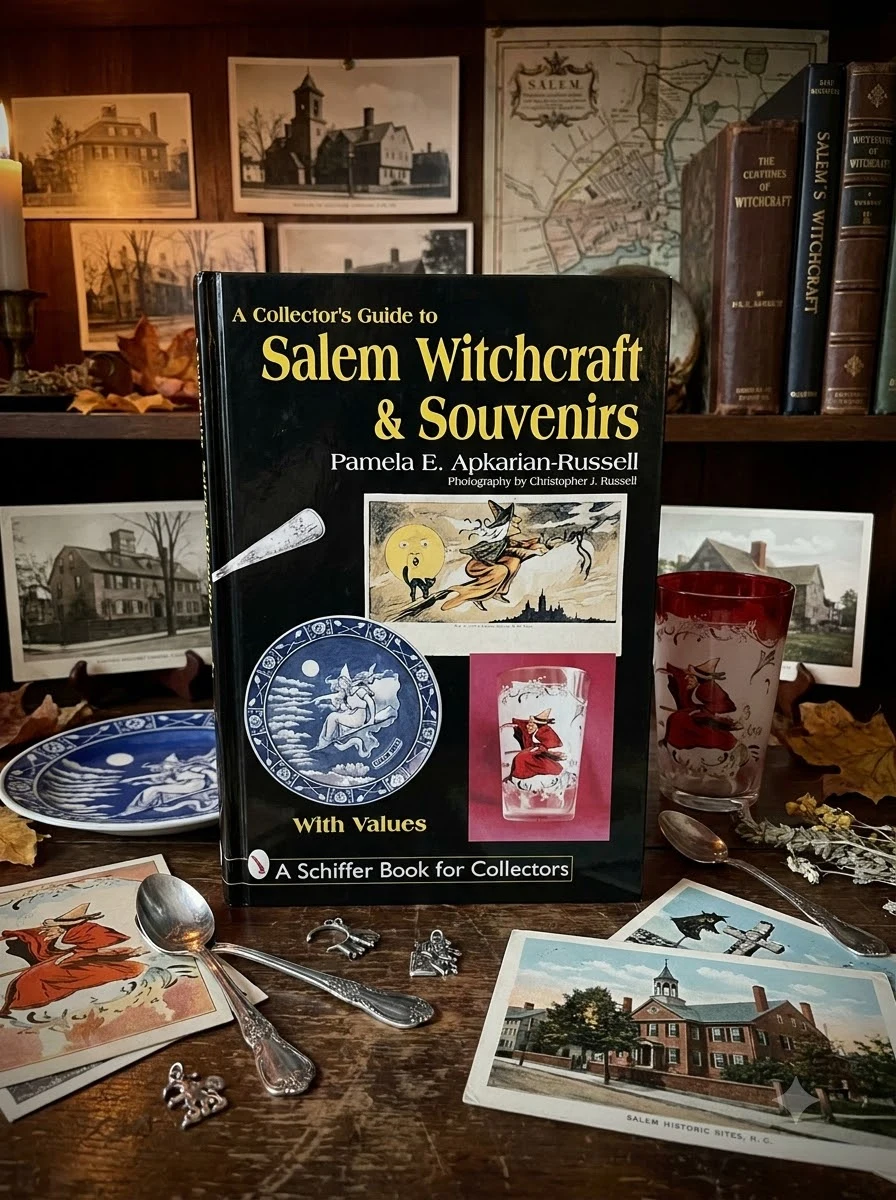
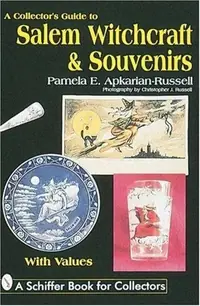
A Collector's Guide to Salem Witchcraft & Souvenirs Apkarian-Russell, Pamela E
Apkarian-Russell, Pamela EThis edition can be ordered. No arrival date is confirmed.
Unearth the silver, porcelain, and print legacy of Salem's dark allure.
This volume chronicles three centuries of Salem’s evolution from tragedy to tourist destination, focusing on the material culture that emerged. It traces the lineage from the harrowing trials to the 1890s when Daniel Low revolutionized souvenir spoons. Through three hundred photographs, the text documents how historic sites transformed into commercial hubs. Readers will explore collections of witch-themed jewelry, silverware, china, and bottled goods, witnessing how collective memory was commodified into tangible artifacts that define the city’s modern identity.
This work sits at the intersection of material culture studies and regional history, documenting how tragic historical events evolve into commercialized tourist attractions through tangible artifacts. It explores the commodification of collective memory within the specific context of Salem's modern identity.


📝 Description: A Collector's Guide to Salem Witchcraft & Souvenirs Apkarian-Russell, Pamela E
💎 Expert review
📖 Why choose it
Why this book is worth reading
This book offers a fascinating glimpse into how a city's dark past is preserved and monetized through everyday objects. Readers interested in the tangible history of Salem, particularly those who collect witch-themed silverware, porcelain, or jewelry, will find this volume invaluable. It traces the lineage from the harrowing trials to the commercial hubs of today, showing how historic sites transformed into centers of trade. By examining three hundred photographs and various artifacts, it reveals how collective memory was commodified into tangible items that define the city's current image. It is ideal for anyone curious about the intersection of tragedy, tourism, and material culture.
⭐ Reader reviews
Reader rating
This volume serves as a specialized visual archive rather than a deep historical analysis. It is perfect for collectors seeking to contextualize their holdings of witch-themed silverware, china, and bottled goods within Salem’s broader economic evolution. However, readers expecting rigorous academic scrutiny of the trials themselves or detailed biographical accounts of the accused will likely find it lacking in substantive narrative depth. It is best suited for visual learners and souvenir enthusiasts who appreciate the aesthetic of commercialized history over dry textual exposition. The focus remains firmly on the objects that define Salem's modern identity as a tourist destination.
❓ Frequently asked questions
📖 Who should read this
Collectors of witch-themed memorabilia, historians of American material culture, and travelers seeking to understand the commercialization of Salem’s history will find this visual archive essential for contextualizing their curiosities.
🎯 Key themes and symbolism
Commodification of Tragedy
The text examines how a historical trauma was transformed into a marketable brand. It details the shift from solemn remembrance to commercial exploitation, analyzing how the narrative of persecution was packaged for public consumption, turning fear and history into accessible, purchasable souvenirs for a growing tourist demographic.
Material Culture of Memory
This section explores the physical objects that preserve collective memory. It catalogs diverse items like silver spoons, ceramic figures, and printed images, showing how everyday goods became vessels for historical storytelling. The book highlights how these artifacts serve as tangible links to the past, shaping how generations understand and interact with Salem's legacy.
Evolution of Souvenir Industry
Here, the focus is on the industrial and artistic development of the souvenir trade. It tracks the innovation of Daniel Low and subsequent makers who created standardized, mass-produced items. The narrative illustrates how design trends and manufacturing techniques evolved over decades to meet tourist demands, creating a distinct visual language for the region.
💬 Quotes from the book
“A treasure trove of silver and china souvenirs showing both witches and the historic sites.”
“From the trials themselves through the 1890s, when Daniel Low produced the first souvenir spoon.”
📜 Historical context
📚 Glossary
- Memorabilia
- Souvenir Spoon
- Tourist Mecca
📔 Questions to reflect on
- How does the transformation of a traumatic event into a commercial product affect our understanding of historical truth?
- In what ways do everyday objects like spoons or cups shape collective memory and cultural identity?
- Why do you think the imagery of persecution remains so potent and marketable in modern consumer culture?
✍️ More books by this author Apkarian-Russell, Pamela E
All books by this author →
🏛 Books from this publisher Schiffer Publishing
All books from this publisher →
 89
89

You might also like
See more →