
US shipping Secure card payment Occult and esoteric books

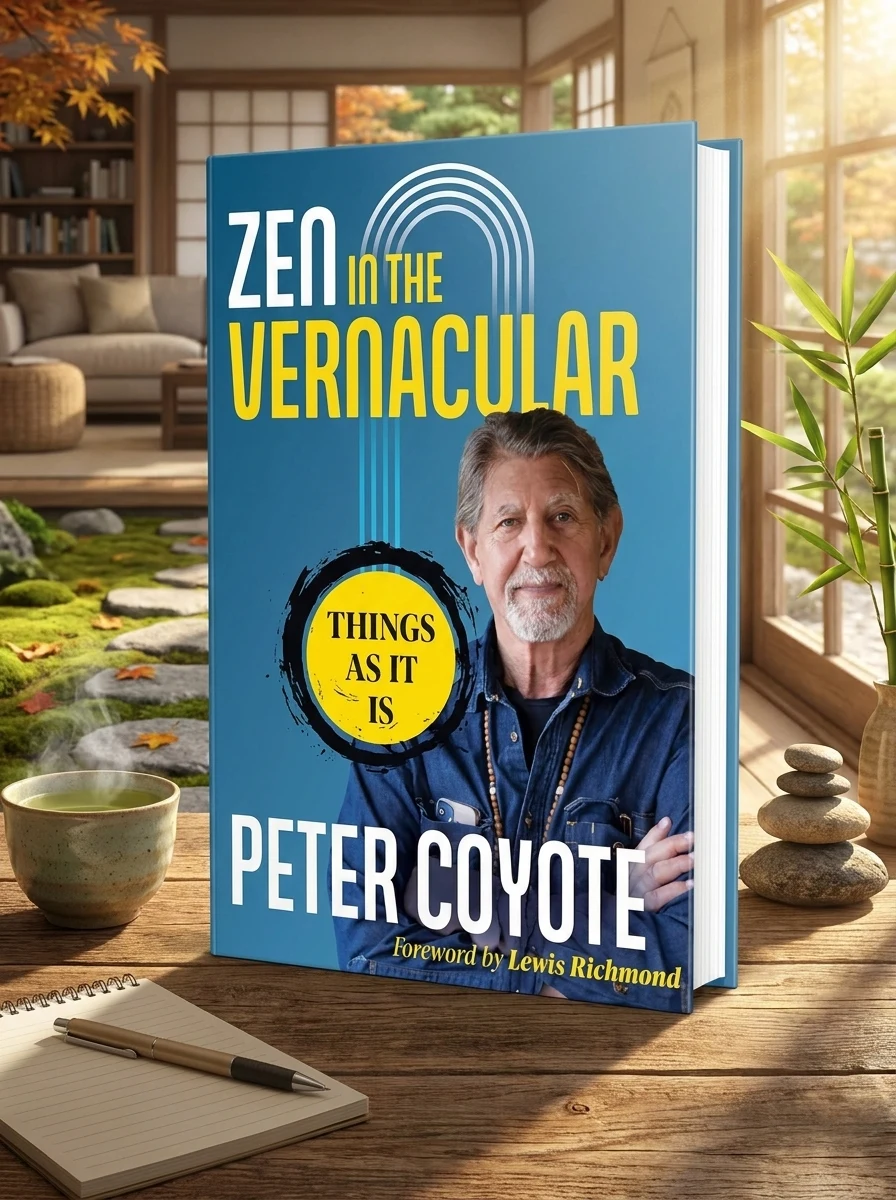
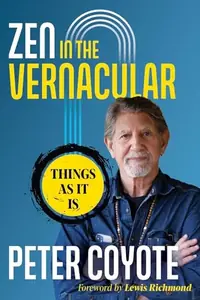
Zen in the Vernacular: Things as It Is

Coyote, Peter; , Richmond, Lewis
Reader rating
4.6
(1 reviews) 43 sold
In stock

Stock reported in the catalog; fulfillment is confirmed with your request.

📚 ABOUT THE BOOK

Unwrap Zen's timeless wisdom, revealing its core truths for a bustling modern world.

Peter Coyote and Lewis Richmond deftly strip away centuries of cultural "gift-wrapping" to present the essential teachings of Zen Buddhism. This insightful guide translates profound concepts like the Four Noble Truths and the Eightfold Path into clear, secular language, making them immediately relevant. It proposes that Zen offers not just a spiritual path, but a practical framework for navigating daily challenges and finding moral clarity. Accessible and direct, this book illuminates the heart of Buddha's message for contemporary seekers.

Key themes
Zen's Modern Relevance Unveiling Core Teachings Secular Path to Wisdom
Historical context

This work sits at the intersection of contemporary secular spirituality and traditional Zen Buddhist philosophy, bridging ancient monastic teachings with modern psychological frameworks. It reflects a growing trend in Western esoteric literature to demystify Eastern practices by stripping away religious dogma for practical application.


Difficulty
● Easy
Fans will love it
Shunryu Suzuki · Thich Nhat Hanh · Jack Kornfield · The Tao Te Ching
🕯️ Occult Philosophy
🏛 Inner Traditions International 📅 2024 📖 352 pages 📔 Paperback 📐 Paperback ISBN: 9781644119754
Fun fact
This refreshingly candid take on Zen is a breath of fresh air for anyone seeking clear, unpretentious wisdom. Coyote and Richmond excel at demystifying complex concepts, offering a highly practical guide for modern living. While it might disappoint those seeking deep scholarly analysis of traditional Zen lineages or intricate ritual explanations, it perfectly serves readers desiring a direct, secular engagement with Buddhist philosophy for personal growth. It carves out a vital niche for accessible, applicable spiritual insight.

📝 Description: Zen in the Vernacular: Things as It Is

Buddha's core teachings explained in accessible, everyday language "A quietly uplifting, practical view of Buddhism."--Kirkus Reviews, Starred Review - Shows how Zen offers a creative problem-solving mechanism and moral guide ideal for the stresses and problems of daily life - Shares the author's secular, vernacular interpretations of the Four Noble Truths, the Three Treasures, the Eightfold Path, and other fundamental Buddhist ideas During the nearly 3,000 years since the Buddha lived, his teachings have spread widely around the globe. In each culture where Buddhism was introduced, the Buddha's teachings have been pruned and modified to harmonize with local customs, laws, and cultures. We can refer to these modifications as "gift wrapping," translating the gifts of Buddha's teachings in ways sensible to particular cultures in particular times. This gift-wrapping explains why Indian, Tibetan, Vietnamese, Japanese, Chinese, and Indonesian Buddhism have significant differences. In this engaging guide to Zen Buddhism, award-winning actor, narrator, and Zen Buddhist priest Peter Coyote helps us peer beneath the Japanese gift-wrapping of Zen teachings to reveal the fundamental teachings of the Buddha and show how they can be applied to contemporary daily life. The author explains that the majority of Western Buddhists are secular and many don't meditate, wear robes, shave their heads, or believe in reincarnation. He reminds us that the mental/physical states achieved by Buddhist practice are universal human states, ones we may already be familiar with but perhaps never considered as possessing spiritual dimensions. Exploring Buddha's core teachings, the author shares his own secular and accessible interpretations of the Four Noble Truths, the Three Treasures, and the Eightfold Path within the context of his lineage and the teachings of his teacher and the teachers before him. He looks at Buddha's teachings on our singular reality that appears as a multiplicity of things and on the "self" that perceives reality, translating powerful spiritual experience into the vernacular of modern life. Revealing the practical usefulness of Buddhist philosophy and practice, Zen in the Vernacular shows how Zen offers a creative problem-solving mechanism and moral guide ideal for the stresses and problems of everyday life.

💎 Expert review

💎
Esoterica Books editorial team
Occult literature desk
This title succeeds in its ambitious goal of stripping away centuries of cultural accumulation to reveal Zen's core truths. The authors’ ability to present these insights in clear, secular language makes the material inviting and immediately applicable to modern dilemmas. However, practitioners deeply invested in traditional Buddhist liturgy or those seeking rigorous scholarly analysis may find the approach too simplified or lacking in depth. It is not suited for readers who require extensive historical context or doctrinal nuance. Instead, it serves as an excellent primer for the uninitiated, offering a warm and direct introduction to Zen’s practical philosophy without overwhelming the beginner with esoteric jargon.
✓ EDITOR'S REVIEW

📖 Why choose it

📖

Why this book is worth reading

Readers seeking a pragmatic approach to mindfulness will find immense value in this guide, particularly those who feel alienated by traditional religious structures or dense academic texts. Peter Coyote and Lewis Richmond excel at translating profound Zen concepts into accessible, secular language, making the Four Noble Truths and Eightfold Path immediately relevant to daily life. It is ideal for modern seekers craving moral clarity and practical frameworks for navigating challenges without the baggage of cultural gift-wrapping. If you desire a direct, uncluttered path to understanding the heart of Buddha's message, this book offers essential wisdom tailored for a bustling contemporary world.

⭐ Reader reviews

The starting rating comes from the team Esoterica Books —
⭐ Esoterica editorial review Editorial rating 4.7/5
★★★★
If you're curious about Zen but intimidated by its traditional complexities, or if you seek a practical, secular approach to mindfulness and ethical living, this book is for you. It offers clarity and direct application for a busy, modern life.

Reader rating

4.6
Based on 1 reviews
5
0
4
1
3
0
2
0
1
0
E
Esoterica Books editorial team

This title succeeds in its ambitious goal of stripping away centuries of cultural accumulation to reveal Zen's core truths. The authors’ ability to present these insights in clear, secular language makes the material inviting and immediately applicable to modern dilemmas. However, practitioners deeply invested in traditional Buddhist liturgy or those seeking rigorous scholarly analysis may find the approach too simplified or lacking in depth. It is not suited for readers who require extensive historical context or doctrinal nuance. Instead, it serves as an excellent primer for the uninitiated, offering a warm and direct introduction to Zen’s practical philosophy without overwhelming the beginner with esoteric jargon.

❓ Frequently asked questions

Absolutely. The authors specifically aim to make core Buddhist teachings accessible and understandable for anyone, regardless of prior experience or knowledge of Zen.
No, it deliberately seeks to move beyond specific lineages or cultural 'gift-wrapping,' focusing instead on the universal, fundamental teachings of the Buddha that underpin all Zen traditions.

📖 Who should read this

If you're curious about Zen but intimidated by its traditional complexities, or if you seek a practical, secular approach to mindfulness and ethical living, this book is for you. It offers clarity and direct application for a busy, modern life.

🎯 Key themes and symbolism

Zen's Modern Relevance

This work explores how Zen principles are not just ancient doctrines but potent tools for addressing the anxieties and complexities of contemporary existence. It positions Buddhist wisdom as a creative problem-solving mechanism and a reliable moral compass, offering practical guidance for everyday life's stresses, rather than abstract philosophy.

Unveiling Core Teachings

The authors diligently peel back the layers of cultural adaptation and historical embellishment that have accumulated around Buddhist teachings over millennia. They aim to reveal the foundational, universal truths of the Buddha's message, free from specific national or ritualistic interpretations, making the essence of Zen universally understandable and applicable.

Secular Path to Wisdom

This book offers a non-dogmatic, 'vernacular' interpretation of fundamental Buddhist concepts. It reframes the Four Noble Truths, the Three Treasures, and the Eightfold Path in terms that resonate with a secular mindset, demonstrating their inherent wisdom without requiring adherence to religious dogma, appealing to a broad audience.

💬 Quotes from the book

“The path to insight isn't found in ancient texts alone, but in how you meet each moment, each challenge, with an open heart and a clear mind.”

“Don't mistake the elaborate ceremony for the simple truth. The core of Zen is profoundly direct, a mirror held up to your own experience.”

📜 Historical context

Buddhism has consistently adapted to diverse cultures throughout its 3,000-year history, a process the authors call 'gift-wrapping.' This book continues that tradition by re-interpreting Zen for a modern, Western, and often secular audience. It aligns with a contemporary movement to make ancient wisdom traditions more accessible and relevant to current societal challenges, echoing the spirit of earlier adaptations in places like Japan or Tibet.

📚 Glossary

Vernacular Zen
Gift-wrapping
Four Noble Truths

📔 Questions to reflect on

  1. Consider a recent 'stress' or 'problem' in your daily life. How might a 'creative problem-solving mechanism' rooted in basic Buddhist principles offer a different approach or perspective?
  2. Reflect on how cultural or personal 'gift-wrapping' might influence your understanding of spiritual or ethical concepts. What core truths might lie beneath these layers?
  3. The book aims for a 'secular, vernacular interpretation.' How does understanding spiritual ideas outside of traditional religious frameworks change their meaning or impact for you?

🏛 Books from this publisher Inner Traditions International

All books from this publisher →
You might also like

See more →