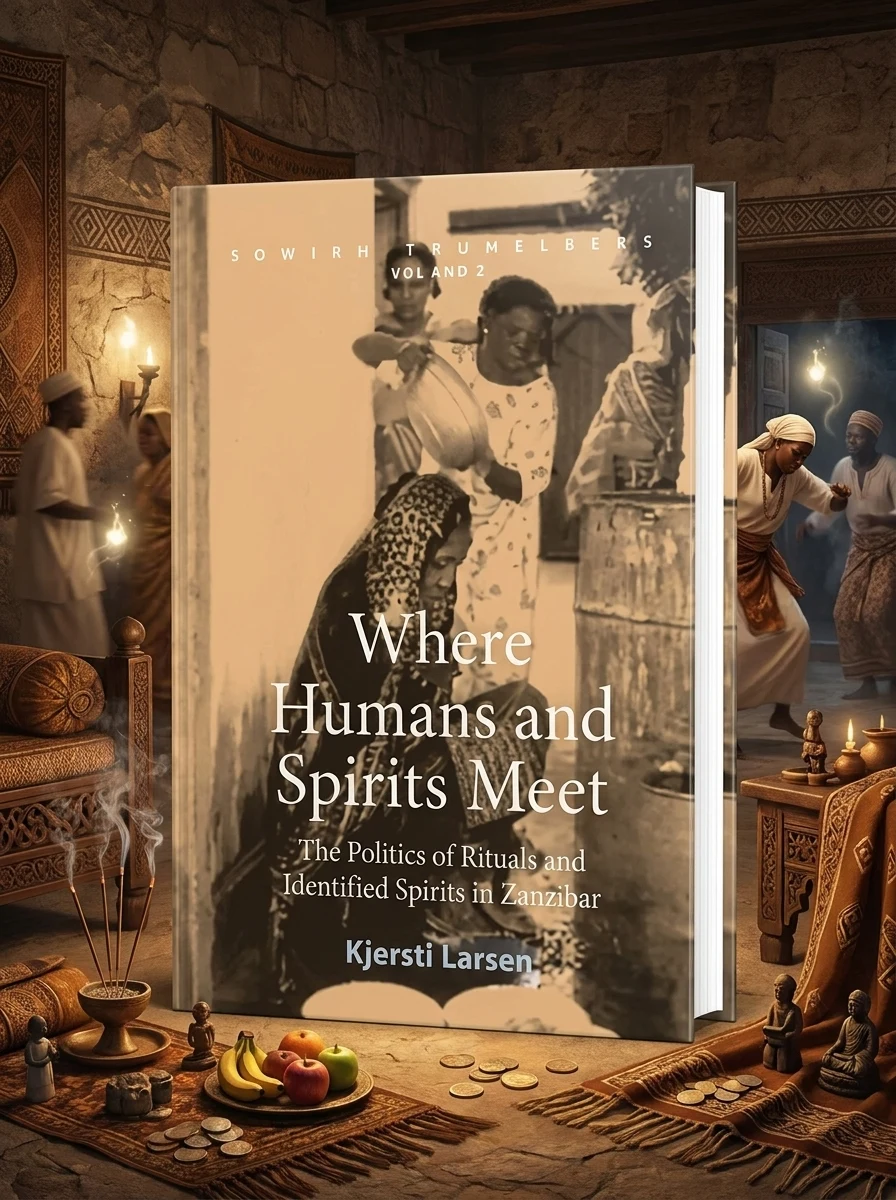
Where Humans and Spirits Meet: The Politics of Rituals and Identified Spirits in Zanzibar - Ingram Academic Larsen, Kjersti
 75
75
 Editorial score
How we rate
Editorial score
How we rate
Stock reported in the catalog; fulfillment is confirmed with your request.
Uncover the intricate dance of identity and possession in Zanzibar's spiritual landscape.
Kjersti Larsen’s ethnography peels back the layers of Zanzibar’s spiritual life, revealing how spirit possession functions as a vital social mechanism. The text explores the nuanced relationships between humans and identified spirits, illustrating how these interactions define personhood and community boundaries. By examining the rituals that bridge the mundane and the metaphysical, the author demonstrates how multicultural tensions and religious identities are negotiated. This work offers a profound look into the Swahili Muslim experience, showing how the unseen world actively shapes the visible social order and individual consciousness in this vibrant East African island setting.
This ethnography situates itself within the rich tapestry of Swahili Muslim culture on the East African island of Zanzibar, exploring how spirit possession serves as a critical social mechanism. It delves into the intricate negotiations of multicultural tensions and religious identities that define personhood in this vibrant setting.


📝 Description: Where Humans and Spirits Meet: The Politics of Rituals and Identified Spirits in Zanzibar - Ingram Academic Larsen, Kjersti
💎 Expert review
📖 Why choose it
Why this book is worth reading
Scholars and enthusiasts of anthropology, religious studies, and African history will find immense value in this profound exploration of the unseen world's impact on visible social orders. Larsen’s work is essential for those interested in how rituals bridge the mundane and metaphysical to shape individual consciousness. Readers seeking to understand the nuanced relationships between humans and identified spirits, and how these interactions define community boundaries, will gain a deep appreciation for the complex dance of identity and possession. It offers a unique window into the Swahili Muslim experience, illustrating how the spiritual landscape actively negotiates multicultural tensions and defines social reality.
⭐ Reader reviews
Reader rating
Not my usual area but wanted to branch out. It pairs well with more modern commentaries on the same tradition. Solid binding, decent paper — holds up to heavy use. Five stars from me.
Been hunting for a decent copy of this text for ages. Some chapters demand a slow, careful read, and that's exactly the point. I found myself reading passages aloud just to sit with them. Deserves a place on any esoteric bookshelf.
Needed this for my research. The historical context alone makes it worth the price. Five stars from me.
I've read excerpts online before, but having the full text is different. It pairs well with more modern commentaries on the same tradition. Glad I finally picked this up.
While Larsen provides a rigorous ethnographic account of Zanzibar’s spirit possession practices, this text is not for casual readers seeking light entertainment or simple narratives. It demands patience from those unaccustomed to dense academic analysis or complex sociological frameworks regarding religion and identity. The focus on nuanced social mechanisms and the negotiation of religious identities may feel overly technical for general audiences. However, for specialists in occult studies, anthropology, and East African culture, it is a vital resource that unpacks the intricate politics of rituals with scholarly precision and depth.
❓ Frequently asked questions
📖 Who should read this
Scholars of African anthropology and religious studies will find this essential. Those interested in the sociology of the sacred, post-colonial identity formation, and the intersection of Islam with indigenous spiritual practices will appreciate its nuanced, empathetic approach to a complex cultural phenomenon.
🎯 Key themes and symbolism
Spirit Possession Dynamics
Larsen treats possession not as pathology but as a structured social language. The text analyzes how specific spirits are invoked to address communal crises, allowing individuals to navigate social hierarchies and express grievances that would otherwise remain silenced within the rigid frameworks of daily life and religious orthodoxy.
Identity Construction
The book argues that being human in Zanzibar is a fluid state negotiated through spiritual engagement. Larsen shows how the boundary between self and other blurs during rituals, enabling participants to reconstruct their social identities, reconcile conflicting cultural influences, and assert agency within a multicultural and post-colonial context.
Ritual Politics
Rituals are depicted as political arenas where power is contested and redistributed. The author details how the performance of rites allows marginalized voices to gain visibility, turning spiritual encounters into sites of negotiation for status, belonging, and moral authority within the complex tapestry of Zanzibari society.
💬 Quotes from the book
“The spirit is not an intruder but a guest whose presence redefines the household.”
“To be human is to be permeable.”
📜 Historical context
📚 Glossary
- Identified Spirits
- Possession Trance
- Syncretism
📔 Questions to reflect on
- How do unseen forces shape your community’s definition of moral responsibility?
- In what ways do rituals allow you to express emotions that are otherwise socially restricted?
- How does the concept of 'guest' apply to the spirits in your cultural or personal narrative?
🏛 Books from this publisher Berghahn Books
All books from this publisher →
You might also like
See more →