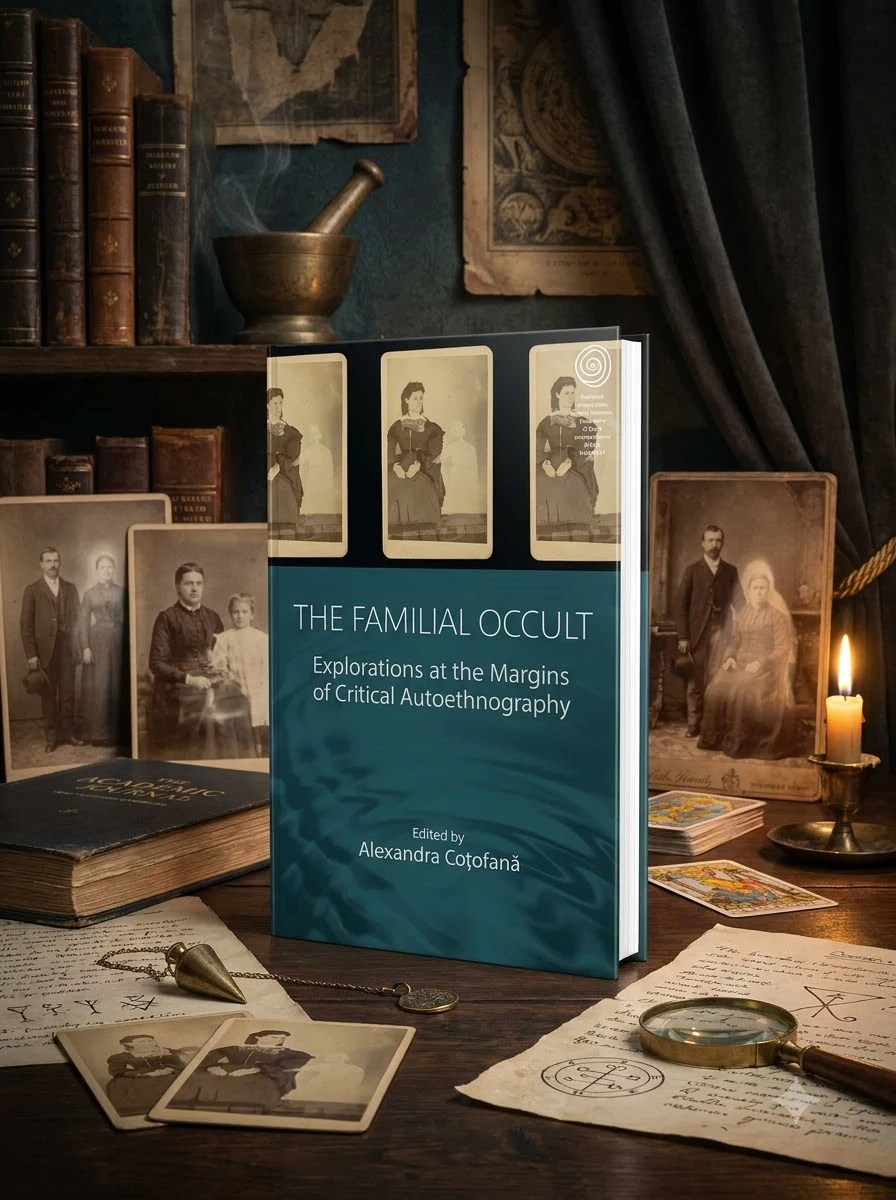
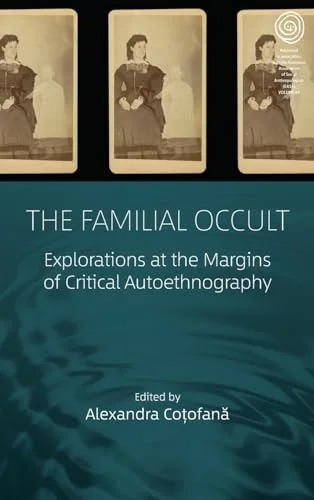
The Familial Occult: Explorations at the Margins of Critical Autoethnography - Ingram Academic
This groundbreaking work delves into the often-unexplored territory of scholars whose upbringing involved occult practices within their families. Alexandra Coțofană examines how these intimate, early experiences fundamentally shape their understanding of reality and knowledge, influencing their very identity as academics. It highlights the intricate conflicts arising when deeply personal, subjective experiences confront the objective frameworks traditionally favored in academia, offering a crucial perspective on a rarely discussed aspect of scholarly life.


Praise for this book
“I found the book to be compelling and fascinating. Some of the authors' evocative writing drew me into the ... stories which resonated with my own family.”
📝 Description: The Familial Occult: Explorations at the Margins of Critical Autoethnography - Ingram Academic
📑 What's inside
- List of Figures
- Introduction: "How Does That Make You Feel?" Writing about the Familial Occult as Therapy Alexandra Coțofană
- Chapter 1. A Chinese American Religious Healer: Towards Filial Ethnography Kin Cheung
- Chapter 2. I am My Mother's Son: Revelations of the Divine Earl Clarence L. Jimenez
- Chapter 3. Of Bibles and Broads: The familial occult as Academic Lens Alexandra Coțofană
- Chapter 4. Facing My Genies: A Commute between Self, Familial Spirits, and Anthropology Kamal Feriali
- Chapter 5. On Familial Occultism James M. Nyce
- Chapter 6. The Familial Occult in Yakutia: Changeling Children and Tricking Demons Natalya Khokholova
- Chapter 7. Can Ethnography of the Occult Be Transformed into Occult Ethnography? Contextualizing a Local Religious Practice in Abkhazia Rita Kuznetsova and Igor Kuznetsov
- Chapter 8. "My father was a Reader" Practices of Folk Medicine in Northern Sweden Annelie Sjölander-Lindqvist and Johan Wedel
- Conclusion
- References Index
💎 Expert review
📖 Why choose it
Why this book is worth reading
Readers deeply interested in the hidden architectures of academic identity will find this text invaluable. It offers a rare, candid look at how familial occult backgrounds influence scholarly thought, providing comfort to those who feel their personal history clashes with institutional norms. If you are a researcher grappling with the tension between subjective experience and objective academia, this book validates your journey. It is essential for anyone seeking to understand the profound, often unspoken ways ancestral practices shape intellectual frameworks and professional existence.
⭐ Reader reviews
Reader rating
Coțofană presents a rigorous examination of how early familial occult exposure impacts academic identity. While intellectually stimulating for those in esoteric studies or sociology, it may not suit readers seeking practical occult techniques or light, accessible narratives. The dense theoretical framework requires patience and a specific interest in autoethnographic methodology. Those looking for straightforward historical accounts of magic might find the focus on contemporary scholarly conflict too abstract. It is a niche contribution that demands engagement with complex identity politics rather than offering easy answers or entertainment.
❓ Frequently asked questions
📖 Who should read this
For scholars, cultural anthropologists, sociologists, and anyone intrigued by the intersection of personal narrative, occult experiences, and academic identity. If you've ever felt the tension between your lived reality and intellectual pursuits, this book offers profound insights.
🎯 Key themes and symbolism
Inherited Esoteric Worlds
This book uniquely explores the experience of growing up with occult traditions embedded in one's family life. Unlike studies focused on fieldwork or apprenticeship, it examines the profound, formative influence of these inherited spiritual landscapes on an individual's worldview from childhood, shaping their personal and intellectual trajectory.
Bridging Subjective & Objective
Coțofană scrutinizes the inherent tension faced by individuals whose personal, often mystical, realities clash with the objective, rational demands of academic discourse. The text illuminates how these scholars navigate the powerful conceptual divide between subjective experience and objective analysis, challenging traditional intellectual boundaries.
Identity in Academia
The work investigates how a familial background rooted in the occult profoundly reconfigures a scholar's sense of self and their epistemological framework. It uncovers the complex interplay between personal history and professional identity, revealing how deeply embedded experiences can redefine one's approach to knowledge and academic inquiry.
📜 Historical context
📚 Glossary
- Occult
- Epistemology
- Ontology
📔 Questions to reflect on
- Reflect on a personal experience or family tradition that significantly shaped your worldview but might be considered "unconventional" by mainstream society or academic circles. How does it influence your perception of knowledge?
- Consider a time when your deeply held subjective beliefs or experiences came into conflict with an objective, academic, or professional framework. How did you navigate that tension?
- In what ways do your early life experiences, particularly those from your family, continue to inform your identity, especially in how you approach learning, research, or understanding the world?
📖 Read on the blog
🏛 Books from this publisher Berghahn Books
All books from this publisher →


You might also like
See more →

Have a question about this item?
Ask about the edition, condition, delivery or anything else — we reply by email or phone, usually within a day.
