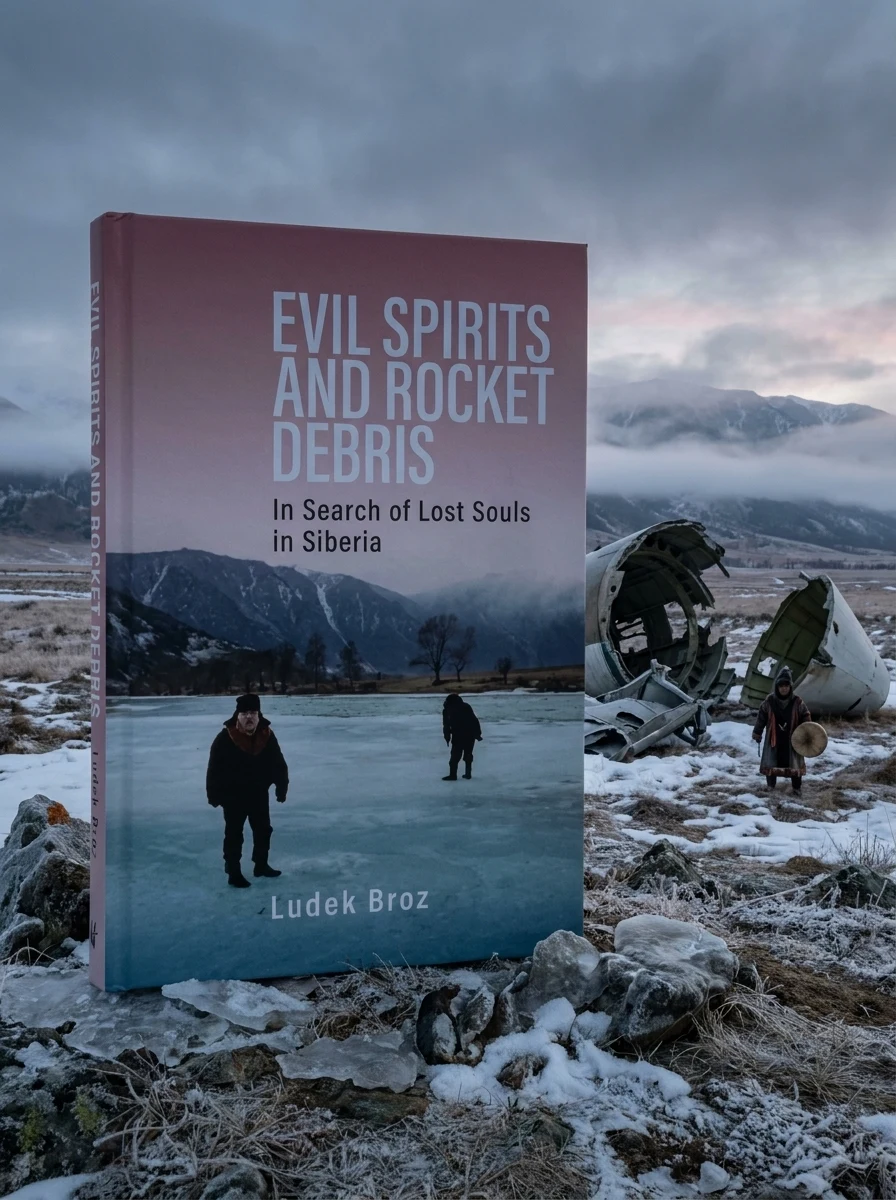

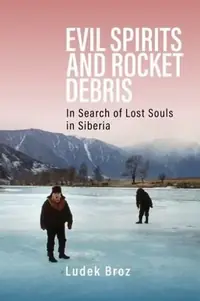
Evil Spirits and Rocket Debris: In Search of Lost Souls in Siberia
 89
89
 Editorial score
How we rate
Editorial score
How we rate
Stock reported in the catalog; fulfillment is confirmed with your request.
Where ancient mummies meet rocket fuel, secrets of the Altai unfold.
Ludek Broz invites us into the Altai Republic, a landscape where permafrost preserves ancient kings and rocket debris rains from the sky. Here, locals interpret misfortunes not as scientific accidents, but as wrathful spirits unleashed by archaeologists and toxic fuel. This narrative dissects the collision between indigenous cosmologies and Soviet-era rationalism, revealing how power shapes truth. Through ethnographic depth, Broz shows that reality is negotiated, not just discovered, in the shadow of both burial mounds and launch pads.
This work sits at the intersection of anthropological ethnography and esoteric studies, exploring how indigenous spiritual frameworks persist within post-Soviet political landscapes. It bridges the gap between traditional occult inquiries into spirit worlds and modern sociological analyses of power and truth.


📝 Description: Evil Spirits and Rocket Debris: In Search of Lost Souls in Siberia
💎 Expert review
📖 Why choose it
Why this book is worth reading
Readers fascinated by the collision of myth and modernity will find this book indispensable. It offers a profound look at how local communities in the Altai Republic negotiate their reality amidst the remnants of Soviet rationalism and space-age technology. If you are interested in how ancient cosmologies adapt to contemporary pressures, such as rocket launches and archaeological excavations, this text provides deep ethnographic insight. It is particularly valuable for those who wish to understand how power shapes truth and how indigenous spirits are reinterpreted in a changing world. The narrative reveals the complex interplay between permafrost-preserved history and toxic modern debris, offering a unique perspective on spiritual resilience.
⭐ Reader reviews
Reader rating
Been hunting for a decent copy of this text for ages. It rewards patience more than any book I've bought this year. If you're drawn to this subject, don't hesitate.
Been hunting for a decent copy of this text for ages. It rewards patience more than any book I've bought this year. Will be gifting a copy to a friend.
Been hunting for a decent copy of this text for ages. Plenty of passages worth underlining; my copy is already full of margin notes. The symbolism is layered and generous to patient readers. If you're drawn to this subject, don't hesitate.
This edition finally does the material justice. Some chapters demand a slow, careful read, and that's exactly the point. It pairs well with more modern commentaries on the same tradition.
Needed this for my research. The ideas are old but land with surprising force today. My only quibble is the cover feels thinner than expected. Solid, if not essential.
This has been on my wishlist for months. The print is clean and easy on the eyes for long sessions. It's become a regular reference in my practice. Good, with the caveats above.
My third book from this store and this one might be the best. Plenty of passages worth underlining; my copy is already full of margin notes. Solid, if not essential.
Broz delivers a dense, scholarly examination of cultural negotiation in Siberia that demands patience from its audience. While the ethnographic depth is impressive, this book will likely alienate readers seeking light entertainment or simple supernatural thrillers. It is not suited for those who prefer clear-cut scientific explanations over nuanced spiritual interpretations. The text requires an interest in academic discourse regarding power dynamics and indigenous cosmologies. Readers looking for straightforward adventure or easy-to-digest folklore may find the focus on sociological theory and the 'negotiation of reality' too abstract and dry, making it a niche acquisition rather than a broad appeal title.
❓ Frequently asked questions
📖 Who should read this
Readers fascinated by the intersection of anthropology, post-Soviet studies, and environmental humanities. Those interested in how marginalized communities interpret technological and historical trauma through spiritual lenses will find this essential reading.
🎯 Key themes and symbolism
Cosmic Contamination
The text examines how toxic rocket fuel and ancient spiritual pollution merge in local perception. It argues that environmental decay is interpreted through mythological frameworks, where scientific waste becomes supernatural curse, blurring the line between ecological disaster and karmic retribution.
Rationality vs Myth
Broz analyzes the friction between state-enforced scientific materialism and persistent shamanic beliefs. The book demonstrates that 'rationalism' is not a neutral observer but an active agent that suppresses or reinterprets local knowledge, creating a hierarchy where official truth invalidates ancestral experience.
Archaeological Ethics
The narrative critiques the extractive nature of modern archaeology. It suggests that digging up frozen mummies is seen locally as a violent intrusion, comparable to dropping rocket stages. The book questions who owns the past and how excavation practices violate contemporary spiritual boundaries.
💬 Quotes from the book
“The sky rains metal; the earth releases ghosts.”
“Truth is not found, but forged in the clash of worlds.”
📜 Historical context
📚 Glossary
- Baikonur Cosmodrome
- Frozen Mummies
- State-Fostered Rationalism
📔 Questions to reflect on
- How do you interpret misfortune when scientific explanation feels insufficient?
- In what ways does modern technology disrupt traditional spiritual landscapes?
- Who has the right to define what is 'real' in a community?
🏛 Books from this publisher Berghahn Books
All books from this publisher →
You might also like
See more →