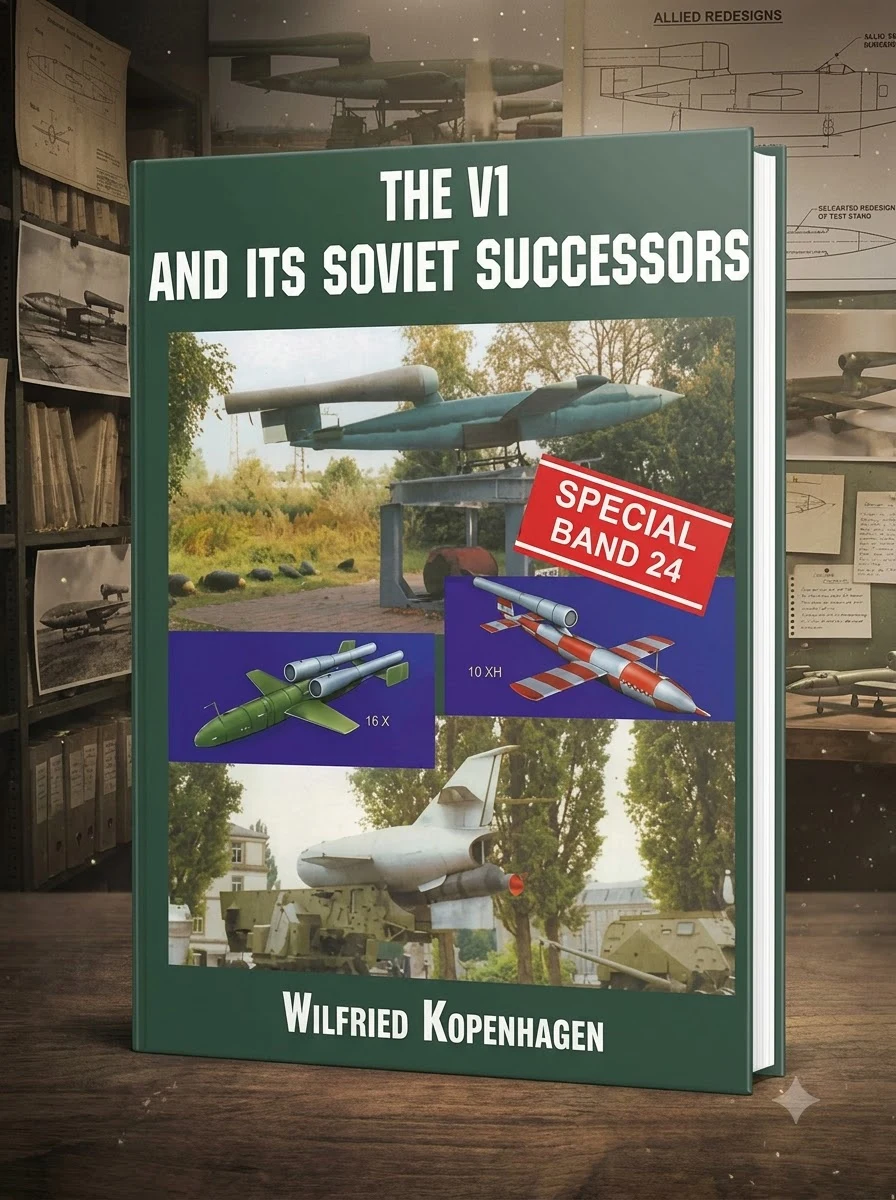
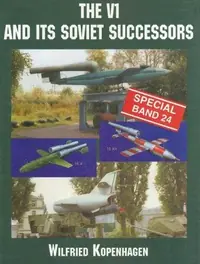
The V1 and Its Soviet Successors Kopenhagen, Wilfried
Kopenhagen, WilfriedThis edition can be ordered. No arrival date is confirmed.
From primitive terror to sophisticated weaponry, witness the V1's enduring legacy.
Wilfried Kopenhagen meticulously chronicles the journey of Germany's V1 pulsejet flying bomb beyond its World War II origins. This comprehensive study, rich with visual documentation, explores how Allied nations, particularly the Soviets, adapted and refined this foundational technology. It traces the V1's direct influence on the development of subsequent generations of air-launched and surface-launched guided munitions, offering an unparalleled look at a pivotal moment in military engineering and the dawn of the missile age.
This work sits at the intersection of military engineering history and Cold War technological evolution, documenting how wartime innovations transitioned into global strategic arsenals. It serves as a technical bridge between World War II aviation history and the subsequent missile age.


📝 Description: The V1 and Its Soviet Successors Kopenhagen, Wilfried
💎 Expert review
📖 Why choose it
Why this book is worth reading
This volume is essential for dedicated military historians and engineering enthusiasts who seek to understand the tangible lineage of modern guided weaponry. Readers interested in the specific mechanical evolution from pulsejet technology to sophisticated Soviet successors will find Wilfried Kopenhagen’s meticulous chronicle invaluable. The book offers a rare, visually rich perspective on how foundational wartime designs were adapted by Allied nations, particularly the Soviets, shaping the future of global defense strategies. If you appreciate deep dives into pivotal moments of military engineering and want to witness the transition from primitive terror to advanced munitions, this comprehensive study provides an unparalleled look at the dawn of the missile age without sacrificing technical accuracy for narrative flair.
⭐ Reader reviews
Reader rating
Wilfried Kopenhagen delivers a dense, visually supported account of the V1’s technological legacy, appealing primarily to those with a strong interest in aerospace engineering and Cold War arms races. The text excels in tracing the direct influence of German pulsejet designs on subsequent generations of guided munitions, offering detailed insights into Soviet adaptation efforts. However, this book is not suited for casual readers seeking a broad narrative history of World War II or general political analysis of the era. Those looking for light reading or personal soldier anecdotes will likely find the focus on mechanical refinement and strategic weaponry too dry and specialized. It is a serious reference work for specialists rather than a general audience overview.
❓ Frequently asked questions
📖 Who should read this
For enthusiasts of military history, aerospace engineering, and the Cold War's technological arms race, this book offers an indispensable visual and technical account. Delve into the seldom-told story of how one iconic weapon sparked a revolution in guided missile design.
🎯 Key themes and symbolism
V1's Post-War Metamorphosis
This volume thoroughly examines how the original V1 design, a weapon of terror, was repurposed and significantly modified by various Allied powers after World War II. It highlights the strategic importance placed on acquiring and understanding this nascent missile technology, driving its rapid evolution into new forms and applications.
Cold War Missile Genesis
Kopenhagen illustrates the critical role the V1 played as a precursor to the advanced air-to-air and air-to-ground missile systems that defined the Cold War arms race. The book details how its fundamental principles were scaled and integrated into a new era of precision-guided munitions, shaping modern aerial combat.
Photographic Archival Insight
The work stands out for its extensive collection of rare photographs, offering an invaluable visual narrative of the V1's development, capture, and subsequent transformations. These images provide a direct window into the engineering challenges and solutions that characterized early missile design and deployment across different nations.
💬 Quotes from the book
“The V1, initially a crude weapon of terror, proved an unwitting catalyst for a technological arms race, its captured designs unlocking possibilities that fundamentally reshaped military aviation.”
“Tracing the lineage from the rudimentary pulsejet of Peenemünde to the sophisticated guided munitions of the Soviet bloc reveals a direct, undeniable thread of engineering inheritance.”
📜 Historical context
📚 Glossary
- V1 (Vergeltungswaffe 1)
- Air-to-air missile
- Air-to-ground missile
📔 Questions to reflect on
- Consider how the ethical implications of developing autonomous weapons like the V1 have evolved (or not) in contemporary warfare.
- Reflect on the unforeseen consequences of technological innovation, using the V1's post-war trajectory as an example.
- How might the historical transfer of advanced military technology, as seen with the V1, influence current international relations and arms proliferation?
📖 From the series “Schiffer Military History”
All books in the series →
 85
85
 87
87

✍️ More books by this author Kopenhagen, Wilfried
All books by this author →
🏛 Books from this publisher Schiffer Publishing
All books from this publisher → 89
89





You might also like
See more → 89
89





 91
91