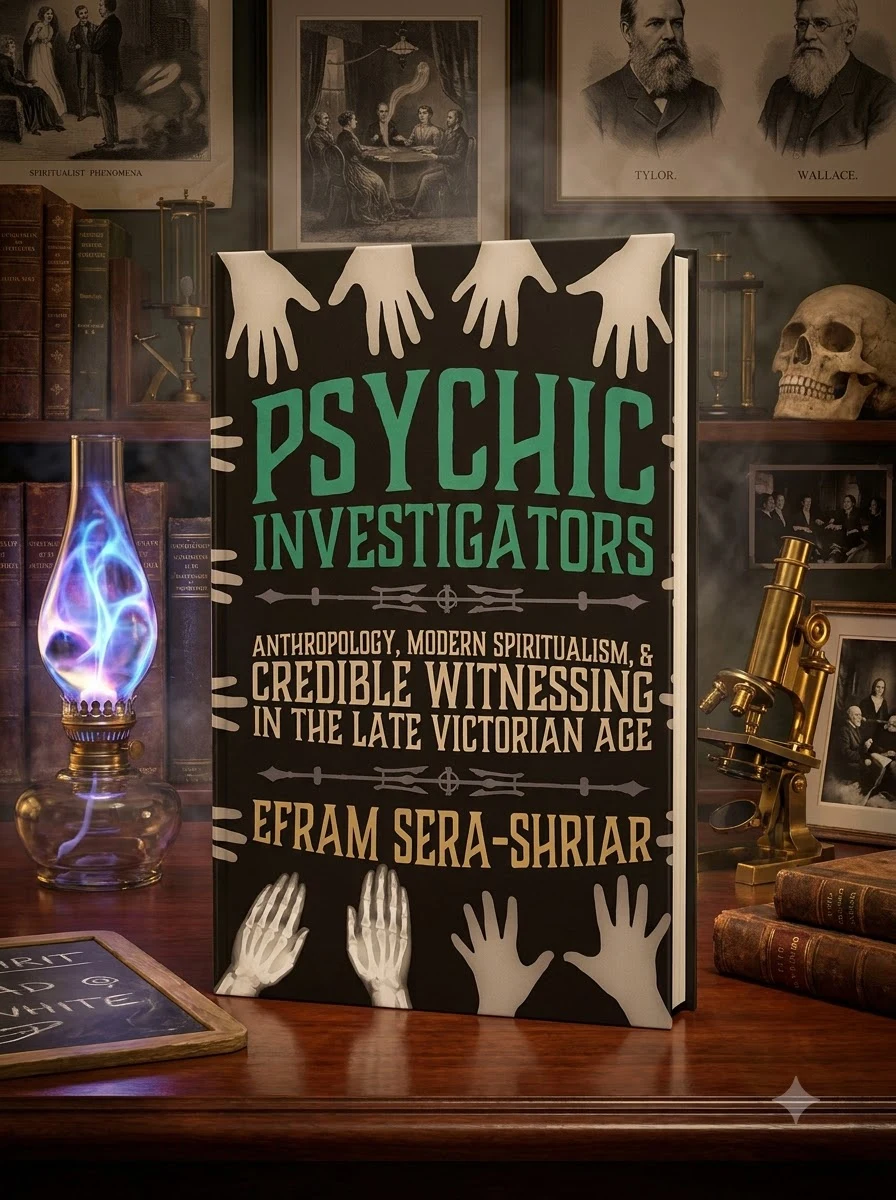
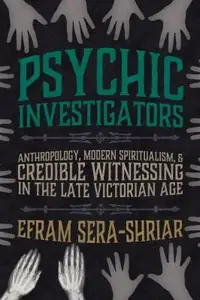
Psychic Investigators: Anthropology, Modern Spiritualism, and Credible Witnessing in the Late Victorian Age Sera-Shriar, Efram
Stock reported in the catalog; fulfillment is confirmed with your request.
Victorian science met the spirit world: a battle for truth and credibility.
Efram Sera-Shriar's incisive study unearths the fascinating conflict between emerging British anthropology and the burgeoning Modern Spiritualist movement in the late Victorian era. This work meticulously details how debates surrounding ghosts and psychic phenomena became central to anthropological discourse on human belief systems. By examining the writings of pioneering figures like Alfred Russel Wallace and Edward Burnett Tylor, Sera-Shriar reveals the critical importance placed on establishing credible witnesses for supernatural occurrences. The book also illuminates how these spiritualist challenges profoundly impacted the development of core anthropological theories, particularly animism, and the very definition of scientific observation.
This work situates itself within the late Victorian era, exploring the intricate intersection where emerging British anthropology collided with the burgeoning Modern Spiritualist movement. It highlights a period where debates over ghosts and psychic phenomena were central to defining scientific observation and human belief systems.


📝 Description: Psychic Investigators: Anthropology, Modern Spiritualism, and Credible Witnessing in the Late Victorian Age Sera-Shriar, Efram
💎 Expert review
📖 Why choose it
Why this book is worth reading
Readers fascinated by the historical tension between empirical science and spiritual belief will find this book indispensable. It offers a meticulous look at how credible witnessing shaped anthropological theory during a pivotal time. Those interested in the intellectual legacy of figures like Edward Burnett Tylor or the development of animism will appreciate the detailed analysis of how spiritualist challenges forced a redefinition of scientific inquiry. This study is particularly rewarding for those who enjoy understanding how cultural conflicts drive theoretical evolution, providing deep insight into the roots of modern anthropological discourse and the complex history of psychic investigation.
⭐ Reader reviews
Reader rating
Sera-Shriar delivers a rigorous academic examination that may feel dense to casual readers seeking light paranormal entertainment. It is not suitable for those expecting practical guidebooks on ghost hunting or sensationalist tales of Victorian hauntings. Instead, this text serves scholars and serious historians who appreciate the nuanced debate between anthropology and spiritualism. Readers looking for accessible, narrative-driven popular history might find the focus on theoretical discourse and credible witnessing too abstract. However, for those dedicated to understanding the epistemological shifts in late Victorian science, it offers a vital, albeit demanding, contribution to the field.
❓ Frequently asked questions
📖 Who should read this
If you're fascinated by the intersection of science, belief, and the supernatural, particularly during the Victorian era, this book is for you. It’s ideal for those curious about the historical development of anthropology and the enduring quest to understand human consciousness and perceived realities.
🎯 Key themes and symbolism
Science vs. Spiritualism
This book meticulously documents the intricate dance between late 19th-century scientific inquiry and the widespread belief in spiritualist manifestations. It explores how anthropologists, often committed to secular explanations, grappled with phenomena that seemed to defy rational understanding, forcing them to confront the limits of their empirical frameworks and the nature of proof.
Credible Witnessing
A core focus is on the profound challenge of what constituted a 'credible witness' when investigating psychic events. Sera-Shriar demonstrates how figures like Wallace and Tylor struggled to establish rigorous standards for observation and testimony in a realm where subjective experience and potential deception blurred the lines of objective truth, shaping early scientific methodology.
Anthropology's Foundations
The work reveals how Modern Spiritualism directly impacted the nascent field of anthropology, particularly its theories on 'primitive' cultures and animism. For scholars like Tylor and Clodd, spiritualism threatened to undermine their foundational ideas about the evolution of religious thought, forcing them to defend their rationalist perspectives against the claims of the supernatural.
💬 Quotes from the book
“The spectral manifestations observed challenged the very bedrock of scientific empiricism, forcing a re-evaluation of what constituted verifiable truth in an age hungry for both rational explanation and spiritual comfort.”
“An anthropologist, caught between a rationalist's skepticism and a spiritualist's conviction, found themselves grappling with the inherent subjectivity of human testimony when confronted with the seemingly inexplicable.”
📜 Historical context
📚 Glossary
- Animism
- Modern Spiritualism
- Credible Witnessing
📔 Questions to reflect on
- How do you think the concept of 'credible witnessing' has evolved since the Victorian era, especially concerning phenomena not easily explained by conventional science?
- Reflect on how foundational scientific theories today might be challenged or influenced by cultural beliefs or unexplained events, similar to how spiritualism impacted early anthropology.
- Consider the historical relationship between science and religion. In what ways do you see similar tensions or collaborations playing out in contemporary society?
You might also like
See more →
 91
91

 91
91