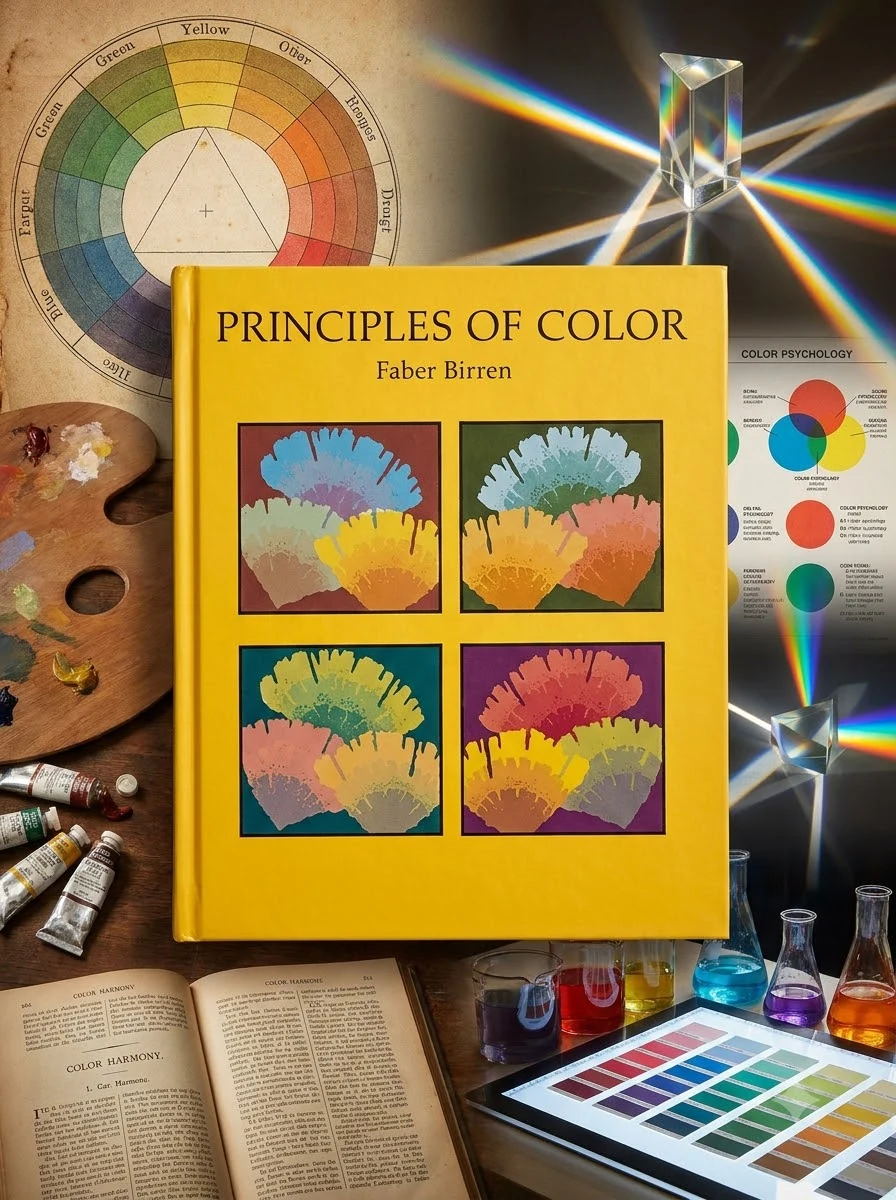
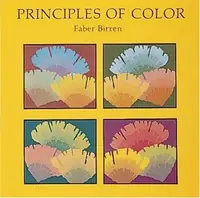
Principles of Color: A Review of Past Traditions and Modern Theories of Color Harmony (Revised)
This edition can be ordered. No arrival date is confirmed.
Birren bridges ancient color circles with modern perception psychology for true chromatic harmony.
Faber Birren masterfully synthesizes classical artistry with contemporary cognitive science in this revised edition. He traces the lineage of color harmony from historical theory to the psychology of human perception. The text guides readers through foundational color circles before delving into complex modern principles. It is not merely a technical manual but a narrative of how we visually experience balance. Birren clarifies why certain combinations resonate while others clash, offering a rigorous yet accessible framework for achieving aesthetic unity in any creative endeavor.
This work resides within the intersection of esoteric color theory and modern perceptual psychology, bridging ancient philosophical traditions with contemporary cognitive science. It serves as a scholarly yet accessible narrative on the historical lineage of chromatic harmony.


📝 Description: Principles of Color: A Review of Past Traditions and Modern Theories of Color Harmony (Revised)
💎 Expert review
📖 Why choose it
Why this book is worth reading
Artists, designers, and seekers of aesthetic unity will find profound value in this revised edition. Birren offers a rigorous yet accessible framework that clarifies why certain color combinations resonate while others clash. By synthesizing classical artistry with modern cognitive science, the text guides readers through foundational color circles to complex principles of human perception. It is not merely a technical manual but a narrative of visual experience, helping practitioners achieve balance in their creative endeavors. If you wish to understand the deep psychological underpinnings of chromatic harmony and appreciate the bridge between ancient theory and modern understanding, this book provides the essential keys to unlocking true aesthetic coherence.
⭐ Reader reviews
Reader rating
This edition finally does the material justice. The material is presented clearly and the structure makes it easy to revisit key passages. Every rereading turns up something I missed. Great value for what you get.
Grabbed this during a weekend order. Every rereading turns up something I missed. Will be gifting a copy to a friend.
Perfect companion for my morning study sessions. The material is presented clearly and the structure makes it easy to revisit key passages. Five stars from me.
Added this to my reference shelf. The ideas are old but land with surprising force today. It connects ideas I'd only seen treated separately elsewhere. The font runs small in the appendices. Still worth having on the shelf.
This exceeded my expectations. I appreciated how the argument builds steadily from first principles. Deserves a place on any esoteric bookshelf.
Been hunting for a decent copy of this text for ages. You can tell why this work has endured. Deserves a place on any esoteric bookshelf.
Faber Birren masterfully synthesizes classical artistry with contemporary cognitive science, tracing color harmony from historical theory to perception psychology. The text clarifies why specific combinations resonate, offering a framework for aesthetic unity. However, it is not merely a technical manual but a narrative of visual experience. Readers seeking dry, purely mathematical formulas or those uninterested in the psychological aspects of sight may find the philosophical undertones less engaging. It suits those wanting to understand the 'why' behind chromatic balance rather than just the 'how'. While accessible, its depth requires attention to both historical context and modern theory, making it ideal for serious students of color who value rigorous yet narrative-driven exploration.
❓ Frequently asked questions
📖 Who should read this
Seeking artists, designers, and psychologists who wish to understand the mechanics behind visual appeal. If you crave the science behind the art, this text provides the rigorous theoretical backbone missing from typical practical guides.
🎯 Key themes and symbolism
Chromatic Harmony Foundations
Birren examines the geometric relationships within the color wheel, explaining how traditional schemes like complements and triads create visual stability. He demonstrates that harmony is not arbitrary but rooted in the structural logic of hue placement, providing a reliable map for artists seeking balance.
Psychological Perception Mechanics
Moving beyond aesthetics, the author integrates modern studies on how the human eye and brain process light. He reveals that color harmony is partly a biological response, discussing how perception shifts based on context, intensity, and the physiological limits of visual processing.
Historical Theoretical Evolution
The work chronicles the shift from mystical color associations to empirical scientific inquiry. Birren contextualizes past theories, showing how early art schools established rules that later influenced modern psychological models, creating a continuum of thought regarding how we define and create beauty.
💬 Quotes from the book
“Harmony is not a static rule but a dynamic interplay of light and perception.”
“To master color is to master the eye’s response to the world.”
📜 Historical context
📚 Glossary
- Color Circle
- Chromatic Perception
- Visual Harmony
📔 Questions to reflect on
- How does your personal emotional response to a specific hue challenge the theoretical rules presented in the text?
- Identify a color combination that feels harmonious to you. Can you trace its logic back to the color circles described?
- In what ways do your cultural background and biological perception influence your definition of 'beautiful' color?
🏛 Books from this publisher Schiffer Publishing
All books from this publisher →
 89
89







You might also like
See more →




 91
91
 91
91